segunda-feira, 10 de março de 2014

50 Things Everyone Should Know How To Do


Self-reliance is a vital key to living a healthy, productive life.  To be self-reliant one must master a basic set of skills, more or less making them a jack of all trades.  Contrary to what you may have learned in school, a jack of all trades is far more equipped to deal with life than a specialized master of only one.

While not totally comprehensive, here is a list of 50 things everyone should know how to do.

Edit: Do you like this post image? Beautful, isnt’ it? You can get a copy here!

1. Build a Fire – Fire produces heat and light, two basic necessities for living.  At some point in your life this knowledge may be vital.

2. Operate a Computer – Fundamental computer knowledge is essential these days.  Please, help those in need.

3.  Use Google Effectively – Google knows everything.  If you’re having trouble finding something with Google, it’s you that needs help.

4.  Perform CPR and the Heimlich Maneuver – Someday it may be your wife, husband, son or daughter that needs help.

5.  Drive a Manual Transmission Vehicle – There will come a time when you’ll be stuck without this knowledge.

6.  Do Basic Cooking – If you can’t cook your own steak and eggs, you probably aren’t going to make it.

7.  Tell a Story that Captivates People’s Attention – If you can’t captivate their attention, you should probably just save your breath.

8.  Win or Avoid a Fistfight – Either way, you win.

9.  Deliver Bad News – Somebody has got to do it.  Unfortunately, someday that person will be you.

10.  Change a Tire – Because tires have air in them, and things with air in them eventually pop.

11.  Handle a Job Interview – I promise, sweating yourself into a nervous panic won’t land you the job.

12.  Manage Time – Not doing so is called wasting time, which is okay sometimes, but not all the time.

13.  Speed Read – Sometimes you just need the basic gist, and you needed it 5 minutes ago.

14.  Remember Names – Do you like when someone tries to get your attention by screaming “hey you”?

15.  Relocate Living Spaces – Relocating is always a little tougher than you originally imagined.

16.  Travel Light – Bring only the necessities.  It’s the cheaper, easier, smarter thing to do.

17.  Handle the Police – Because jail isn’t fun… and neither is Bubba.

18.  Give Driving Directions – Nobody likes driving around in circles.  Get this one right the first time.

19.  Perform Basic First Aid – You don’t have to be a doctor, or genius, to properly dress a wound.

20.  Swim – 71% of the Earth’s surface is covered by water.  Learning to swim might be a good idea.

21.  Parallel Park – Parallel parking is a requirement on most standard driver’s license driving tests, yet so many people have no clue how to do it.  How could this be?

22.  Recognize Personal Alcohol Limits – Otherwise you may wind up like this charming fellow.

23.  Select Good Produce – Rotten fruits and vegetables can be an evil tease and an awful surprise.

24.  Handle a Hammer, Axe or Handsaw – Carpenters are not the only ones who need tools.  Everyone should have a basic understanding of basic hand tools.

25.  Make a Simple Budget – Being in debt is not fun.  A simple budget is the key.

26.  Speak at Least Two Common Languages – Only about 25% of the world’s population speaks English.  It would be nice if you could communicate with at least some of the remaining 75%.

27.  Do Push-Ups and Sit-Ups Properly – Improper push-ups and sit-ups do nothing but hurt your body and waste your time.

28.  Give a Compliment – It’s one of the greatest gifts you can give someone, and it’s free.

29.  Negotiate – The better deal is only a question or two away.

30.  Listen Carefully to Others – The more you listen and the less you talk, the more you will learn and the less you will miss.

31.  Recite Basic Geography – If you don’t know where anything is outside of your own little bubble, most people will assume (and they are probably correct) that you don’t know too much at all.

32.  Paint a Room – The true cost of painting is 90% labor.  For simple painting jobs it makes no sense to pay someone 9 times what it would cost you to do it yourself.

33.  Make a Short, Informative Public Speech – At the next company meeting if your boss asks you to explain what you’ve been working on over the last month, a short, clear, informative response is surely your best bet.  “Duhhh…” will not cut it.

34.  Smile for the Camera – People that absolutely refuse to smile for the camera suck!

35.  Flirt Without Looking Ridiculous – There is a fine line between successful flirting and utter disaster.  If you try too hard, you lose.  If you don’t try hard enough, you lose.

36. Take Useful Notes – Because useless notes are useless, and not taking notes is a recipe for failure.

37.  Be a Respectful House Guest – Otherwise you will be staying in a lot of hotels over the years.

38.  Make a Good First Impression – Aristotle once said, “well begun is half done.”

39.  Navigate with a Map and Compass – What happens when the GPS craps out and you’re in the middle of nowhere?

40.  Sew a Button onto Clothing – It sure is cheaper than buying a new shirt.

41.  Hook Up a Basic Home Theater System – This isn’t rocket science.  Paying someone to do this shows sheer laziness.

42.  Type – Learning to type could save you days worth of time over the course of your lifetime.

43.  Protect Personal Identity Information – Personal identity theft is not fun unless you are the thief.  Don’t be careless.

44.  Implement Basic Computer Security Best Practices – You don’t have to be a computer science major to understand the fundamentals of creating complex passwords and using firewalls.  Doing so will surely save you a lot of grief someday.

45.  Detect a Lie – People will lie to you.  It’s a sad fact of life.

46.  End a Date Politely Without Making Promises – There is no excuse for making promises you do not intend to keep.  There is also no reason why you should have to make a decision on the spot about someone you hardly know.

47.  Remove a Stain – Once again, it’s far cheaper than buying a new one.

48.  Keep a Clean House – A clean house is the foundation for a clean, organized lifestyle.

49.  Hold a Baby – Trust me, injuring a baby is not what you want to do.

50.  Jump Start a Car – It sure beats walking or paying for a tow truck.


50 Things Everyone Should Know How To Do _ Even Cool.com - Mozilla Firefox 2014-03-10 11.18.42

http://evencool.com/links/50-things-everyone-should-know-how-to-do/

Cuatro frases que hacen un mundo de diferencia


Tamara Medina Sapovalova

Tamara Medina Sapovalova

Business Confidence Coach

lograrobjetivos

“Somos lo que pensamos”. Todos tenemos hábitos que nos ayudan a alcanzar nuestras metas pero con frecuencia nos saboteamos con frases que nos decimos a nosotros mismos y que impactan nuestro desarrollo y crecimiento.

Una de las primeras cosas que analizo con mis clientes tiene que ver con las palabras y cómo las utilizan, además de la actitud que tienen ante la vida y los retos que ésta les presenta.

Tengo una regla que utilizo con todos mis clientes; durante las sesiones no está permitido utilizar las siguientes expresiones:

“No sé” – Si no sabes algo, investiga, aprende. Hoy en día con la tecnología de la que disponemos, el mundo está, literalmente hablando, al alcance de nuestras manos. La respuesta a cualquier pregunta la puedes encontrar rápidamente.

Si se trata de algo sobre ti mismo y tus sentimientos debes preguntarte: ¿qué te ayudaría encontrar la respuesta?

Si es con respecto a las cosas que quieres, puedes hacer una lista de lo que deseas. Si esto se te dificulta hazlo a la inversa: pregúntate que es lo que no quieres y lo opuesto será lo que si quieres. Más detalles de este ejercicio puedes encontrarlos en una de las entradas anteriores: Tips que te ayudarán a vivir una vida plena.

“No puedo” – ¿Qué te hace pensar que no puedes? ¿Qué te ayudaría para poder lograrlo? ¿Quién podría apoyarte? Es importante que te concentres en las soluciones. Encuentra la manera de lograr lo que quieres; tal vez tengas que hacerlo varias veces o buscar una nueva estrategia hasta que logres tus metas. Como bien dijo Albert Einstein, “La locura es seguir haciendo lo mismo y esperar resultados diferentes”.

“Es difícil” – Hay que ver la vida y las situaciones que se nos presentan como retos. Todo depende en aquello en lo que decidas enfocarte. Tienes dos opciones o te enfocas en todas las razones por las cuales no se van a dar las cosas que quieres o te enfocas en las oportunidades. La decisión es tuya. Puedes ver más sobre este tema en: ¿La vida es difícil o te la haces difícil?.

“Lo voy a intentar” – Como bien dijo el Maestro Yoda: “O lo haces o no lo haces, pero no lo intentes”. Cuando “intentamos” algo nunca damos el 100 por ciento pues “solo lo estamos intentando”, nosotros mismos ya nos estamos limitando.

Cuando nos hacemos preguntas la tendencia natural de nuestro cerebro es buscar las respuestas, pero si ya de antemano nos estamos diciendo que no sabemos, que no podemos, que es difícil, y que lo vamos a “intentar” entonces nuestro cerebro se “cierra” porque ya no ve como necesario el buscar alternativas, oportunidades, conocimiento y respuestas.

Como ejercicio te invito que esta semana prestes atención si utilizas estas frases en tus conversaciones cotidianas y que te hagas a ti mismo esta pregunta: ¿en qué te estás enfocando, en las oportunidades o en las razones por las cuales no vas a poder lograr lo que quieres?

Con algo de práctica, así como lo han hecho mis clientes, también tú podrás eliminar de tu vocabulario estas frases que te limitan y te darás la oportunidad de lograr mucho más de lo que jamás te hayas imaginado.

Cuando alguno de los dos trabaja jornadas muy largas

  • Es entendible que en ocasiones tengan que trabajar horas extras o asistir a reuniones importantes que traspasan los horarios regulares de oficina, pero de alguna manera deben tratar de evitar que esto se vuelva una regla. Si siempre salen tarde del trabajo, llegarán a casa cuando la otra persona ya haya cenado por su cuenta e incluso tal vez haya decidido irse a dormir. Si esta dinámica se convierte en su día a día, llegará un momento en el que quien siempre está solo en casa, se canse y aburra de esperarles sin sentido. Dos cosas podrán suceder: un reclamo en tono de pelea surgirá, o bien, se dará un alejamiento con toda la indiferencia del mundo.

  • Cuando trabajan hasta en fines de semana

    Cuando el trabajo se vuelve más demandante cada vez y de poco en poco les va siendo inminente ocupar hasta sus días de descanso para resolver pendientes laborales, la oportunidad de disfrutar los ratos de ocio juntos desaparece. Aquel que sí puede descansar los fines de semana, será el único que asista a las reuniones familiares o con amigos. Sólo uno de ustedes irá al club, a pasear al perro o al cine, y pronto, se volverá prácticamente en una persona soltera. Sentirse abandonado de esa manera sólo hará que el amor se diluya.

  • Cuando el trabajo genera malhumor y estrés

    Cuando alguien tiene problemas en la oficina o demasiada carga de trabajo, todo el tiempo estará hablando o quejándose de ello. Cuando el trabajo se vuelve el único tema de conversación entre ustedes, o alguno pasa todo el tiempo atendiendo llamadas o correos electrónicos de la oficina, la situación se vuelve incómoda y aburrida. Aunque pasen tiempo juntos, la relación no se enriquecerá en absoluto, y por el contrario, se volverá una carga para el que sirva de confidente.

  • Cuando no hay energía para el romance

    Cuando por fin se liberan y dejan de pensar en el trabajo, la energía que les queda es mínima. Ven tele y se quedan dormidos, platican y parecen zombies… y en la cama, nunca hay vitalidad para una sesión de sexo. ¿Crees que esto no acabará con la paciencia de tu pareja? Están juntos para compartirlo TODO, y si bien es cierto que ambos deben ser comprensivos y entender que el trabajo es importante, no pueden dejar de lado los cariñitos y los instintos más básicos.

  • Cuando la presión del trabajo afecta su salud

    Todo el estrés que genera el trabajo, tiene repercusiones físicas: el sistema endocrino se ve afectado, aumentan el estrés y la ansiedad, se incrementa el riesgo de sufrir enfermedades cardiovasculares (infartos, anginas de pecho, hipertensión), insomnios, trastornos urinarios… ¿Qué tal te suena esto? Si enfermas, tu pareja tendrá todo el derecho de decirte: “te lo dije”. Una cosa es estar juntos en la salud y en la enfermedad, pero otra es tener que atender los achaques que la obsesión por el trabajo pueda provocar en alguno de ustedes sólo por la necedad de no querer liberarse un poco de él.

  • Lo que debe hacer el que sufre el abandono:

    Se debe decir lo que se siente, hacer evidente lo que afecta. “Estoy triste”, “necesito que algo cambie”, “necesito pasar tiempo de calidad contigo”. Si no te haces escuchar, tu pareja podría ni enterarse de que hay un problema entre ustedes. No se vale que te calles lo que te molesta y un día, de buenas a primeras, simplemente te alejes y termines la relación.

  • Lo que debe hacer el trabajador compulsivo:

    Aunque no lo creas, la solución está en ti. Por muy demandante que sea tu trabajo, tú, tus compañeros y jefes, entienden que también tienes vida personal. La salud de tu relación de pareja puede ser el motor para el resto de tu vida, así que no la sacrifiques en nombre del trabajo. Debes encontrar tiempo para pasar tiempo de calidad con tu pareja. Escucha y sé sensible o a lo que la otra persona siente y no des por hecho que estará a tu lado siempre sin importar que la ignores.

domingo, 9 de março de 2014

London image gallery (43)


London images – link

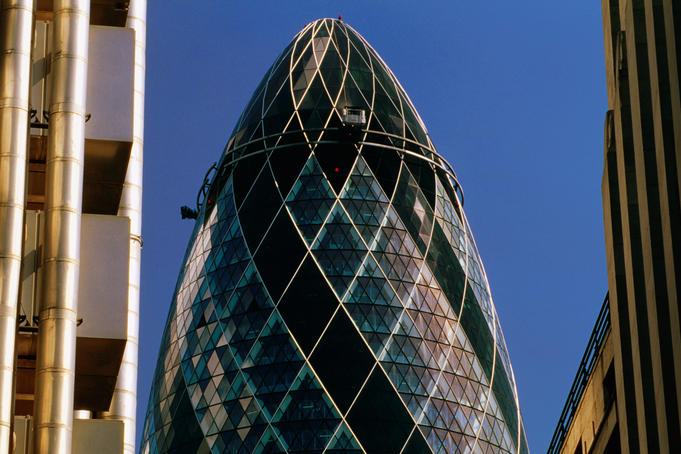
Swiss Re Tower (aka the Gherkin) in city.


Hanami_ a guide to cherry blossom viewing in Japan - Lonely Planet - Mozilla Firefox 2014-03-05 06.45.36

The Best Investment Advice You Will Ever Get


I’m going to simplify what I consider to be the best investment advice I have ever been given and share it with you.  Here you go:

1. If you have any credit card or other type of consumer debt on which you pay 5pct or more interest, pay it off.  Compound interest is your enemy.  The chances of you earning more on your money than you are paying in consumer interest rates are slim. Pay it off.

2.  Cash is King. Now that Madoff is in jail, no investment can offer returns with zero risk. If you don’t fully understand the risks of an investment you are contemplating, it’s ok to do nothing. In times of massive uncertainty like we are facing today, doing nothing is a valid and IMHO preferable investment strategy. Just put your money in the bank.

3. Cash Creates Transactional Returns.   What does this mean ? It means that you should analyze what you spend money on over the course of a year. You will get a better return on your money by being a smart shopper and taking advantage of  cash, quantity or other types of discounts than you will in the stock market.  Saving 15pct on the $1k dollars worth of items you know you will absolutely spend money on is a better return on your money than making 15pct in a year on a $1k investment  because you don’t pay taxes on it.

If you have under 100k dollars in liquid assets,  your net worth will be higher in one year if you follow this advice  than if you follow ANY other investment advice any broker or banker will give you this year.

The Best Investment Advice You Will Ever Get _ blog maverick - Mozilla Firefox 2014-03-09 12.47.15

Should You Increase Savings First Or Pay Down Debt?


Erik Carter, Contributor

One of the most common questions we get is about how to prioritize your savings. If you’re like most Americans, you may have some credit card debt to pay off, an emergency fund to build up, and a retirement to invest for but your savings to fund these goals are shall we say…limited. So what should you do? While financial planning should always be customized according to your individual situation, here are some general guidelines to consider in setting your priorities:

1. Make sure you have adequate emergency savings. Start with at least $1k in cash. Dave Ramsey calls this a “starter emergency fund” and is the first in his recommended series of “ baby steps.” You can keep it in a savings account or even in your checking account as a protection against overdraft fees. (With a rewards checking account, you can actually earn more interest than in a savings account.) Either way, be sure to only use it for genuine emergencies (no, the new Samsung Galaxy doesn’t count).

Next , you’ll want to have access to enough assets to cover at least 3-6 months of expenses as Dave Ramsey suggests or even as much as 8 months of expenses, which is what Suze Orman recommends. Your number may depend on how risky you feel your income is. Do not count credit card limits or home equity lines of credit as these can be cancelled, especially if you lose your job, which is when you’ll need it the most.  If you’re depending on selling investments or borrowing from your retirement plan, make sure you’ll still have enough even if the market takes a significant downturn.

It may feel like a lot of savings before investing for retirement but keep in mind that this amount is unlikely to make or break your retirement plans. On the other hand, not having it can really get you in trouble. One option is to save for both emergencies and retirement at the same time by contributing to a Roth IRA since anything you don’t withdraw for emergencies (you can access Roth IRA contributions any time and for any reason without tax or penalty) can grow to be tax-free for retirement. Just be sure to keep the Roth IRA in cash until you have enough emergency savings elsewhere. At that point, you can invest it more aggressively for retirement.

2. Max the match in your employer’s retirement plan. It’s hard to beat a guaranteed 50% or 100% return on your money. Plus, you’ll at least be putting something away for retirement.

3. Pay off any debt with interest rates over 5-7%. If the interest rate is over 7%, you’re likely to save more in interest by paying down the debt than you would earn by investing the money. If the interest rate is 5-7%, you can go either way depending on how comfortable you are with debt and how aggressive an investor you are. If the rate is below 5%, you’re probably better off investing any extra savings.

4. If you don’t own a home, save for a down payment. That’s because having a paid-off home is a huge asset to have in retirement. Just be sure you buy one you can actually afford.

5. Max out a health savings account. If you have a qualified high-deductible insurance plan, an HSA is a great deal. Why? Like an FSA,  you can contribute to it pre-tax and use the money tax-free for health care expenses. But unlike an FSA, you can carry it over and invest it for the long term. Anything you don’t use grows tax-deferred and can be withdrawn penalty-free after age 65 (and still tax-free for health care expenses). For that reason, you may not want to touch it even if you do have qualified medical expenses.

6. Get on track for retirement. You can use one of these calculators to see if you’re on track for retirement. If not, try to save more, starting with tax-advantaged accounts like a 401(k) and IRAs. If you can’t save enough now, try slowly increasing your savings rate over time. By increasing your contribution rate by 1% a year, most people don’t even notice the difference in their paychecks. Some retirement plans offer this as a feature called an automatic contribution rate escalator.

7. Save for college. This should be last not because a college education isn’t important, but because there are other ways of funding it. They don’t give financial aid for retirement though. If you are on track for retirement and have extra savings, look for a low cost 529 plan or Coverdell account so your investments can grow tax-free for education expenses.

These guidelines can provide some much needed guidance for an otherwise complex decision. However, keep in mind that financial priorities are ultimately always a matter of individual circumstances and preferences. In the end, what matters is what works for you.

Erik Carter, JD, CFP® is a senior resident financial planner at Financial Finesse, the leading provider of unbiased financial education for employers nationwide, delivered by on-staff CERTIFIED FINANCIAL PLANNER™ professionals. For additional financial tips and insights, follow Financial Finesse on Twitter and become a fan on Facebook.

Top 10 Hack to Organize Your Kitchen


Had you ever feel like you need some extra space in your kitchen. Are you sick of extra bottles or dishes laying down around your kitchen area? Life hacks kick hard to help you with your organizing and will present you 10 great tips on how to manage extra space and how to pack the kitchen items properly. Let’s start


Use Rail to Store Cleaning Products

1 kitchen hacks Top 10 Hack to Organize Your Kitchen

Use the Magnetic Rack to Organize Knives

2 kitchen hacks Top 10 Hack to Organize Your Kitchen

Tension Curtain Rods Will Organize Cupboards

3 kitchen hacks Top 10 Hack to Organize Your Kitchen

Organize Pot Lids with Magazine Rack

4 kitchen hacks Top 10 Hack to Organize Your Kitchen

Hang Pots and Pans on the Ceiling

Utilize Wall Space to Hang Utensils

6 kitchen hacks Top 10 Hack to Organize Your Kitchen

Deep Kitchen Drawer Will organize your Utensils Vertically

7 kitchen hacks Top 10 Hack to Organize Your Kitchen

Supplement Your Fridge Storage

8 kitchen hacks Top 10 Hack to Organize Your Kitchen

Keep Magnetic Spice Racks on your fridge

9 kitchen hacks Top 10 Hack to Organize Your Kitchen

Attach Undershelves in a Cabinet to Take Advantage of Vertical Space

10 kitchen hacks Top 10 Hack to Organize Your Kitchen


Top 10 Hack to Organize Your Kitchen _ Life Hacks - Mozilla Firefox 2014-03-09 12.17.06

sábado, 8 de março de 2014

The 10 Commandments From a Dog’s Perspective


1. My life is likely to last 10 to 15 years; any separation from you will be painful for me. Remember that before you adopt me.

2. Give me time to understand what you want from me; don’t be impatient, short-tempered, or irritable.

3. Place your trust in me and I will always trust you back. Respect is earned not given as an inalienable right.

4. Don’t be angry with me for long and don’t lock me up as punishment; I am not capable of understanding why. I only know I have been rejected. You have your work, entertainment, and friends, but I only have you.

5. Talk to me. Even if I don’t understand your words, I do understand your voice and your tone. You only have to look at my tail.

6. Be aware that however you treat me, I’ll never forget it, and if it’s cruel, it may affect me forever.

7. Please don’t hit me. I can’t hit back, but I can bite and scratch, and I really don’t ever want to do that.

8. Before you scold me for being uncooperative, obstinate, or lazy, ask yourself if something might be bothering me. Perhaps I’m not getting the right foods or I’ve been out in the sun too long, or my heart is getting old and weak. It may be I am just dog-tired.

9. Take care of me when I get old. You too will grow old and may also need love, care, comfort, and attention.

10. Go with me on difficult journeys. Never say, “I can’t bear to watch” or “Let it happen in my absence.” Everything is easier for me if you are there. Remember, regardless of what you do, I will always love you.

Author Stan Rawlinson
1993

900hp Quant EV powered by flow cell battery


Car of the future or vaporware?

Car of the future or vaporware?

One of the wildest cars at the Geneva Motor Show, the Nanoflowcell Quant e-Sportlimousine is a research prototype that's powered by salt water. More accurately, it's powered by a flow battery that uses a special formula of ionic charge-carrying salt water as its storage medium. Not content to just electrify an average powertrain, Nanoflowcell uses its technology to send 912 horses into an all-out frenzy of spinning, smoking rubber.

We now have a clearer picture of Nunzio La Vecchia's energy and supercar ventures than we did when we covered the Quant teaser. La Vecchia began researching alternative energy technologies in 1991, forming NLV Solar in Switzerland seven years later. He turned his attention to auto design in 2003, partnering with Koenigsegg on the original Quant in 2009 and releasing an updated version on his own a year later. Nanoflowcell emphasizes that the cooperation with Koenigsegg ended in 2009, and the 2014 Quant represents an entirely new vehicle concept.

"Following the 2010 Geneva Motor Show, it was decided to pursue a completely new concept, both optically and technically," Nanoflowcell explains. "Every element of the Quant e-Sportlimousine has been developed from the ground up over the last four years: new powertrain, complete redesign, and most importantly, every aspect of the new prototypes are designed with homologation requirements in mind."

The beating heart of the new Quant is its Nanoflowcell power storage, a very specific formulation of flow battery. Flow battery power for vehicle use is being researched elsewhere, as well, but the Quant becomes what Nanoflowcell qualifies as the first actual vehicle powered by it.

Nanoflowcell explains that its technology boasts five to six times the storage capacity of other flow cell designs or lithium-ion batteries, making it primed for vehicular use. It credits that superior energy density to "an extremely high concentration of ionic charge carriers in the cell system’s electrolyte" and translates it into a 249- to 373-mile (400- to 600-km) driving range estimate.

Understandably, Nanoflowcell isn't divulging the full recipe for its flow battery or electrolytes. In its introductory video, it describes the solutions simply as salt water. La Vecchia confirmed that the full truth is a bit more complex, as the electrolytes contain a mix of metal salts and other ingredients.

The high- and low-charge solutions are stored in separate 200-liter tanks in the rear of the Quant, being pumped forward through a central cell, separated from each other by a thin membrane. This creates electricity, which flows into two supercapacitors, where it is stored and managed, released on acceleration to power the four three-phase wheel motors. Nanoflowcell says the flow technology operates with 80 percent internal efficiency.

A diagram of the Nanoflowcell powertrain

The Quant design uses supercapacitors for their ability to release energy quickly, allowing for the sportiest performance, a reason that they've shown up in race cars and concepts like the Toyota Yaris Hybrid R. On the receiving end of that energy, the four motors combine for a very supercar-like 912 hp.

Beyond the robust estimated range, the Nanoflowcell system has other major advantages. When the energy in the electrolyte solutions is used up, the liquids need only be replaced, a process that is similar in ease and quickness to refueling a gasoline car. La Vecchia envisions a future where gas stations or the like will offer seamless flow cell refueling. Nanoflowcell also says that the used liquid can be recharged and used again.

Unlike in lithium-ion batteries, the flow battery's storage capacity does not degrade over time from memory effect. Nanoflowcell claims there are no environmentally damaging components to the electrolytes and says the system does not rely on rare or precious metals.

As with any research vehicle, the Quant's specifications need to be viewed as food for thought, not reliable, rock-solid numbers. Nanoflowcell lists a 2.8-second 0-62 mph (100 km/h) time and a potential 236 mph (380 km/h) top speed. Those numbers come thanks in part to the gobs of torque being cranked at each wheel. The car weighs 5,070 lb (2,300 kg).

In terms of design, La Vecchia and company did an excellent job in making a car that stands out at a show full of wild and exotic designs, without making it so overwrought as to distract from the technological story. You could walk right past many alternatively powered vehicles, never realizing what interesting technology hides underneath plain skins, but you're going to want to stick around and learn more about a car like the Quant.

Nanoflowcell claims the big sports car is capable of hitting 62 mph in just 2.8 seconds

The 5,257-mm concept offers seating for four with gullwing access to the front and rear. The big, roof-hinged doors are reminiscent of the wings on last year's Vauxhall Monza concept.

At the front, the Quant has an interesting combination of arched fenders swooping inward and a distinctive grill and inlet design. A clamshell roof drops gently toward the rear, framing the extended four-person cabin. The rear quarter is defined by the curves of the fenders and double-bubble roof as well as the under-shell-style fascia. The "crystal lake blue" and copper paint job represents the car's liquid-based electrical powertrain.

"It was important to us that, despite its size and unusual dimensions, our four-seater Quant e-Sportlimousine would be a sporty automobile," explains La Vecchia. "The front of the car is convincing, with its pronounced shoulders, self-confident look, and clear lines. Anyone who stands in front of the QUANT e-Sportlimousine will know exactly what I mean."

Ash wood veneers separate the two sides of the cabin

The interior is arguably even more visually interesting than the body. The richly grained ash wood sweeps through the center of the seats, wrapping passenger-side and driver-side occupants in separate tubs. The wood appears solely decorative, but just underneath are integrated touch controls and LED lighting.

"The wood surfaces are so thin that a light touch of the finger on the Sensorflow icons triggers the appropriate action," says La Vecchia. "This innovation allows us use a sustainable material like wood to give you a direct connection to the digital control systems."

Lights and controls lurk just below the wood surfaces

The RGB LED light strips represent the car's linear flow of electricity, providing a visual reminder of the ions popping free below. A floating "widescreen" dashboard and leather trim finish off the clean, stylish look. In place of the tachometer, the Quant has a torque indicator that shows readings for all four motors. The display also provides real-time information from the energy management system.

The Quant's infotainment system is built atop an Android platform, and an accompanying smartphone app connects to provide remote information, offer remote control, and act as a sort of access key when docked, allowing the car to start. During the drive, the smartphone becomes a touchscreen control for the infotainment system.

After chatting briefly with La Vecchia in Geneva, and getting up to speed on some of his past ventures, we're left with the impression that he's articulate and passionate but overly consumed with image and style.

Nanoflowcell purportedly has decades of research behind it, but only three months separate the company's founding from this week's proclamation about something of a holy grail of energy storage. We watched La Vecchia walk out with a meticulously styled pompadour and pristine, black-on-black three-piece and make big promises for a couple years down the road, a couple of years after walking the same Geneva ground with the original Quant. La Vecchia's music career and research experience described as "years of intense, private study covering a broad spectrum of academic knowledge" don't add a lot of confidence.

Nunzio La Vecchia and the Quant e-Sportlimousine

Then again, La Vecchia's not hawking preorders on Kickstarter, and he readily admits that this is a research vehicle that may or may not pave the way for a production car. He's convinced Bosch Engineering that the Quant is a project worth teaming up on, and the current focus is entirely on further developing and testing the flow cell powertrain and pursuing road homologation for the system.

"The whole car is built with all the rules of [European] homologation," La Vecchia told us. "The design, the structure of the car, the monocoque of the car – everything is based on homologation. The only one thing that we didn't homologate is the flow battery. We need some more time."

La Vecchia believes that the homologation process could be complete by 2015 or 2016, which gives him a couple of years to prove that the Quant is more than just a fancy concept car powered by vapor tech. He plans to build several more prototypes for research and testing by the end of this year.

At the very least, the premiere of this car should stimulate more conversation about the future of flow cells, both in automobiles and other areas. Nanoflowcell mentions that its technology has wide-reaching potential for applications such as domestic energy, where other flow cells are already in use, and aerospace. The Quant e-Sportlimousine is also a pretty cool concept car, vaporware or not. We'll be keeping an eye on Nanoflowcell, but we're not going to strain our vision.

The video below highlights La Vecchia's flash-over-substance approach, but it is a quick, fun watch.

Source: Nanoflowcell


BigRep ONE 3D printer creates whole pieces of furniture - Mozilla Firefox 2014-02-24 19.30.36

The History of the Telephone - Alexander Graham Bell


Alexander Graham Bell and Elisha Gray raced to invent the telephone.


Model of Alexander Graham Bell's Telephone

This model of Bell's first telephone (right) is a duplicate of the instrument through which speech sounds were first transmitted electrically (1875).


Alexander Graham Bell

Alexander Graham Bell

 
In the 1870s, two inventors Elisha Gray and Alexander Graham Bell both independently designed devices that could transmit speech electrically (the telephone). Both men rushed their respective designs to the patent office within hours of each other, Alexander Graham Bell patented his telephone first. Elisha Gray and Alexander Graham Bell entered into a famous legal battle over the invention of the telephone, which Bell won.
Alexander Graham Bell - Evolution of the Telegraph into the Telephone
The telegraph and telephone are both wire-based electrical systems, and Alexander Graham Bell's success with the telephone came as a direct result of his attempts to improve the telegraph.
When Bell began experimenting with electrical signals, the telegraph had been an established means of communication for some 30 years. Although a highly successful system, the telegraph, with its dot-and-dash Morse code, was basically limited to receiving and sending one message at a time. Bell's extensive knowledge of the nature of sound and his understanding of music enabled him to conjecture the possibility of transmitting multiple messages over the same wire at the same time. Although the idea of a multiple telegraph had been in existence for some time, Bell offered his own musical or harmonic approach as a possible practical solution. His "harmonic telegraph" was based on the principle that several notes could be sent simultaneously along the same wire if the notes or signals differed in pitch.
Alexander Graham Bell - Talk with Electricity
By October 1874, Bell's research had progressed to the extent that he could inform his future father-in-law, Boston attorney Gardiner Greene Hubbard, about the possibility of a multiple telegraph. Hubbard, who resented the absolute control then exerted by the Western Union Telegraph Company, instantly saw the potential for breaking such a monopoly and gave Bell the financial backing he needed. Bell proceeded with his work on the multiple telegraph, but he did not tell Hubbard that he and Thomas Watson, a young electrician whose services he had enlisted, were also exploring an idea that had occurred to him that summer - that of developing a device that would transmit speech electrically.
While Alexander Graham Bell and Thomas Watson worked on the harmonic telegraph at the insistent urging of Hubbard and other backers, Bell nonetheless met in March 1875 with Joseph Henry, the respected director of the Smithsonian Institution, who listened to Bell's ideas for a telephone and offered encouraging words. Spurred on by Henry's positive opinion, Bell and Watson continued their work. By June 1875 the goal of creating a device that would transmit speech electrically was about to be realized. They had proven that different tones would vary the strength of an electric current in a wire. To achieve success they therefore needed only to build a working transmitter with a membrane capable of varying electronic currents and a receiver that would reproduce these variations in audible frequencies.
First Sounds - Twang
On June 2, 1875, Alexander Graham Bell while experimenting with his technique called "harmonic telegraph" discovered he could hear sound over a wire. The sound was that of a twanging clock spring.
Bell's greatest success was achieved on March 10, 1876, marked not only the birth of the telephone but the death of the multiple telegraph as well. The communications potential contained in his demonstration of being able to "talk with electricity" far outweighed anything that simply increasing the capability of a dot-and-dash system could imply.
First Voice - Mr. Watson, come here. I want to see you.
Alexander Graham Bell's notebook entry of 10 March 1876 describes his successful experiment with the telephone. Speaking through the instrument to his assistant, Thomas A. Watson, in the next room, Bell utters these famous first words, "Mr. Watson -- come here -- I want to see you."
Alexander Graham Bell - Brief Biography
Born on March 3, 1847, in Edinburgh, Scotland, Alexander Graham Bell was the son and grandson of authorities in elocution and the correction of speech. Educated to pursue a career in the same specialty, his knowledge of the nature of sound led him not only to teach the deaf, but also to invent the telephone.
Alexander Graham Bell - Other Inventions
Bell's unceasing scientific curiosity led to invention of the photophone, to significant commercial improvements in Thomas Edison's phonograph, and to development of his own flying machine just six years after the Wright Brothers launched their plane at Kitty Hawk. As President James Garfield lay dying of an assassin's bullet in 1881, Bell hurriedly invented a metal detector in an unsuccessful attempt to locate the fatal slug.

Black History Month - African American Inventors Celebrate Black History Month - Mozilla Firefox 2014-02-22 18.17.20