sexta-feira, 3 de outubro de 2014

New chip promising for tumor-targeting research


September 22, 2014 

tumor chip

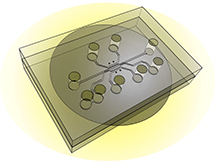
WEST LAFAYETTE, Ind. – Researchers have developed a chip capable of simulating a tumor's "microenvironment" and plan to use the new system to test the effectiveness of nanoparticles and drugs that target cancer.

The new system, called a tumor-microenvironment-on-chip (T-MOC) device, will allow researchers to study the complex environment surrounding tumors and the barriers that prevent the targeted delivery of therapeutic agents, said Bumsoo Han, a Purdue University associate professor of mechanical engineering.

Researchers are trying to perfect "targeted delivery" methods using various agents, including an assortment of tiny nanometer-size structures, to selectively attack tumor tissue.

One approach is to design nanoparticles small enough to pass through pores in blood vessels surrounding tumors but too large to pass though the pores of vessels in healthy tissue. The endothelial cells that make up healthy blood vessels are well organized and have small pores in the tight junctions between them. However, the endothelial cells in blood vessels around tumors are irregular and misshapen, with larger pores in the gaps between the cells.

"It was thought that if nanoparticles were designed to be the right size they could selectively move toward only the tumor," Han said.

However, one complication hindering the success of this strategy is that the pressure of "interstitial fluid" inside tumors is greater than that of surrounding healthy tissue. This greater pressure pushes out most drug-delivery and imaging agents, with only a small percentage of them reaching the target tumor.

Now, new research findings suggest that the T-MOC system is capable of simulating the complex environment around tumors and providing detailed information about how nanoparticles move through this environment. Such information could aid efforts to perfect targeted delivery methods.

The findings are detailed in a research paper appearing online this month and will be published in a print edition of the Journal of Controlled Release in November. The paper was authored by postdoctoral research associate Bongseop Kwak; graduate students Altug Ozcelikkale and Crystal S. Shin; Kinam Park, the Showalter Distinguished Professor of Biomedical Engineering and a professor of pharmaceutics; and Han.

The T-MOC chip is about 4.5 centimeters (1.8 inches) square and contains "microfluidic" channels where tumor cells and endothelial cells are cultured. The chip also incorporates extracellular matrix – a spongy, scaffold-like material made of collagen found between cells in living tissue.

The new chip offers an alternative to conventional experimental methods. Studies using cancer cells in petri plates exclude the complex microenvironment surrounding tumors, and research with animals does not show precisely how proposed therapies might work in people.

However, the T-MOC system has the potential to mimic cancer in humans, Han said.

The researchers tested the technology using human breast cancer and endothelial cells and studied how nanoparticles moved within the microenvironment.

Future work will expand to the study of anticancer drugs. Eventually, the devices might be used to grow tumor cells from patients to gauge the effectiveness of specific drugs in those people.

The work is based at the Birck Nanotechnology Center in Purdue's Discovery Park. It was supported by the National Science Foundation, National Institutes of Health, and a Collaboration in Translational Research Award from the Indiana Clinical and Translational Sciences Institute. Han's work also been supported by the B.S.F. Schaefer Award, the Discovery Park Fellowship, and an Incentive Grant Program from Purdue.

Writer: Emil Venere, 765-494-4709, venere@purdue.edu

Source: Bumsoo Han, 765-494-5626, bumsoo@purdue.edu


ABSTRACT

Simulation of Complex Transport of Nanoparticles around a Tumor Using Tumor- Microenvironment-on-Chip

Bongseop Kwak, Altug Ozcelikkale, Crystal S Shin, Kinam Park, and  Bumsoo Han 

Purdue University

Delivery of therapeutic agents selectively to tumor tissue, which is referred as "targeted delivery," is one of the most ardently pursued goals of cancer therapy. Recent advances in nanotechnology enable numerous types of nanoparticles (NPs) whose properties can be designed for targeted delivery to tumors. In spite of promising early results, the delivery and therapeutic efficacy of the majority of NPs are still quite limited. This is mainly attributed to the limitation of currently available tumor models to test these NPs and systematically study the effects of complex transport and pathophysiological barriers around the tumors. In this study, thus, we developed a new in vitro tumor model to recapitulate the tumor microenvironment determining the transport around tumors. This model, named tumor-microenvironment-on-chip (T-MOC), consists of 3-dimensional microfluidic channels where tumor cells and endothelial cells are cultured within extracellular matrix under perfusion of interstitial fluid. Using this T-MOC platform, the transport of NPs and its variation due to tumor microenvironmental parameters have been studied including cut-off pore size, interstitial fluid pressure, and tumor tissue microstructure. The results suggest that T-MOC is capable of simulating the complex transport around the tumor, and providing detailed information about NP transport behavior. This finding confirms that NPs should be designed considering their dynamic interactions with tumor microenvironment.


Snap 2014-10-03 at 09.06.43


11 Ways to Improve Your Memory and Remember More


Do you find yourself forgetting where you left your keys or blanking out information on important tests? Fortunately, there are plenty of things that you can do to help improve your memory.

Before your next big exam, be sure to check out some of these tried and tested techniques for improving memory. These research-proven strategies can effectively improve memory, enhance recall, and increase retention of information.

Students reading in library - Er Creatives Services Ltd/Iconica/Getty Images

Getty Images

1. Focus your attention on the materials you are studying.

Attention is one of the major components of memory. In order for information to move from short-term memory into long-term memory, you need to actively attend to this information. Try to study in a place free of distractions such as television, music, and other diversions.

2. Avoid cramming by establishing regular study sessions.

According to Bjork (2001), studying materials over a number of session's gives you the time you need to adequately process the information. Research has shown that students who study regularly remember the material far better than those who do all of their studying in one marathon session.

Woman placing post-its on a wall - Compassionate Eye Foundation/Noel Hendrickson/Digital Vision/Getty Images

Getty Images

3. Structure and organize the information you are studying.

Researchers have found that information is organized in memory in related clusters. You can take advantage of this by structuring and organizing the materials you are studying. Try grouping similar concepts and terms together, or make an outline of your notes and textbook readings to help group related concepts.

4. Utilize mnemonic devices to remember information.

Mnemonic devices are a technique often used by students to aid in recall. A mnemonic is simply a way to remember information. For example, you might associate a term you need to remember with a common item that you are very familiar with. The best mnemonics are those that utilize positive imagery, humor, or novelty. You might come up with a rhyme, song, or joke to help remember a specific segment of information.

5. Elaborate and rehearse the information you are studying.

In order to recall information, you need to encode what you are studying into long-term memory. One of the most effective encoding techniques is known as elaborative rehearsal. An example of this technique would be to read the definition of a key term, study the definition of that term and then read a more detailed description of what that term means. After repeating this process a few times, you'll probably notice that recalling the information is much easier.

6. Relate new information to things you already know.

When you are studying unfamiliar material, take the time to think about how this information relates to things that you already know. By establishing relationships between new ideas and previously existing memories, you can dramatically increase the likelihood of recalling the recently learned information.

blackboard with idea illustration - yang wenshuang/E+/Getty Images

yang wenshuang/E+/Getty Images

7. Visualize concepts to improve memory and recall.

Many people benefit greatly from visualizing the information they study. Pay attention to the photographs, charts, and other graphics in your textbooks. If you do not have visual cues to help, try creating your own. Draw charts or figures in the margins of your notes or use highlighters or pens in different colors to group related ideas in your written study materials.

8. Teach new concepts to another person.

Research suggests that reading materials out loud significantly improves memory of the material. Educators and psychologists have also discovered that having students actually teach new concepts to others enhances understanding and recall. You can use this approach in your own studies by teaching new concepts and information to a friend or study partner.

9. Pay extra attention to difficult information.

Have you ever noticed how it's sometimes easier to remember information at the beginning or end of a chapter? Researchers have found that the order of information can play a role in recall, which is known as the serial position effect.

While recalling middle information can be difficult, you can overcome this problem by spending extra time rehearsing this information. Another strategy is to try restructuring what you have learned so it will be easier to remember. When you come across an especially difficult concept, devote some extra time to memorizing the information.

10. Vary your study routine.

Another great way to increase your recall is to occasionally change your study routine. If you are accustomed to studying in one specific location, try moving to a different spot during your next study session. If you study in the evening, try spending a few minutes each morning reviewing the information you studied the previous night. By adding an element of novelty to your study sessions, you can increase the effectiveness of your efforts and significantly improve your long-term recall.

11. Get some sleep.

Researchers have long known that sleep is important for memory and learning. Some recent research has shown that taking a nap after you learn something new can actually help you learn faster and remember better.

One study actually found that sleeping after learning something new actually leads to physical changes in the brain. Sleep deprived mice experienced less dendtritic growth following a learning task than well-rested mice.

So the next time you are struggling to learn new information, consider getting a good night's sleep after you study.

10 Fascinating Facts About Human Memory

References:
Bjork, D. (2001, March). How to succeed in college: Learn how to learn. APS Observer, 14(3), 9.

Yang, G., Lai, C. S. W., Cichon, J., Ma, W., Li, W., & Gan, W. B. (2014). Sleep promotes branch-specific formation of dendritic spines after learning. Science, 344(6188), 1173. DOI: 10.1126/science.1249098

Snap 2014-10-03 at 08.51.47

Medical discovery first step on path to new painkillers


A major medical discovery by scientists at The University of Nottingham could lead to the development of an entirely new type of painkiller.

A drug resulting from the research, published in the journal Neurobiology of Disease, would offer new hope to sufferers of chronic pain conditions such as traumatic nerve injury, for which few effective painkillers are currently available.

The work, led by Dr Lucy Donaldson in the University's School of Life Sciences, in collaboration with David Bates, Professor of Oncology in the University'sCancer Biology Unit, focuses on a signal protein called vascular endothelial growth factor (VEGF).

VEGF controls the re-growth of blood vessels in tissues which have been damaged by injury. It is a widely targeted compound for cancer, eye disease and other illnesses in which abnormal blood vessel growth occurs.

Drugs are used to inhibit the VEGF in cancer, which can otherwise lead to the formation of new blood vessels that provide oxygen and nutrients to tumours.

Professor Bates and colleagues had previously discovered in 2002 that VEGF comes in two forms and acts like a switch -- one which turns on the growth of blood vessels and another that blocks growth.

Pain prevention

However, this latest research has shown for the first time that these two forms of VEGF not only act on blood vessels but also differently affect the sensory nerves that control pain.

The academics discovered that the VEGF that promotes blood vessel growth causes pain, while the other, which inhibits blood vessel growth, prevents pain.

The study has centred on understanding how these two types of VEGF work and why the body makes one form rather than the other.

The academics have been able to switch from the pain stimulating form to the pain inhibiting VEGF in animal models in the laboratory and are now investigating compounds to replicate this in humans. It is thought these compounds could form the basis for new drugs to be tested in humans in clinical trials.


Story Source:

The above story is based on materials provided by University of Nottingham. Note: Materials may be edited for content and length.


Journal Reference:

  1. R.P. Hulse, N. Beazley-Long, J. Hua, H. Kennedy, J. Prager, H. Bevan, Y. Qiu, E.S. Fernandes, M.V. Gammons, K. Ballmer-Hofer, A.C. Gittenberger de Groot, A.J. Churchill, S.J. Harper, S.D. Brain, D.O. Bates, L.F. Donaldson. Regulation of alternative VEGF-A mRNA splicing is a therapeutic target for analgesia. Neurobiology of Disease, 2014; 71: 245 DOI: 10.1016/j.nbd.2014.08.012


ZEB1: Oscar for leading role in fat storage


October 1, 2014

Ecole Polytechnique Fédérale de Lausanne

A research team has managed to decode the process of adipogenesis by identifying the precise proteins that play the leading roles in fat absorption. There are many actors involved in the process of adipogenesis, used by the body to store the fat that it absorbs from food. Up to now there had been some uncertainty as to how it was regulated. Yet, understanding this mechanism is of crucial importance to prevent the diseases related to fat accumulation in adipose tissue.


A team from EPFL, in collaboration with ETH Zurich, has managed to decode the process of adipogenesis by identifying the precise proteins that play the leading roles in fat absorption. Their findings have been published in the open-access scientific journal eLife.

And the winner is ... ZEB1! There are many actors involved in the process of adipogenesis, used by the body to store the fat that it absorbs from food. Up to now there had been some uncertainty as to how it was regulated. Yet, understanding this mechanism is of crucial importance to prevent the diseases related to fat accumulation in adipose tissue.

A research team led by Carine Gubelmann and Petra Schwalie at EPFL's Laboratory of Systems Biology and Genetics, directed by Bart Deplancke, joined forces with Christian Wolfrum's researchers from ETH Zurich, to decode the process of adipogenesis. They performed a large scale study of the action of no less than 734 "transcription factors," the proteins that specifically regulate gene expression.

To do this, the researchers "over-expressed" each factor to see which one had an impact on adipogenesis. Their observations, performed in vitro, allowed to identify 26 transcription factors involved in the differentiation of fat cells and to "rank" their importance in the process. The first place went to the ZEB1 factor, which left no doubt about being the undisputed champion. "We found that it clearly dominated the action of other important proteins known in adipogenesis," said Petra Schwalie.

Using this information, the researchers studied the in vivo effects of an intervention on the ZEB1 factor -- only to find that, once again, its role was crucial. Its level of expression accurately corresponds to the human body's fat storage potential as well as its tendency to obesity, calculated through the waist/hip ratio. Is the development of a miracle drug against weight gain in the horizon? "The problem is that this protein plays an important role in at least nine vital physiological processes," said the researcher. "If turned off completely, the body does not survive. Thus, a therapeutic molecule acting on ZEB1's expression should specifically target a precise type of tissue, which is a big challenge."

Nevertheless, these findings, published in the open-access journal eLife, contribute information that is essential to understanding a key physiological process.


Story Source:

The above story is based on materials provided by Ecole Polytechnique Fédérale de Lausanne. Note: Materials may be edited for content and length.


Journal Reference:

  1. Carine Gubelmann, Petra C Schwalie, Sunil K Raghav, Eva Röder, Tenagne Delessa, Elke Kiehlmann, Sebastian M Waszak, Andrea Corsinotti, Gilles Udin, Wiebke Holcombe, Gottfried Rudofsky, Didier Trono, Christian Wolfrum, Bart Deplancke. Identification of the transcription factor ZEB1 as a central component of the adipogenic gene regulatory network. eLife, 2014; 3 DOI: 10.7554/eLife.03346


Intervention helps decrease 'mean girl' behaviors, researchers find


October 1, 2014

University of Missouri-Columbia

Relational aggression, or 'mean girl' bullying, is a popular subject in news and entertainment media. This nonphysical form of aggression generally used among adolescent girls includes gossiping, rumor spreading, exclusion and rejection. As media coverage has illustrated, relational aggression can lead to tragic and sometimes fatal outcomes. Researchers have now developed and tested an intervention that effectively decreases relational aggression among teen girls.


Relational aggression, or "mean girl" bullying, is a popular subject in news and entertainment media. This nonphysical form of aggression generally used among adolescent girls includes gossiping, rumor spreading, exclusion and rejection. As media coverage has illustrated, relational aggression can lead to tragic and sometimes fatal outcomes. Despite these alarming concerns, little has been done to prevent and eliminate these negative behaviors. Now, University of Missouri researchers have developed and tested an intervention that effectively decreases relational aggression among teen girls.

"Good outcomes can happen when priorities are set by schools and families to prevent and eliminate relational aggression," said co-author Connie Brooks, an assistant professor in the Department of Health Psychology in the School of Health Professions and in the Thompson Center for Autism and Neurodevelopmental Disorders. "This study was an attempt to address this social problem in a meaningful way by testing an intervention to reduce relational aggression among teen girls."

The intervention, Growing Interpersonal Relationships through Learning and Systemic Supports (GIRLSS), developed by MU researchers, is a 10-week, group counseling, caregiver training and caregiver phone consultation intervention for relationally aggressive middle school girls and their families. Students, ranging in age from 12 to 15, participated in one 70-minute session per week that included interactive discussions, media-based examples, role-playing, journaling and weekly goal setting. At the end of the intervention, school counselors and teachers reported a decrease in relationally aggressive behaviors among the girls.

Caregivers of students participated in separate workshops and biweekly phone consultations during which they learned new communication, monitoring and supervision strategies in addition to appropriate disciplinary responses.

"It takes a village to raise relationally healthy children," said Melissa Maras, co-author and assistant professor in the Department of Educational, School and Counseling Psychology in the MU College of Education. "This study represents a first step in helping school personnel meet the intervention needs of a diverse group of relationally aggressive girls."

According to Brooks, relational aggression is a complicated issue with many variables, including schools, families and individuals. She says parents and teachers should be aware of relational aggression so they don't unknowingly contribute to the negative behaviors.

In order for the intervention to expand to more schools, MU researchers hope to improve and further evaluate GRILSS based on feedback from the participants.

The study's lead author, Joni Williams Splett, completed this research at MU while she was a doctoral student. Splett is now a postdoctoral research fellow at the University of South Carolina. The research, "GIRLSS: A Randomized, Plot Study of a Multisystemic, School-Based Intervention to Reduce Relational Aggression," was published in the Journal of Child and Family Studies.


Story Source:

The above story is based on materials provided by University of Missouri-Columbia. The original article was written by Diamond Dixon. Note: Materials may be edited for content and length.


Journal Reference:

  1. Joni D. Splett, Melissa A. Maras, Connie M. Brooks. GIRLSS: A Randomized, Pilot Study of a Multisystemic, School-Based Intervention to Reduce Relational Aggression. Journal of Child and Family Studies, 2014; DOI: 10.1007/s10826-014-0027-0


What happens in our brain when we unlock a door? Research sheds light on Aprixia condition


A test case from the study: What happens in test persons’ brains when they insert a key in a lock?

Researchers from Technische Universität München (TUM) and the Klinikum rechts der Isar hospital have analyzed the brain networks that control the use of tools or other utensils. Their chosen method of functional magnetic resonance imaging (fMRI) shows the areas of the brain that are activated when a person thinks, moves and performs actions.

The use of tools is an essential human skill. "Numerous studies are investigating the neural processes at play when we pick up a tool," says Prof. Joachim Hermsdörfer from TUM's Chair of Human Movement Science. "But many of these studies are restricted to test subjects observing an action, miming it, or simply visualizing it." The aim of this latest study was to analyze the basic neural principles of tool use under the most realistic conditions possible.

In the MRI study, the subjects received ten everyday objects, including a hammer, a bottle-opener, a key, a lighter and a scissors as well as some unfamiliar objects. Their task was to either use the objects or simply lift them up and place them down again, first with the left and then with the right hand. When they analyzed the data, the scientists looked at the planning phase and the actual execution phase separately. In this way, they were able to identify the brain networks that were activated while the subjects planned and used a tool and those that controlled execution.

Tool-specific network in the brain

One important finding was that the left hemisphere was activated when the subjects planned to use a tool -- regardless of the hand they held it in. In addition, the researchers recognized a distributed network responsible for both planning and execution. When working with unfamiliar objects, these regions of the brain were less activated.

The "tool network" consists of brain regions of the parietal and frontal lobes as well as regions in the posterior temporal lobe and another area in the lateral occipital lobe. What the researchers found, therefore, was a neural activation pattern that covered all elements of a complex action. This includes recognizing the objects as tools, understanding how they are used, and the motor action to actually use the tool.

"The study also allowed us to confirm that there are different streams of perception in the brain for different tasks," explains Hermsdörfer. The dorsal stream of perception conducts signals to the posterior parietal lobe and is generally responsible for controlling actions. "It can be divided into two function-specific processing pathways. The dorso-dorsal stream controls basic gripping and movement processes, regardless of whether the person is familiar with the object or not. A second ventro-dorsal stream becomes active when we use tools that are familiar to us.

Armed with knowledge about the localization of these "action modules," doctors could in future provide a more differentiated diagnosis of apraxia and develop improved therapeutic approaches.


Story Source:

The above story is based on materials provided by Technische Universitaet Muenchen. Note: Materials may be edited for content and length.


Journal Reference:

  1. Brandi M-L, Wohlschläger A, Sorg C, Hermsdörfer J. The Neural Correlates of Planning and Executing Actual Tool Use. The Journal of Neuroscience, 34(39):13183-13194 DOI: 101523/JNEUROSCI.0597-14.2014


Testosterone and Mortality


Vakkat Muraleedharan, T. Hugh Jones

Abstract and Introduction
Abstract

Epidemiological studies have found that men with low or low normal endogenous testosterone are at an increased risk of mortality than those with higher levels. Cardiovascular disease accounts for the greater proportion of deaths in those with low testosterone. Cancer and respiratory deaths in some of the studies are also significantly more prevalent. Disease-specific studies have identified that there are higher mortality rates in men with cardiovascular, respiratory and renal diseases, type 2 diabetes and cancer with low testosterone. Obesity, metabolic syndrome, type 2 diabetes, cardiovascular disease and inflammatory disorders are all associated with an increased prevalence of testosterone deficiency. Two major questions that arise from these findings are  is testosterone deficiency directly involved in the pathogenesis of these conditions and/or a contributory factor impairing the body's natural defences or is it merely a biomarker of ill health and the severity of underlying disease process? Does testosterone replacement therapy retard disease progression and ultimately enhance the clinical prognosis and survival? This review will discuss the current state of knowledge and discuss whether or not there are any answers to either of these questions. There is convincing evidence that low testosterone is a biomarker for disease severity and mortality. Testosterone deficiency is associated with adverse effects on certain cardiovascular risk factors that when combined could potentially promote atherosclerosis. The issue of whether or not testosterone replacement therapy improves outcomes is controversial. Two retrospective studies in men with diagnosed hypogonadism with or without type 2 diabetes have reported significantly improved survival.

Introduction

The prevalence of hypogonadism in male populations is not known with certainty, in part due to a lack of consensus on the threshold that should be used to define testosterone insufficiency. Hypogonadism is defined as a clinical syndrome which comprises both symptoms and biochemical evidence of testosterone deficiency.Clinical guidelines have provided some direction for cut-off levels of testosterone, but these also differ. Differences in the measurement of testosterone between assays and laboratories also lead to problems interpreting these thresholds. The European Male Aging Study (EMAS), involving 3369 men, defined late-onset hypogonadism as the presence of at least 3 sexual symptoms (loss of morning erections, low sexual desire and erectile dysfunction), total testosterone (TT) <320 ng/dl (11 nmol/l) and free testosterone (fT) <64 pg/ml (220 pmol/l). Using this definition, the overall prevalence of hypogonadism in the EMAS study population was 2·1% and increased with age from 0·1% for men 40 to 49 years of age to 5·1% for those 70–79 years. However, men already receiving testosterone replacement therapy (TRT) were excluded so this figure may represent an underestimate of the overall prevalence of hypogonadism. The Boston Area Community Health (BACH) study reported a prevalence of symptomatic hypogonadism of 4·2% in men aged 39–50 years and 8·4% between 50 and 79 years.

Testosterone deficiency is associated with reduced insulin sensitivity, central obesity, dyslipidaemia, hypertension, osteoporosis, muscle weakness and frailty, cognitive impairment, lethargy and fatigue and sexual dysfunction. Low testosterone is also an independent risk factor for the future development of obesity, the metabolic syndrome and type 2 diabetes. Each of these conditions has a high prevalence in Klinefelter's syndrome.Acute and/or chronic illness (including cardiovascular disease) can lead to suppression of the hypothalamic–pituitary–testicular axis. This raises the question as to whether testosterone deficiency is merely a biomarker for ill health or is bidirectional having an adverse effect on the underlying disease progression.

Snap 2014-10-03 at 04.22.07

Decreased ability to identify odors can predict death: Olfactory dysfunction is a harbinger of mortality


Jayant Pinto, M.D., is shown with one of the Sniffin' Sticks used to test a patient's ability to identify scents for his research on olfactory dysfunction and aging.

For older adults, being unable to identify scents is a strong predictor of death within five years, according to a study published October 1, 2014, in the journal PLOS ONE. Thirty-nine percent of study subjects who failed a simple smelling test died during that period, compared to 19 percent of those with moderate smell loss and just 10 percent of those with a healthy sense of smell.

The hazards of smell loss were "strikingly robust," the researchers note, above and beyond most chronic diseases. Olfactory dysfunction was better at predicting mortality than a diagnosis of heart failure, cancer or lung disease. Only severe liver damage was a more powerful predictor of death. For those already at high risk, lacking a sense of smell more than doubled the probability of death.

"We think loss of the sense of smell is like the canary in the coal mine," said the study's lead author Jayant M. Pinto, MD, an associate professor of surgery at the University of Chicago who specializes in the genetics and treatment of olfactory and sinus disease. "It doesn't directly cause death, but it's a harbinger, an early warning that something has gone badly wrong, that damage has been done. Our findings could provide a useful clinical test, a quick and inexpensive way to identify patients most at risk."

The study was part of the National Social Life, Health and Aging Project (NSHAP), the first in-home study of social relationships and health in a large, nationally representative sample of men and women ages 57 to 85.

In the first wave of NSHAP, conducted in 2005-06, professional survey teams from the National Opinion Research Center at the University of Chicago used a well-validated test -- adapted by Martha K. McClintock, PhD, the study's senior author -- for this field survey of 3,005 participants. It measured their ability to identify five distinct common odors.

The modified smell tests used "Sniffin'Sticks," odor-dispensing devices that resemble a felt-tip pen but are loaded with aromas rather than ink. Subjects were asked to identify each smell, one at a time, from a set of four choices. The five odors, in order of increasing difficulty, were peppermint, fish, orange, rose and leather.

Measuring smell with this test, they learned that: • Almost 78 percent of those tested were classified as "normosmic," having normal smelling; 45.5 percent correctly identified five out of five odors and 29 percent identified four out of five. • Almost 20 percent were considered "hyposmic." They got two or three out of five correct. • The remaining 3.5 percent were labelled "anosmic." They could identify just one of the five scents (2.4%), or none (1.1%).

The interviewers also assessed participants' age, physical and mental health, social and financial resources, education, and alcohol or substance abuse through structured interviews, testing and questionnaires. As expected, performance on the scent test declined steadily with age; 64 percent of 57-year-olds correctly identified all five smells. That fell to 25 percent of 85-year-olds.

In the second wave, during 2010-11, the survey team carefully confirmed which participants were still alive. During that five-year gap, 430 (12.5%) of the original 3005 study subjects had died; 2,565 were still alive.

When the researchers adjusted for demographic variables such as age, gender, socioeconomic status (as measured by education or assets), overall health, and race, those with greater smell loss when first tested were substantially more likely to have died five years later. Even mild smell loss was associated with greater risk.

"This evolutionarily ancient special sense may signal a key mechanism that affects human longevity," noted McClintock, the David Lee Shillinglaw Distinguished Service Professor of Psychology, who has studied olfactory and pheromonal communication throughout her career.

Age-related smell loss can have a substantial impact on lifestyle and wellbeing, according to Pinto, a member of the university's otolaryngology-head and neck surgery team. "Smells impact how foods taste. Many people with smell deficits lose the joy of eating. They make poor food choices, get less nutrition. They can't tell when foods have spoiled or detect odors that signal danger, like a gas leak or smoke. They may not notice lapses in personal hygiene."

"Of all human senses," Pinto said, "smell is the most undervalued and underappreciated -- until it's gone."

Precisely how smell loss contributes to mortality is unclear. "Obviously, people don't die just because their olfactory system is damaged," McClintock said.

The research team, which includes biopsychologists, physicians, sociologists and statisticians, is considering several hypotheses. The olfactory nerve, the only cranial nerve directly exposed to the environment, may serve as a conduit, they suggest, exposing the central nervous system to pollution, airborne toxins, pathogens or particulate matter.

McClintock noted that the olfactory system also has stem cells which self-regenerate, so "a decrease in the ability to smell may signal a decrease in the body's ability to rebuild key components that are declining with age and lead to all-cause mortality."


Story Source:

The above story is based on materials provided by University of Chicago Medical Center. Note: Materials may be edited for content and length.


Journal Reference:

  1. Jayant M. Pinto, Kristen E. Wroblewski, David W. Kern, L. Philip Schumm, Martha K. McClintock. Olfactory Dysfunction Predicts 5-Year Mortality in Older Adults. PLoS ONE, 2014; 9 (10): e107541 DOI: 10.1371/journal.pone.0107541

quinta-feira, 2 de outubro de 2014

Hospitals with aggressive treatment styles had lower failure-to-rescue rates


Hospitals with aggressive treatment styles, also known as high hospital care intensity (HCI), had lower rates of patients dying from a major complication (failure to rescue) but longer hospitalizations, writes Kyle H. Sheetz, M.D., M.S., of the Center for Healthcare Outcomes and Policy, Ann Arbor, Mich., and colleagues.

The intensity of medical care varies around the country. Intensity is synonymous with an aggressive treatment style and it has been implicated in rising health care costs, especially during the end-of-life period. Inpatient surgery also is a cost burden. The authors analyzed national Medicare data to examine increased HCI and outcomes after major surgery.

The data identified 706,520 patients at 2,544 hospitals who underwent 1 of 7 major cardiovascular, orthopedic or general surgical operations. The Dartmouth Atlas provides metrics of health care intensity for Medicare beneficiaries in their last two years of life.

Patients who had surgery at high HCI vs. low HCI hospitals had increased major complication rates. However, patients who had surgery at high HCI hospitals were 5 percent less likely to die of a major complication (failure to rescue) than at a low HCI facility. However, patients treated at high-HCI hospitals had longer hospitalizations, more inpatient deaths and lower hospice use during the final two years of life.

"Hospital care intensity has an independent influence on established quality metrics for surgical care, although its ability to improve quality through direct augmentation appears limited."


Story Source:

The above story is based on materials provided by The JAMA Network Journals. Note: Materials may be edited for content and length.


Journal Reference:

  1. Kyle H. Sheetz, Justin B. Dimick, Amir A. Ghaferi. The Association Between Hospital Care Intensity and Surgical Outcomes in Medicare Patients. JAMA Surgery, 2014; DOI: 10.1001/jamasurg.2014.552


Ethical filament: Can fair trade plastic save people and the planet?


October 1, 2014

Michigan Technological University

It’s old news that open-source 3-D printing is cheaper than conventional manufacturing, not to mention greener and incredibly useful for making everything from lab equipment to chess pieces. Now it’s time add another star to the 3-D printing constellation. It may help lift some of the world’s most destitute people from poverty while cleaning up a major blight on the earth and its oceans: plastic trash.


Waste pickers in the developing world barely eke out a living scouring landfills for trash to sell. They usually don't bother with plastic, however, because it has almost no value. But thanks to an emerging market, waste plastic may soon be a more alluring target; it can serve as a feedstock for 3D printer filament.

It's old news that open-source 3D printing is cheaper than conventional manufacturing, not to mention greener and incredibly useful for making everything from lab equipment to chess pieces. Now it's time add another star to the 3D printing constellation. It may help lift some of the world's most destitute people from poverty while cleaning up a major blight on Earth and its oceans: plastic trash.

At the center of the movement is a new set of standards inspired by fair trade products ranging from diamonds to chocolate.

"We are creating a new class of material called ethical 3D printing filament, like fair trade coffee," said Joshua Pearce of Michigan Technological University. "It's a way to help the poorest of the poor up the economic ladder."

Waste pickers in the developing world barely eke out a living scouring landfills for trash to sell. They usually don't bother with plastic, however, because it has almost no value.

But thanks to an emerging market, waste plastic may soon be a more alluring target; it can serve as a feedstock for 3D printer filament. What makes it especially attractive is the cost of conventional filament made from virgin plastic: about $35 to $50 a kilogram.

Pearce's group has already developed a recyclebot that turns milk jugs and other plastic trash into filament for pennies on the dollar. And next-generation commercial-grade recyclebots are creating opportunities for businesses. But for waste pickers to truly benefit, Pearce says, the recycled filament industry will need to adhere to certain fair labor and environmental practices.

Here's how it would work. Under fair trade standards for ethical 3D printing filament, manufacturers would guarantee that their enterprise meets certain conditions, which Pearce and his colleagues published in the Journal of Sustainable Development. They include the following:

• minimum pricing to assure that workers receive fair wages • a fair-trade premium added to the filament's price that supports development projects • a regular work week of 48 hours and a ban on child labor and forced labor • environmentally conscious manufacturing practices • safeguards for workers' health and safety • the right to unionize • a ban on discrimination and sexual and physical harassment

Businesses that make or use ethical filament could charge a premium for their product, though it would still cost less than conventional 3D filament. "Filament prices are so high that places like Protoprint and Plastic Bank could sell their filament at half that price and still give pickers a living wage while doing good for the environment," said Pearce.

Protoprint, a 3D printing firm in Pune, India, is collaborating with techfortrade. The London-based nonprofit harnesses technology to eliminate poverty through economic development. After working with Pearce, techfortrade plans to fully implement his fair trade standards for filament in the Ethical Filament Foundation.

"Joshua's knowledge and his passion, plus his open, collaborative approach, persuaded us that his ethical filament standards would do for 3D printer filament what Fair Trade did for coffee," said William Hoyle, CEO of techfortrade. "We're now close to making this idea a reality; Protoprint is planning to make the first ethical filament offering available in January, and our other ventures in Latin America will follow."

The paper on fair trade filament, "Evaluation of Potential Fair Trade Standards for an Ethical 3D Printing Filament," is coauthored by Pearce, Savanna R. Feeley of Michigan State University and Bas Wijnen, a PhD candidate in materials science and engineering at Michigan Tech and published this month in the Journal of Sustainable Development.


Story Source:

The above story is based on materials provided by Michigan Technological University. The original article was written by Marcia Goodrich. Note: Materials may be edited for content and length.


Journal Reference:

  1. S. R. Feeley, Bas Wijnen, Joshua M. Pearce. Evaluation of Potential Fair Trade Standards for an Ethical 3-D Printing Filament. Journal of Sustainable Development, 2014; 7 (5) DOI: 10.5539/jsd.v7n5p1