Mostrando postagens com marcador Virtual reality. Mostrar todas as postagens

segunda-feira, 2 de março de 2015

Samsung and Oculus have a new Gear VR for the Galaxy S6 and Galaxy S6 edge


The new Samsung Gear VR, which uses a GS6 or GS6 edge instead of a Note 4

The new Samsung Gear VR, which uses a GS6 or GS6 edge instead of a Note 4

Image Gallery (2 images)

Samsung's Gear VR still hasn't launched its full store with paid apps (it's coming to the US later this month), but the virtual reality headset is now compatible with two more phones. While the original Gear VR Innovator Edition was only compatible with the Galaxy Note 4, the new version adds support for the new Galaxy S6 and Galaxy S6 edge (along with a few other bells and whistles).

The new Gear VR has the same basic design as the original Note 4 version, but it is 15 percent smaller. It also gets a few more upgrades thanks to the new pair of phones: benefiting from their higher pixel density and faster performance. It also has a 96-degree field of view.

The biggest update, though, is that the new Gear VR will have better battery life. Now when you plug either the GS6 or GS6 edge into the headset's microUSB port, it will draw power from the headset. So when you sit down for a lengthy VR session, you don't have to worry (as much) about draining your phone's battery for the rest of the day.

The original Gear VR (pictured) now has an improved sequel that's compatible with the new ...

The biggest problem with the original Gear VR (above) was its tendency to overheat, so we'll have to wait and see if the new version does any better. Its Exynos processor, in place of the Note's Snapdragon, could potentially help out in this department.

Not many more details on the new headset at the moment, but we'll keep you posted as pricing and release info trickles in.

For more on the Note 4 version, you can hit up our full Gear VR review.


sábado, 21 de fevereiro de 2015

Review: Zeiss VR One virtual reality headset (for iPhone 6)


Gizmag reviews the Zeiss VR One, a virtual reality headset with a slide-out tray for the i...

Gizmag reviews the Zeiss VR One, a virtual reality headset with a slide-out tray for the iPhone 6 (Photo: Will Shanklin/Gizmag.com)

Image Gallery (10 images)

Any company that's been making lenses for 169 years is probably good at adapting. So perhaps it makes sense that German company Carl Zeiss AG (better known today simply as "Zeiss") didn't waste time jumping into the new frontier of virtual reality. Gizmag has been playing with the company's VR One headset for the iPhone 6 – read on for our review.

Considering the company's pedigree, we never doubted that the Zeiss VR One would have a great pair of lenses (it does). But the entire headset is solidly built, looking and feeling more than a little like the Samsung Gear VR. Pick up the VR One and you'll see that this is no cheaply-built Google Cardboard kit: solid-feeling plastic, comfortable foam padding and durable adjustable bands make it clear that this is consumer-grade gear.

While the Gear VR requires you to plug a Galaxy Note 4 into a microUSB port, and Google Cardboard headsets have adjustable arms to hold a variety of phones in place, the Zeiss VR One uses a slide-out tray. It's a nice touch that makes it easier to get your phone in and out: just put your phone into the tray, then push the tray into the front of the headset (from either side) and wait for it to snap into place. Zeiss says that the tray also allows for ideal positioning of each handset (more precise, at least, than those retractable arms on Cardboard headsets).

This also means that, as long as Zeiss keeps making new trays for new phones, the headset itself won't become obsolete. The company has support for more phones in the pipeline, though this headset won't work with any phones with displays larger than 5.2-in (more on that in a minute).

You'll need to start your VR app before sliding the iPhone in (like we didn't do here) (Ph...

Right now the list of compatible phones only includes two models: the iPhone 6 (only the 4.7-in model, not the iPhone 6 Plus) and the Samsung Galaxy S5. We tested the VR One with the iPhone.

Turning the most popular phone on the planet into a virtual reality headset could have its perks, but in this case it carries some drawbacks too.

For starters, there isn't much VR content in the App Store right now. Zeiss offers a media launcher app that suggests a group of third-party apps to download (most are quick and basic demos), as well as two more apps straight from Zeiss. Those include a cinema app (it lets you watch videos stored on your iPhone while sitting in a virtual movie theater ... similar to several apps available for Oculus Rift developers) and an augmented reality app that combines the iPhone's camera with a bundled cardboard cube to make animated characters appear to be walking in front of you.

How can you use the iPhone's camera, you ask? Well, the phone's tray has a cut-out for it to peek through, and the covering on the front of the headset – which looks mostly opaque in pictures – is transparent enough for the camera to view your environment. This element works well, and the augmented views of your real environment don't look cloudy or distorted.

The lenses – and the headset as a whole – have a high build quality (Photo: Will Shanklin/...

The VR One is also compatible with Google Cardboard VR content, as the VR fundamentals (two side-by-side horizontal images/videos displayed on your phone's screen) are the same here as on any other headset. That still doesn't mean it has a great selection on iOS, but it does mean that the Zeiss VR One unofficially doubles as a consumer-grade Google Cardboard kit, and should continue to play nicely with all Cardboard content moving forward (in addition to new content supported by Zeiss or any other VR app maker).

The other big compromise with an iPhone 6-powered VR headset is that 4.7 inches is a little small for a virtual reality screen. The field of view isn't great. The product page says it's around 100 degrees, but we consistently saw two indentations on the right and left sides of your view that take away from the illusion. We mocked up the image below to give you an idea of what this looks like (note the little black dead zones on either side):

Review: Zeiss VR One virtual reality headset (for iPhone 6)

If you're new to virtual reality, then maybe the small screen's limitations won't bother you much. But if you go from the Gear VR or Oculus Rift DK2 to the Zeiss VR One, you're probably going to be let down in this respect. It simply doesn't match their "magical" immersive quality.

We weren't able to test the VR One with a Galaxy S5, but its 5.1-in screen should fare better in this respect. That's still, however, a far cry from the 5.7-in displays found in the Gear VR and Oculus Rift DK2 ... and, again, even when new trays come into play, the Zeiss headset isn't designed to support phones with screens larger than 5.2 inches.

Unlike the Gear VR, the Zeiss headset doesn't have any built-in navigation controls. Of the App Store's limited VR content, many of them are either non-interactive demos or videos, or they use a head-tracking-based cursor for navigation. But for present and future apps that need "real" controls, you'll need to use a compatible Bluetooth gamepad.

Zeiss hasn't cracked the case for lens fogging. Like every other virtual reality headset we've used, the VR One's lenses fog up after a few minutes of use, so you'll want to look into something like Clarity Defog It wipes or defogging sprays designed for scuba gear to deal with that (and for your eyes' sake, don't even think about using defogging sprays or wipes designed for car windshields).

the Zeiss VR One retails for US$99 (Photo: Will Shanklin/Gizmag.com)

Right now the Zeiss VR One with iPhone tray is a well-built headset that's good for giving iPhone owners a little glimpse into the world of VR. Neither its content nor overall experience come close to being on par with the Oculus Rift or Gear VR, but the good news is once we start seeing more Google Cardboard apps (and other universal VR content) popping up in the App Store, the VR One will only get better. The iPhone 6's screen will never be as ideal as something bigger and sharper like the Note 4, and you'll still miss out on native controls, but the VR One is probably about as good as any iPhone 6-based virtual reality headset can be (right now). For whatever that's worth.

The Zeiss VR One retails for US$99, including one phone tray of your choice. An additional tray will cost you $10, and the company is planning on releasing trays for other handsets, as long as their screen sizes fall between 4.7 and 5.2 inches.

Product page: Zeiss (on Tumblr)


sábado, 18 de outubro de 2014

Zeiss VR One headset delivers smartphone-powered virtual reality for $99


Zeiss’ VR One headset aims to bring virtual reality to the masses

Zeiss’ VR One headset aims to bring virtual reality to the masses

Image Gallery (5 images)

Zeiss’ VR One is a Samsung Gear VR-like headset that takes advantage of your smartphone’s processing power and display to provide a wireless, self-contained virtual reality experience. Unlike Samsung’s product, the German company’s headset is set to be compatible with a number of smartphones, including the iPhone 6.

Though upcoming headsets like Sony’s Project Morpheus and Samsung’s Gear VR require specific hardware to function (namely the PlayStation 4 console and Galaxy Note 4 smartphone respectively), the VR One is designed to be compatible with smartphones of varying sizes, from 4.7 to 5.2 inches.

This doesn’t mean that you can slot just any old device into the headset, with the company instead producing different trays designed for certain models – something that it claims leads to better display positioning and the best possible image quality. At present, the VR One can be pre-ordered with a choice of iPhone 6 and Samsung Galaxy S5 trays. The company has promised to increase compatibility in the future, and is currently asking customers which devices they would most like to see supported.

The headset is powered by Android or iOS smartphones

The headset makes use of the open source Unity3D SDK which, like the headset itself, is compatible with both iOS and Android. Zeiss is actively encouraging developers to get on board with the hardware and create applications that work with its new headset.

As the connected smartphone provides the processing, audio, sensors and display for the headset, there’s not a huge amount to report when it comes to specs. The VR One packs a pair of Zeiss precision lenses, providing an approximate 100 degree field of view, and there’s a dark transparent shield designed to conceal the smartphone, cutting out light while still allowing the camera to function.

Zeiss is encouraging customers to vote on which devices they'd like to see supported

The company will release the VR One Media App alongside the headset, allowing users to view the images and videos saved on their smartphone, as well as both 2D and 3D YouTube clips. Users will be able to move back and forth through content by tapping the right and left sides of the headset. The software will also integrate with Google Maps Streetview, allowing users to look to view 360 degree panoramas and "walk forward" by tapping the front of the headset.

Though the VR One’s affordable and compatible nature makes it an appealing concept, we’ll have to wait and see if it receives enough substantial developer support to make it a big player in virtual reality tech, and how said developers cope with the task of catering for multiple smartphones.

Zeiss’ VR One is available for pre-order now for US$99, and is expected to start shipping by the end of the year.

Source: Zeiss


sexta-feira, 2 de maio de 2014

Oculus Rift


Oculus Rift’s Virtual Reality Headset Could Kick-Start a Revolution Beyond Video Games - MIT Technology Review 2014-05-02 05-08-11

Thirty years after virtual-reality goggles and immersive virtual worlds made their debut, the technology finally seems poised for widespread use.

Breakthrough

High-quality virtual-reality hardware that is cheap enough for the consumer market.

Why It Matters

Visually immersive interfaces will lead to new forms of entertainment and communications.

Key Players
  • Oculus Vry
  • Vuzix
  • Nvidia

Palmer Luckey had not been born when The Lawnmower Man was released in 1992, but the movie, with its vision of computer-generated sensory immersion, helped seed his interest in virtual reality as soon as he saw it. He dreamed of playing video games in simulated 3-D worlds—a dream that led him to amass one of the world’s largest collections of head-mounted displays and, eventually, inspired him to attempt to make his own. With no formal engineering training, Luckey designed his first working prototype in his garage at the age of 16.

Today, the 21-year-old is the founder of Oculus VR, a company that is on the verge of releasing the Rift, an affordable virtual-reality headset for playing ultra-immersive video games. Facebook bought the company for $2 billion this spring.

Oculus VR had already attracted more than $91 million in venture funding, a near-fanatical following, and team members like the game programmer John Carmack, who led the development of influential video games such as Doom, Quake, and Rage. But the Facebook deal is a sign of faith that virtual reality is now sharp enough and cheap enough to have huge potential for more than video games. The idea of merging immersive virtual reality with social communications is intriguing. It could also be a compelling tool for teleconferencing, online shopping, or more passive forms of entertainment. Some filmmakers are, in fact, already experimenting with movies designed just for the Rift.
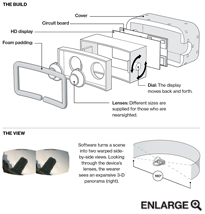
Virtual-reality headsets could be found in some arcades when The Lawnmower Man was in the theaters. But the technology wasn’t good enough to catch on widely. This time around, Luckey realized that cheap smartphone components could be combined to stunning effect, rendering bright, crisp worlds much more compelling than the blocky graphics often seen through earlier virtual-­reality headsets.

When you use the Rift, you feel as though you’re actually inside these worlds. The technology follows the movement of your head in real time; lean in to take a better look at a virtual flower or look to the skies to gaze at a virtual cloud, and your mind is drawn into the simulation. You can almost believe you are fully there.

The vast audience for home video games appears hungry for the device. In August 2012, Oculus VR set out to raise $250,000 on Kickstarter and met the goal in a matter of hours. It surpassed $1 million within two days.

Luckey started shipping a version of the Rift for software developers in March 2013 for just $300, and in the past year, the hardware has improved significantly. The retail version, which is expected to launch later this year or early next, will offer resolution higher than 1,920 by 1,080 pixels per eye. Such stunningly sharp definition has only recently become possible at such a low price.

While video games are where this improved virtual-reality technology is likely to take off first, it could also have applications in telepresence, architecture, computer-aided design, emergency response training, and phobia therapy.

Indeed, in some niches, older VR technology has been in use for years. Some surgeons routinely practice operations using VR simulations, while some industrial designers use the technology to view their designs as if they had already been constructed. But 30 years ago, when Jaron Lanier founded VPL Research, the first company to sell virtual-reality goggles, such products were too expensive for the consumer mainstream (a single head-mounted display cost as much as $100,000).

There were other reasons, too, that earlier versions of virtual reality failed commercially. Players of Nintendo’s Virtual Boy, a low-end VR game system launched in the mid-1990s, complained of nausea after extended play. For other players, the keen sense of wonder and presence they felt inside a virtual world soon dissipated. “Your first time playing a game in a virtual world is incredible,” Lanier says, “but the 20th time is wearying.”

Things may be different now. Though some testers have experienced nausea using the Oculus Rift, the company says the latest version has almost eliminated this problem. And today’s virtual environments offer so much more fidelity that they could remain captivating for much longer. Artists have been able to create a more stimulating range of worlds, from the rigorously realistic to the more abstract and painterly.

Already Oculus has inspired imitators. Acknowledging the Rift as an inspiration, Sony has demonstrated a VR headset that players will be able to use with the PlayStation 4. Sony is also working with NASA to create a virtual-reality simulation of Mars using images pulled from the Mars Rover. A more mundane but potentially useful application that Sony is exploring would let travelers visit virtual hotel rooms before booking the real thing. Assuming they ever want to take the headsets off.

Simon Parkin

Technology Review - La rivista del MIT per l'innovazione - Mozilla Firefox 2014-02-27 12.32.02