quinta-feira, 6 de novembro de 2014

14 cosas que te sorprenderán cuando visites Japón


Japón es diferente, muy diferente. Si viajas a Japón estarás la mayoría del tiempo con la boca abierta. El brutal antagonismo entre tecnología y cultura milenaria es una de las cosas que más te llamarán la atención. Pero además hay cientos de pequeños detalles que te sorprenderán a diario.

Hay que tener en cuenta que durante la era Edo, Japón estuvo cerrado al mundo durante más de 200 años. Cualquier extranjero que llegara por mar era inmediatamente sentenciado a muerte o expulsado. Durante este tiempo los japoneses desarrollaron un gran amor por su país y surgieron muchas tradiciones y artes propias. No fue hasta 1868 que Japón abrió sus fronteras al mundo entrando de lleno en la era Meiji. Por entonces, Europa estaba en plena era industrial mientras que en Japón apenas acababan de salir de una época feudal en la que el Samurai era la casta dominante usando caballos, arcos y katanas. Tan solo 72 años después, en la Segunda Guerra Mundial, Japón contaba con aviones, barcos y última tecnología. ¿Cómo es posible en 72 años pasar de los arcos a los aviones?

Los japoneses, influidos por su cultura, piensan y actúan de manera diferente a los europeos.

He intentado reunir y documentar con fotos algunos de esos pequeños detalles que me sorprendieron al llegar a Japón y que me parecen realmente curiosos. También examino junto con ellos, la forma de pensar que tienen los japoneses.

Quizás os animen a pasaros por aquí :)

1. Aseos y lavabos

Los aseos originales japoneses eran poco más que una zanja o cubo en el patio en el que hacer tus necesidades. Y aún puedes ver en algunos sitios el aseo tradicional japonés que se parece a los que puedes encontrar por ejemplo en algunos lugares de Marruecos. Es decir, un simple agujero en el suelo.

Pero los japoneses son famosos por su “copia y mejora”. Así que en muchos sitios encontrarás unos aseos que más parecen una nave espacial, llenos de botones y artilugios. Son toda una experiencia que no debes perderte:

  • El borde donde te sientas está calentito.
  • Hay un botón que al activarlo surge un chorro de agua caliente que te limpia el trasero. En los más avanzados puedes seleccionar entre varios tipos de chorros.
  • También hay un chorro, que surge de la parte frontal, para las chicas. Cuidado si eres chico con equivocarte o puedes acabar con todo tu “badajo” mojado.
  • Al terminar, hay otro botón de “secado”, que lanza aire caliente.
  • Algunos, cuando te levantas, lo detectan y tiran ellos solitos de la cadena.

Lo malo es que en ocasiones no está claro qué botón hace cada cosa. Así que tengo un par de anécdotas graciosas que sufrimos en estos aseos :) Por ejemplo, la primera vez que los usé no encontraba el botón de parada del chorro. Así que pensé que se pararía al levantarme… ¡menuda charquera de agua dejé en el aseo!

Este de la foto, dentro de los de gama alta, es uno de los “sencillos”. He visto otros con bastante más opciones.

IMG_20140311_134007

Por otro lado, hay otros aseos más cutres que yo llamo “combos”. Son aseo y lavabo todo en uno. Cuando tiras de la cadena, lo quieras o no, sale agua del lavabo, el tiempo justo para que te laves las manos.

Por cierto, una de las cosas más cómodas de Tokyo es que hay muchísimos aseos públicos. Y comparados con los que puedes encontrar en Europa, realmente limpios. Eso sí, en estos no encontrarás el aseo futurista con los chorritos :)

2. Bebidas raras en dispensadores callejeros. ¡Latas calientes!

Cada 200 metros aproximadamente puedes encontrar una máquina de bebidas en la calle con bebidas que no habrás visto en tu vida:

  • Con suerte, tendrán algunas cosas normales, como cocacolas o batidos.
  • Pero también he visto máquinas en las que puedes comprar ramen caliente (sopa), té verde, bebidas derivadas de las habichuelas, bebidas de soja, etc.
  • Algo que me encanta es que hay tanto latas frías como calientes. Es decir, compras por ejemplo un café y viene en una lata caliente.
  • También puedes encontrar bebidas curiosas como fanta con sabor a uva, bebidas energéticas con super héroes tipo Power Ranger, etc.

_DSC0645

Si vienes de visita, ¡experimenta! Nosotros jugábamos a comprar la bebida más rara posible al contrario :)

3. Mascarillas por la calle

Aproximadamente una de cada seis personas que veo paseando por Tokyo lleva mascarilla. Lo normal cuando lo ves por primera vez es que te asustes pensando que es por culpa de la contaminación.

Pero en realidad los motivos por los que llevan mascarillas son estos:

  • Algunos las llevan para evitar resfriarse. Hay que tener en cuenta que Tokyo tiene cerca de 40 millones de habitantes. Eso es casi como toda la población de España metida en una única ciudad. Así que aquí estás prácticamente todo el tiempo muy cerca de otras personas, especialmente en el metro, en tiendas, restaurantes, etc.
  • También las llevan para evitar resfriar a los demás. Si ellos mismos han pillado un catarro, se ponen mascarilla para no fastidiar al resto. Aquí está bastante mal visto sonarse los mocos en público, aunque curiosamente no es una falta de educación hacer ruido para sorberse los mocos :)
  • Durante la primavera, con las sakuras (cerezos) en flor, muchos las llevan para mitigar su alergia.
  • Durante el invierno, la mascarilla hace que lleves más calentita la cara. Yo lo he probado y la verdad es que es agradable.
  • Muchas chicas, si bajan un momento a la tienda de las esquina a comprar algo, se ponen la mascarilla simplemente para que no las vean sin maquillar.
  • Y por supuesto también mitigan la contaminación. Aunque Tokyo tiene niveles iguales o inferiores a los de por ejemplo Madrid. Y si alguien llevara mascarilla por Madrid lo tacharían de loco :)

_DSC0415-2

_DSC0732

4. Les gusta usar muñequitos para explicar todo

La forma de pensar japonesa es muy visual. Esto tiene mucho que ver con su escritura basada en kanjis. Es decir, a base de símbolos que tienen uno o varios significados.

Dado que les gusta lo visual, casi cualquier cartelito que veas por la calle tendrá un monigote que escenifica el texto. Además, como en general les gustan las cosas kawaii (monas o bonitas) y supongo que también por la influencia de su religión sintoísta (en la que hay cientos de dioses de origen animal), en vez de poner un monigote simple, lo normal es que veas animalitos como perritos, pandas, personajillos inventados… tanto en sus anuncios como en sus carteles de advertencia en el metro o en casi cualquier sitio a donde mires.

_DSC0429

_DSC0467

Por otro lado, esta forma de leer tan visual, tiene sus ventajas para los gaijin (extranjero, o más bien “guiri”). Por ejemplo, en casi todos los restaurantes hay fotos con los platos que puedes pedir. Lo cual ayuda mucho cuando no sabes japonés.

5. Japón es muy seguro

Japón es el único sitio del mundo que conozco en el que si me dejo la cartera y la cámara de fotos sobre la mesa de un restaurante, junto con mi mochila y todas mis cosas y voy al aseo, tendré la seguridad de que al volver todo seguirá allí. También es el único sitio que conozco en el que las ciudades no tienen prácticamente barrios chungos o zonas peligrosas a las que no debe ir un turista.

Japón es increíblemente seguro. Y es una de las cosas que más se agradecen cuando vienes de visita. Algunas anécdotas al respecto:

  • Si te encuentras una cartera en la calle y preguntas a alguien qué hacer, no te extrañe si te dicen que la dejes allí mismo. Nadie va a llevársela y su dueño puede que la vuelva a buscar. Si alguien que pase por allí otra vez al día siguiente la vuelve a ver, posiblemente la cogerá y la llevará a un koban (puesto de policía).
  • Una vez perdí una mochila en la que iba mi cámara de fotos y un montón de cosas. La encontré al día siguiente en la oficina de objetos perdidos. Intacta.
  • Mucha gente va en bici en Tokyo. Pocas de ellas llevan candado. Cualquiera podría pasar y robarlas. Pero nadie lo hace.
  • Algunos supermercados tienen varias entradas que dan directamente a los pasillos de productos. Sería sencillísimo no pasar por caja. Pero todo el mundo cumple.
  • En los pueblos, puedes encontrar tiendas en las que los productos están expuestos y no hay vendedor. Simplemente coges lo que necesites y dejas el dinero en una caja. ¿Imaginas algo así en España?

    Algunas pistas de por qué esto es así:

    • El índice de paro es muy bajo (3,7%) por lo que casi todo el mundo vive más o menos bien (aunque una gran parte de la población trabaja muchas horas diarias).
    • La mentalidad japonesa es muy reacia a incumplir las reglas. El robo es algo que ni se les pasa por la cabeza. Algo realmente vergonzoso. Piensan como grupo más que como individuo.
    • Los japoneses en general son bastante supersticiosos. La tradición dice que los objetos que ha usado una persona conservan una parte de su personalidad o alma. Por lo que robar algo a alguien es como robarle parte de su ser. Eso es muy “mal kami”. Algo que les traerá mala suerte. Es por esto también que los japoneses compran pocas cosas de segunda mano.
    • Las penas por los crímenes son bastante elevadas.

      Por otra parte, si que hay crimen en Japón. Crimen organizado (incluso para hacer el mal se organizan bien). En torno a la prostitución, drogas, pornografía, juegos de azar y otras lindezas. Todo gestionado por los yakuzas, la mafia japonesa. Una organización tremendamente jerarquizada y con sus propias reglas y códigos de honor, que recuerdan un poco a los de los samurais.

      6. Los cables eléctricos y telefónicos van por fuera

      El paisaje urbano en cualquier ciudad de Japón se ve salpicado por un montón de postes de electricidad y cableado. En ocasiones, de forma aparentemente caótica. Quizás es algo que has visto ya en mangas y ánimes japoneses.

      Los motivos no están del todo claros:

      • Se suele decir que es debido a los terremotos y desastres naturales en general. Es más fácil, rápido y barato repararlos si están por fuera. De esta forma es cuestión de días, si están enterrados pueden ser semanas o meses si es una zona con nieve.
      • Pero por otro lado, las inclemencias del tiempo, tormentas, tifones y demás también los pueden tumbar. De hecho, supone un coste importante cada año. Aunque en teoría menor que si estuvieran enterrados.
      • Además, en caso de terremoto o tormentas, pueden caer sobre la gente o las casas y hacer verdaderos estropicios.
      • Es más, según una nueva legislación, la idea es ir enterrando los cables. El 45% en Tokio ya están enterrados pero solo el 15% teniendo en cuenta todo el país. Por lo que si quieren cambiarlo, aparte del motivo estético, será porque tampoco son tantas ventajas.

      _DSC0526

      _DSC0547-2

      Mi teoría personal es que simplemente empezaron a hacerlo así porque les parecía más sencillo y punto. Hay que tener en cuenta que cuando Japón entró en la época moderna, lo hizo a toda prisa. Quizás no hubo tiempo para miramientos :)

      7. Hay muchos coches pequeños

      Y cuando digo pequeños, me refiero a que casi parecen de juguete. No he visto coches así en ningún otro lado. Son de fabricación japonesa y no creo que exporten muchos. Reciben el nombre de kei cars.

      En general, casi todas las cosas en Japón son más pequeñas. Por ejemplo las raciones de comida (una amiga discrepa en esto), las viviendas, los transportes o algunas latas de bebida. Además, hay cierto afán por economizar el espacio, por lo que un pequeño coche o furgoneta, completamente cuadrado, sin “morro” alguno y realmente compacto, es una ventaja en la ciudad porque ocupa menos espacio.

      _DSC0643

      _DSC0444

      8. Cuidado con eso que piensas que es chocolate

      En Japón hay chocolate, pero no les vuelve locos. Al menos no en los puestos callejeros y tiendas en mercadillos y demás.

      Es un clásico el turista que viene a Japón el ver algún dulce tipo dorayaki (¡lo que come Doraemon!) y pensar que su relleno es de chocolate. Pero en realidad es azuki, ¡una pasta de judías! La sorpresa cuando lo comes por primera vez es mayúscula, porque el sabor es bastante particular. A mi no me gusta nada, y eso que soy de los que lo prueban todo.

      En Japón puedes encontrar chocolate y marcas como Kitkat (que por cierto, hay Kitkats hasta de té verde) en los supermercados, pero no parece ser algo que coman demasiado.

      IMG_20140310_220738

      9. Comida de cera

      Esta es otra de esas cosas que la primera vez que ves sorprende bastante. Como ya os comenté antes, a los japoneses les encanta la comunicación visual. Así que a muchos restaurantes se les queda corto el mostrar fotos de los platos. Para atraer a los clientes exponen una serie de platos con comida hiper realista, que dan el pego totalmente, pero que en realidad están hechos de cera.

      Están tan bien recreados que en foto es complicado ver la diferencia con comida real. Hay toda una industria en torno a la creación de estos platos.

      _DSC0619

      _DSC0620

      10. Apenas hay papeleras

      Una de las primeras cosas que hago cada vez que llego a casa es tirar papelitos, envoltorios y demás basura que he acumulado durante el día. Encontrar una papelera en Japón es complicado:

      • No hay papeleras en las que puedas tirar todo mezclado. Cuando encuentras una son tres unidas en las que separan las cosas que pueden quemarse (combustibles), las que no (incobustibles) y otra para botellas y latas.
      • Andando por la calle no hay papeleras, excepto en las puertas de algunos supermercados.
      • En grandes almacenes y tiendas, también es complicado encontrarlas.
      • En los parques, tampoco abundan. En Yoyogi, un parque inmenso cerca de Shibuya, solo encontré una (de las separadas en tres partes).
      • Para latas y botellas, casi siempre hay una papelera junto con cada máquina dispensadora de las que ya os hablé. Pero ahí no puedes tirar papeles o basura.

        Así que ya sabes, prepara una bolsita donde ir guardando tu basura si sales a pasear por alguna ciudad de Japón.

        IMG_20140315_170956

        Por cierto, el mito de que reciclar en japón es complicado no es más que eso, un mito. Al menos en mi barrio, en Ueno, es muy sencillo. Como ya he dicho, basta con separar la basura en tres categorías.

        La ausencia de papeleras podría haceros pensar que sus calles están sucias. Nada más lejos de la verdad, es complicado encontrarse un papel o una colilla tirada por el suelo. Son extremadamente limpios y respetuosos en cuanto mantener limpias sus ciudades.

        11. Los japoneses son realmente educados

        Es una de las sociedades más cívicas que existen:

        • Si preguntas algo a un japonés por la calle, ten por seguro que tratará de ayudarte. De hecho, a veces se pasan de educados. Si por ejemplo preguntas una dirección y no la saben, puede que se queden un rato pensando o incluso paren a otro viandante. Aunque no sepan la dirección, les cuesta darte una negativa. Por eso ten presente que a veces es preciso cortarles, decirles “arigato” y con eso saben que pueden irse :)
        • Me ha pasado más de una vez que me han acompañado hasta la dirección que había preguntado. Una vez hasta 15 minutos andando.
        • Si en por la calle alguien pasa muy cerca de ti, incluso aunque no te haya tocado, te dirá inmediatamente “sumimasen” (perdona).
        • Siempre intentarán darte preferencia a la hora cruzar una puerta o subir una escalera.
        • Si te ven despistado mirando un mapa en la calle, probablemente se acercarán a ayudarte.

        Y si ya hablamos de la relación con el cliente, entramos en una nueva dimensión:

        • Al referirse al cliente, utilizan el sufijo “sama“, que es un sufijo honorífico respetuoso y formal. Es el mismo sufijo que utilizan para una oración hacia un kami (dios), lo cual nos da una idea de en qué posición ponen al cliente.
        • Tanto cuando entras a una restaurante o tienda como cuando sales te saludarán con reverencias y dándote la bienvenida o las gracias.
        • El servicio es rápido y eficaz. Una vez estés sentado a la mesa, es raro que tengas que esperar.
        • Se deshacen en sonrisas y respeto hacia el cliente. Te sentirás muy bien tratado en todos lados.

        También es relativamente normal que te hablen desconocidos o te inviten a cosas. Sobre todo por la noche cuando están de fiesta. El caso es que los japoneses son muy distintos en el trato durante el trabajo y luego al salir y tomarse un par de cervezas. De hecho, tienen hasta unas palabras para definir estas dos formas de ser: Honne y Tatemae. Durante el trabajo son serios entre compañeros y muy formales con sus jefes. Cuando salen del trabajo y van juntos a un bar, su comportamiento cambia y son mucho más abiertos.

        Así que no te asustes si estás en un bar por la noche y un par de salaryman (hombres de negocios) entablan conversación contigo e intentan pagarte la cena. Sonríe, habla y disfruta :) No busques segundas intenciones.

        12. Frikadas

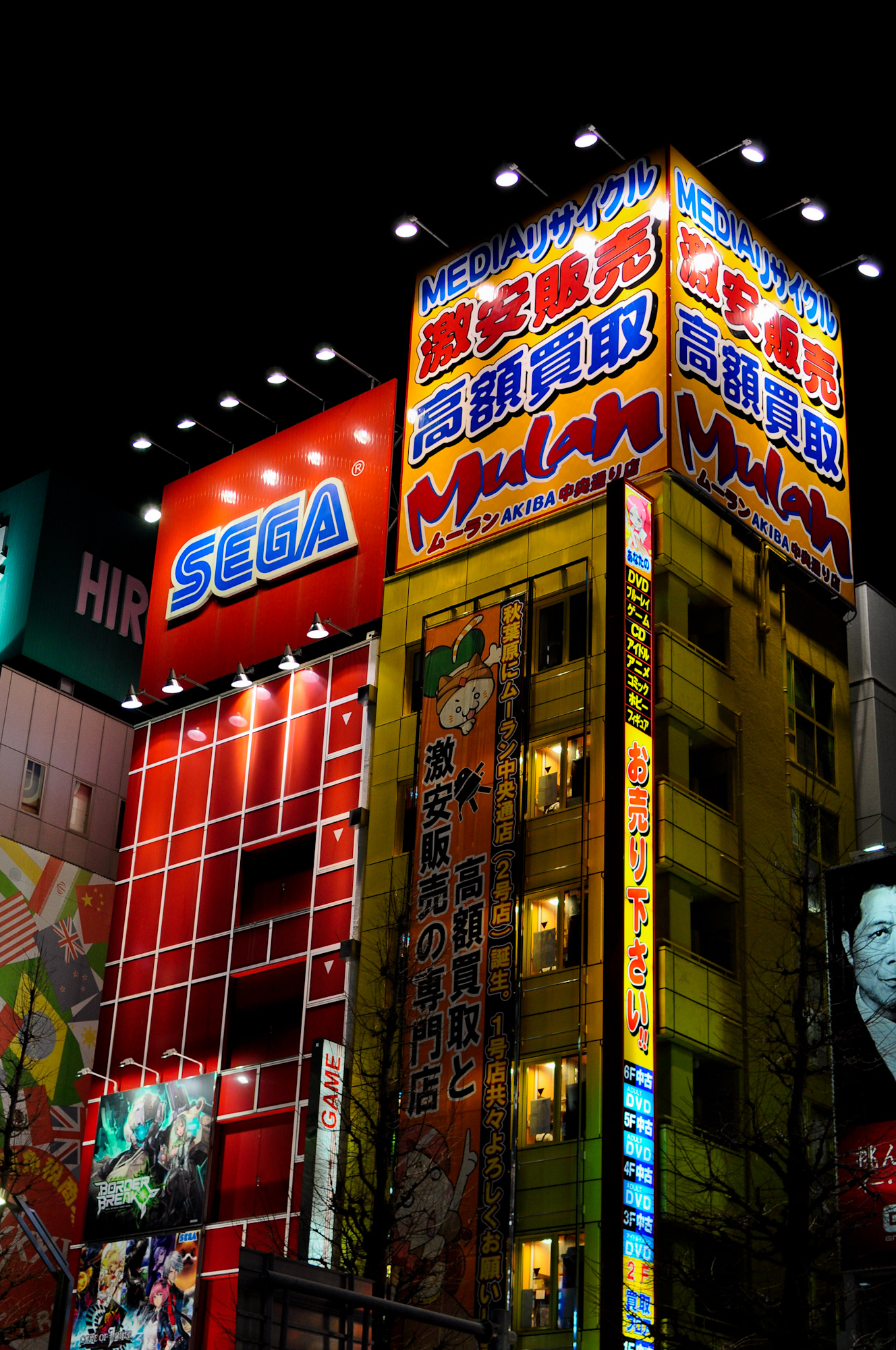
        Los japoneses son realmente otakus (frikis). Tienen montones de aficiones a cuál más geek. En Tokyo puedes encontrar barrios enteros con edificios de hasta siete plantas dedicados a videojuegos, mangas, ánimes, figurillas, recreativas, etc. Puedes leer más sobre esto en este post: Paseo por Akihabara, Tokyo y visita a Super Potato.

        _DSC0595

        _DSC0612

        En Tokyo, cada persona viste como le da la gana y hace lo que le apetece hacer. Si paseas por Yoyogi por ejemplo u Odaiba no te extrañe encontrar gente haciendo cosplay, disfrazados de personajes de manga o videojuegos.

        _DSC0381

        También existen numerosas tribus urbanas como las lolitas (chicas disfrazadas de niñas), kogal (bronceados y con el pelo tintado de rubio), góticos, rockabillies (con tupés y chupas de cuero), meido (doncellas) que te atienden en cafés especiales y te sirven disfrazadas de doncellas, etc.

        _DSC0551

        _DSC0115

        13. Guarreridas y fetichismos. ¡Pero tímidos!

        Los dispensadores de bragas usadas existen (por ejemplo en el Mercadillo de Ameyoko). Con eso os podéis hacer ya una idea de cómo van estos temas. La oferta para adultos en Tokyo es enorme:

        • Existen Love Hotels con habitaciones que se alquilan por horas y donde puedes disfrazar a tu pareja de Sailor Moon o doncella.
        • En Akihabara puedes encontrar centros comerciales de 6 plantas llenos de artilugios sexuales. En algunas plantas tienen prohibida la entrada las mujeres. Lo curioso es que tienen las puertas abiertas de par en par enseñando todos sus productos, y las parejas japonesas entran sin reparos y sin la más mínima vergüenza.
        • Existen numerosos barrios donde puedes encontrar salas de masajes especiales, bailes, etc.
        • No está mal visto leer un manga hentai (comic erótico) en el metro.

        IMG_20140306_182839

        _DSC0664

        En contraposición con todo esto es rarísimo ver una pareja dándose un beso en público (yo no he visto a nadie aún por la calle hacerlo, solo una vez en una discoteca). Y apenas se ve a gente cogida de la mano, dándose un abrazo u otras muestras de afecto. Son muy tímidos y reservados a la hora de la verdad. Parece que hacen una división muy fuerte entre sus fantasías y la realidad. O también entre lo que se hace en público y lo que se hace en privado.

        14. Miles de templos

        Te puedes encontrar con templos budistas y sintoístas prácticamente en cada esquina.

        Los sintoístas suelen ser más pequeños y existen infinidad de mini-templos escondidos entre los edificios. Todos tienen una campana para llamar al Kami, es decir, al espíritu que habita el templo. Lo habitual es dar una ofrenda (unas monedas), darle a la campana para llamar la atención del espíritu (que puede ser la alegoría de cualquier cosa, pero predominan los animales) y luego orarle. Cuando digo “mini-templos” me refiero justo a eso, hay uno a cinco metros de mi portal que no ocupará ni diez metros cuadrados.

        _DSC0496

        Supongo que un japonés se quedará igual de flipado que yo paseando por ejemplo por Córdoba y viendo las vírgenes y Jesucristos sangrando en cada esquina. Por cierto, ¿sabías que el gato que mueve la patita este que se ve en los chinos en España es en realidad un kami japonés?

        _DSC0377

        _DSC0771

        Conclusión y agradecimientos

        Me he dejado bastantes cosas en el tintero. He puesto 14, pero bien podrían ser cien o mil…

        Me ha salido un post bastante largo, pero espero que las fotos os ayuden digerirlo mejor.

        Me gustaría agradecerle la ayuda que me brindaron Pablo y Kirai al darme detalles sobre el cableado eléctrico y por las perlas de sabiduría que me han ido comentando el resto de españoles (Rodrigo, Carlos, Antonio, Luis, etc) que he conocido aquí y que tienen años de experiencia en Japón.

        Japón es diferente, ven a visitarlo para darte cuenta de hasta qué punto por ti mismo :)

        Snap 2014-11-06 at 20.50.49

Hydrogel: Patent issued for substance with medical benefits


Xiuzhi "Susan" Sun, university distinguished professor of grain science and bio- and agro-engineering at Kansas State University, examines a test tube containing a hydrogel. A U.S. patent was recently issued for the Kansas State University developed hydrogel formulas.

A novel jelly-like substance developed by Kansas State University researchers was recently issued a U.S. patent. The substance may be used for biomedical applications, ranging from cell culture and drug delivery to repairing and replacing tissue, organs and cartilage.

U.S. Patent No. 8,835,395, "Novel Protein Peptide Hydrogels," was awarded to the Kansas State University Research Foundation, a nonprofit corporation responsible for managing technology transfer activities at the university.

The patent is licensed by the research foundation to the company PepGel LLC, started by the inventors to explore commercialization opportunities in biomedical research and medical device areas.

The patent is for research conducted by Xiuzhi "Susan" Sun, university distinguished professor of grain science and bio- and agro-engineering, and Hongzhou "John" Huang, a 2012 doctoral graduate. It covers various combinations of short peptides -- compounds created from amino acids -- that can be used to form hydrogels.

A hydrogel is a substance that can transform from a jelly-like state to a liquid-like state. Physically, the hydrogel looks similar to a blob of jelly, although it is less dense because it is composed of nearly 100 percent water.

"When the hydrogel is made, it has a jelly or tofu consistency, but colorless and transparent," Sun said. "But when it is shaken, the gel can become like water and then return to its original state. When we first made it, we had never expected such phenomena and we thought we were onto something interesting."

The hydrogel was created as a spinoff of a separate project -- a protein-based glue that can be used in outer space and other extremely dry environments that Sun developed with Kansas State University's John Tomich, professor of biochemistry. Sun decided to study a fraction of the peptide sequence that gave the glue its adhesive ability by attaching a heterogeneous hydrophilic peptide segment inspired by spider silk proteins.

The newly discovered peptide was formed with 19 amino acids and can self-assemble into 3-D nanofiber networks. These transform into a hydrogel by changing the pH level or introducing an ion, such as a calcium ion.

The nanofiber size and pore size of the hydrogel are in the similar range of a natural extracellular matrix in the biological system. Moreover, the hydrogel was found to have sheer-thinning and self-healing properties -- meaning it could change from a gel to a liquid state and back to a gel again.

In addition to being able to rapidly change forms, the hydrogel formulas created by Sun and Huang are resistant to high temperatures up to 80-degrees Celsius at a neutral pH level.

"This hydrogel system has large variations and flexibility in controlling the gel stiffness, viscoelastic behavior and surface properties," Sun said. "Because of this, the hydrogels may have numerous biomedical research uses and medical device application, including use as scaffolds or artificial extracellular matrix for tissue engineering and healing wounds; cell therapies; combining with stem cells to repair or replace organs; drug delivery; an adjuvant for vaccines; and drug and cell encapsulation."

Sun is currently conducting collaborative research with hydrogels for applications and efficiency with anticancer drugs screening and delivery, stem cells and wound healing, as well as being used in vaccines for H1N1 influenza and animal diseases, such as the porcine reproductive and respiratory syndrome virus, or PRRS.

This hydrogel patent, along with several other patent pending applications, are licensed by the startup company PepGel LLC, which was co-founded by Sun and Huang to make their technology available for research use and medical device applications.

"We are pleased with the international interest in our hydrogel formulas and hope the hydrogels help develop meaningful medical applications that improve wellness, especially in areas such as cancer therapies," said Tim Fealey, CEO of PepGel LLC.

Currently, the Kansas State University Research Foundation has been awarded eight U.S. patents in 2014 for inventions by Kansas State University researchers.

Disorder plus disorder equals more disorder?


Chaos is not necessarily bad for us if we know how to counteract it with a little properly applied disorder of our own.

If you took the junk from the back of your closet and combined it with the dirty laundry already on your floor, you would have an even bigger mess. While this principle will likely always hold true for our bedrooms, it turns out that in certain situations, combining messes can actually reduce the disorder of the whole. An international team of researchers from Slovenia and Iran has identified a set of conditions in which adding disorder to a system makes it more orderly. This behavior is known as antifragility, a concept introduced recently to describe similar phenomena in statistics, economics and social science.

In a paper published Nov. 4 in The Journal of Chemical Physics, from AIP Publishing, the researchers found a counterintuitive interplay between two different types of disorder. One is thermodynamic disorder, or entropy. The other is the structural disorder -- defects in an idealized system that can change its properties.

"One expects that different types of disorder just add to one another to one final mess at the end," said Ali Naji, the lead author of the paper and a researcher from the Institute for Research in Fundamental Sciences in Tehran. "But surprisingly, we find that in some cases, structural disorder can counteract the thermal disorder, making the system overall more ordered."

The exception that the researchers identified involved the interaction between the structural disorder of charged surfaces and the thermal disorder of Coulomb fluids -- collections of mobile charged particles, either ions or larger molecules, that interact with each other.

They compared two different types of charged surfaces. In the orderly one, the charges were evenly distributed across the surface. In the messy one, positive and negative charges were spread randomly across the surface, though they maintained their positions once placed--a situation called "quenched disorder."

When the researchers put each of these surfaces in contact with a Coulomb fluid, they found that the ions in the Coulomb fluid were more strongly attracted to the disordered surface than to the ordered one. Surprisingly, when they then calculated the entropy of both systems, they found that the randomly charged system had lower entropy than the uniformly charged one -- the addition of structural disorder opposed the effects of the Coulomb fluid's thermal disorder.

Unfortunately, the finding won't revolutionize our approach to cleaning anytime soon. "This only works for certain cases and under certain conditions," Naji said. "We find out that the disordered charges have to interact strongly with the mobile charges in the Coulomb fluid in order to have this behavior." However, the researchers eventually hope to identify these systems in areas more directly applicable to human lives.

"One wonders in what other systems one could observe even more spectacular cases [of these systems] that would help us stave degradation, spontaneous disordering and aging of materials and instill robustness and resilience," said Rudolf Podgornik, a researcher from the Jozef Stefan Institute and University of Ljubljana, Slovenia who is the senior coauthor of this paper. "Chaos is not necessarily bad for us if we know how to counteract it with a little properly applied disorder of our own."


Story Source:

The above story is based on materials provided by American Institute of Physics (AIP). Note: Materials may be edited for content and length.


Journal Reference:

  1. Ali Naji, Malihe Ghodrat, Haniyeh Komaie-Moghaddam and Rudolf Podgornik. Asymmetric Coulomb fluids at randomly charge dielectric interfaces: Anti-fragility, overcharging, and charge inversion. The Journal of Chemical Physics, 2014 DOI: 10.1063/1.4898663


Google Glass may partially obstruct peripheral vision, study finds


Testing of study participants who wore head-mounted display systems -- Google Glass -- found that the glasses created a partial peripheral vision obstruction, according to a study in the November 5 issue of JAMA.

Interest in wearable head-mounted display systems for general consumers is increasing, with multiple models in production. However, their effect on vision is largely unknown. Peripheral visual field is a main component of vision and essential for daily activities such as driving, pedestrian safety, and sports. Conventional spectacle frames can reduce visual field, sometimes causing absolute blind spots, and head­ mounted devices have even more pronounced frames, according to background information in the article.

Tsontcho Ianchulev, M.D., M.P.H., of the University of California, San Francisco, and colleagues compared performance on visual field tests with a head-mounted device vs regular eyewear to quantify their effect on visual function. Three healthy individuals with 20/20 best-corrected visual acuity and normal baseline visual fields were tested in April 2014. Participants used a wearable device (Google Glass, Google Inc.), following manufacturer's instructions, for a 60-minute acclimation period. Perimetric visual testing (a measurement of the field of vision) was conducted first with the device, followed by a control frame (regular eyewear) of similar color and temple width.

In addition, to assess how the devices are worn by general consumers, photographs of people wearing the product and facing the camera, obtained from an Internet search, were analyzed. Photographs were assessed for prism position relative to the pupil.

Visual field testing demonstrated significant scotomas (blind spots) in all 3 participants while wearing the device, creating a clinically meaningful visual field obstruction in the upper right quadrant. Defects were induced by the Google Glass frame hardware design only and were not related to a distracting effect of software-related interference.

An analysis of 132 images indicated that many people wear the device near or overlapping their pupillary axis (a line perpendicular to the surface of the cornea, passing through the center of the pupil), which may induce scotomas and interfere with daily function.

The authors note that the study is limited by the small number of participants, who may not be representative of all users, and that a larger sample is needed to identify factors that influence scotoma size and depth.

"Additional studies are needed to understand the effects of these devices on visual function, particularly as their use becomes increasingly common," the authors conclude.


Story Source:

The above story is based on materials provided by The JAMA Network Journals. Note: Materials may be edited for content and length.


Journal Reference:

  1. Tsontcho Ianchulev, Donald S. Minckler, H. Dunbar Hoskins, Mark Packer, Robert Stamper, Ravinder D. Pamnani, Edward Y. Koo. Wearable Technology With Head-Mounted Displays and Visual Function. JAMA, 2014; 312 (17): 1799 DOI: 10.1001/jama.2014.13754


Novel nanofiber-based technology could help prevent HIV/AIDS transmission


Scientists have developed a novel topical microbicide loaded with hyaluronic acid (HA) nanofibers that could potentially prevent transmission of the human immunodeficiency virus (HIV) through the vaginal mucosa. This research is being presented at the 2014 American Association of Pharmaceutical Scientists (AAPS) Annual Meeting and Exposition, the world's largest pharmaceutical sciences meeting, in San Diego, Nov. 2-6.

HIV is an infectious virus that attacks T lymphocytes, a type of white blood cell that prevents infections and disease. Over time, HIV dramatically depletes the body's T cell population, leaving the body defenseless against opportunistic pathogens. HIV is transmitted through direct contact with blood, semen, pre-seminal fluid, vaginal fluids, rectal fluids, or breast milk from an infected person. According to AIDS.gov, the Center for Disease Control and Prevention estimates that more than 1 million persons aged 13 years and older are living with HIV infection, including 180,900 who are unaware that they have the virus. To date, there is no functional cure for HIV infection/AIDS. Currently available anti-HIV drug delivery methods are formulated as gels and suppositories, but can lack appropriate vaginal retention, are prone to medicine leakage, and may cause uncomfortable wetness.

To address these issues, Bi-Botti Youan, Ph.D and his colleagues from University of Missouri-Kansas City School of Pharmacy developed an anti-HIV drug loaded onto a mucoadhesive hyaluronic acid (HA) nanofiber delivery system. This delivery system is intended to stop HIV transmission through the vaginal mucosa, providing a triggered release upon exposure to semen fluid during sexual intercourse. The researchers used an electrospinning method to prepare the nanofibers loaded with tenofovir, a topical anti-HIV compound. Both semen enzyme-dependent nanofiber degradation and drug release were then measured using chemical and analytical assays. The cytotoxic effects of the nanofibers on human vaginal cells and on the Lactobacilli bacteria (L. crispatus) present in vaginal flora were also assessed.

"The success of vaginal drug delivery systems depends on the length of time that the drug-containing formulation remains at the site of administration (ex. vagina, rectum). The mucoadhesive nanofibers developed in this study could be beneficial by causing much less discomfort and reducing the dosing frequency simultaneously due to their prolonged retention at the target site," said Youan.

The nanofiber-based formulation offers various potential advantages in vaginal drug delivery, including the ability to adapt delivery systems for different medical needs, with no leakage or messiness after their application. Furthermore, this technology could be beneficial in protecting drug molecules against enzymatic and other degradation that can occur in the body. Since human semen is the carrier of HIV virus transmission during male to female intercourse, a semen enzyme-triggered nanofiber delivery system as used in this study has the potential to inactivate or kill the HIV virus prior to exposure and penetration of the vaginal mucosa.

The next stage of Youan's research is to examine the safety and efficacy of the hyaluronic acid-based nanofiber templates. Further in vivo studies will be carried out using animal models to characterize the viral transmission, inhibition, potential biodistribution, pharmacokinetics, vaginal retention time, safety and immunological responses to the nanofibers.


Story Source:

The above story is based on materials provided by American Association of Pharmaceutical Scientists. Note: Materials may be edited for content and length.


High-speed 'label-free' imaging could reveal dangerous plaques


This image is taken using a new type of medical imaging technology that could diagnose cardiovascular disease by measuring ultrasound signals from molecules exposed to a fast-pulsing laser. The system, called intravascular photoacoustic imaging, takes precise three-dimensional images of plaques lining arteries and identifies deposits that are likely to rupture and cause heart attacks. This cross-sectional view of an artery shows lipids (green) deposited inside the arterial wall. Black and white indicate contrast showing the cross-sectional geometry.

Researchers are close to commercializing a new type of medical imaging technology that could diagnose cardiovascular disease by measuring ultrasound signals from molecules exposed to a fast-pulsing laser.

The system takes precise three-dimensional images of plaques lining arteries and identifies deposits that are likely to rupture and cause heart attacks, said Ji-Xin Cheng (pronounced Jee-Shin), a professor in Purdue University's Weldon School of Biomedical Engineering and Department of Chemistry.

The imaging reveals the presence of carbon-hydrogen bonds making up lipid molecules in arterial plaques that cause heart disease. Research findings are detailed in a paper appearing online in the Nature journal Scientific Reports.

"This allows us to see the exact nature of plaque formation in the walls of arteries so we can define whether plaque is going to rupture," said Michael Sturek, co-author of the paper and a professor and chair of the Department of Cellular & Integrative Physiology at Indiana University School of Medicine. "Some plaques are more dangerous than others, but one needs to know the chemical makeup of the blood vessel wall to determine which ones are at risk of rupturing."

Research in the area has been hindered by the inability to perform high-speed imaging in tissue. The researchers solved the problem by developing a Raman laser using a laser that produces 2,000 pulses per second, each pulse capable of generating an image, representing a 100-fold increase in the imaging speed of the new technology, called intravascular photoacoustic imaging.

"This innovation represents a big step toward advancing this technology to the clinical setting," Cheng said.

The paper was authored by researchers from Purdue, Indiana University School of Medicine, the University of California, Davis, the University of California, Irvine, and startup company Spectral Energy.

The imaging technique is "label free," meaning it does not require samples to be marked with dyes, making it appealing for diagnostic applications.

The technology is being commercialized by the company Vibronix Inc., co-founded by Cheng and Purdue postdoctoral research associate Pu Wang.

The laser, which pulses in the near-infrared range of the spectrum, causes tissue to heat and expand locally, generating pressure waves at the ultrasound frequency that can be picked up with a device called a transducer.

The paper was authored by Wang; USC graduate student Teng Ma; Purdue research scientist Mikhail N. Slipchenko; USC graduate student Shanshan Liang; Purdue graduate student Jie Hui; K. Kirk Shung, director of the Ultrasonic Transducer Resource Center at USC; Sukesh Roy, CEO of Spectral Energy LLC in Dayton, Ohio; Sturek; USC researcher Qifa Zhou; Zhongping Chen, a researcher at UC Irvine; and Cheng.

The system is small enough to be incorporated into an endoscope to put into blood vessels using a catheter, said Cheng.

The near-infrared laser causes enough heating to generate ultrasound but not enough to damage the tissues. The research was conducted with intact pig tissue and will expand to research with live animals and then clinical studies with humans.


Story Source:

The above story is based on materials provided by Purdue University. The original article was written by Emil Venere. Note: Materials may be edited for content and length.


Journal Reference:

  1. Pu Wang, Teng Ma, Mikhail N. Slipchenko, Shanshan Liang, Jie Hui, K. Kirk Shung, Sukesh Roy, Michael Sturek, Qifa Zhou, Zhongping Chen, Ji-Xin Cheng. High-speed Intravascular Photoacoustic Imaging of Lipid-laden Atherosclerotic Plaque Enabled by a 2-kHz Barium Nitrite Raman Laser. Scientific Reports, 2014; 4: 6889 DOI: 10.1038/srep06889


String field theory could be the foundation of quantum mechanics: Connection could be huge boost to string theory


Artist's abstraction (stock illustration).

Two USC researchers have proposed a link between string field theory and quantum mechanics that could open the door to using string field theory -- or a broader version of it, called M-theory -- as the basis of all physics.

"This could solve the mystery of where quantum mechanics comes from," said Itzhak Bars, USC Dornsife College of Letters, Arts and Sciences professor and lead author of the paper.

Bars collaborated with Dmitry Rychkov, his Ph.D. student at USC. The paper was published online on Oct. 27 by the journal Physics Letters.

Rather than use quantum mechanics to validate string field theory, the researchers worked backwards and used string field theory to try to validate quantum mechanics.

In their paper, which reformulated string field theory in a clearer language, Bars and Rychov showed that a set of fundamental quantum mechanical principles known as "commutation rules'' may be derived from the geometry of strings joining and splitting.

"Our argument can be presented in bare bones in a hugely simplified mathematical structure," Bars said. "The essential ingredient is the assumption that all matter is made up of strings and that the only possible interaction is joining/splitting as specified in their version of string field theory."

Physicists have long sought to unite quantum mechanics and general relativity, and to explain why both work in their respective domains. First proposed in the 1970s, string theory resolved inconsistencies of quantum gravity and suggested that the fundamental unit of matter was a tiny string, not a point, and that the only possible interactions of matter are strings either joining or splitting.

Four decades later, physicists are still trying to hash out the rules of string theory, which seem to demand some interesting starting conditions to work (like extra dimensions, which may explain why quarks and leptons have electric charge, color and "flavor" that distinguish them from one another).

At present, no single set of rules can be used to explain all of the physical interactions that occur in the observable universe.

On large scales, scientists use classical, Newtonian mechanics to describe how gravity holds the moon in its orbit or why the force of a jet engine propels a jet forward. Newtonian mechanics is intuitive and can often be observed with the naked eye.

On incredibly tiny scales, such as 100 million times smaller than an atom, scientists use relativistic quantum field theory to describe the interactions of subatomic particles and the forces that hold quarks and leptons together inside protons, neutrons, nuclei and atoms.

Quantum mechanics is often counterintuitive, allowing for particles to be in two places at once, but has been repeatedly validated from the atom to the quarks. It has become an invaluable and accurate framework for understanding the interactions of matter and energy at small distances.

Quantum mechanics is extremely successful as a model for how things work on small scales, but it contains a big mystery: the unexplained foundational quantum commutation rules that predict uncertainty in the position and momentum of every point in the universe.

"The commutation rules don't have an explanation from a more fundamental perspective, but have been experimentally verified down to the smallest distances probed by the most powerful accelerators. Clearly the rules are correct, but they beg for an explanation of their origins in some physical phenomena that are even deeper," Bars said.

The difficulty lies in the fact that there's no experimental data on the topic -- testing things on such a small scale is currently beyond a scientist's technological ability.

quarta-feira, 5 de novembro de 2014

How a giant impact formed asteroid Vesta's 'belt'


A massive collision: A high-speed camera recorded a laboratory simulation of colliding heavenly bodies. An analysis of shock propagation suggests what may have caused the tilted canyon-like grooves around the equator of the asteroid Vesta.

Collisions of heavenly bodies generate almost unimaginable levels of energy. Researchers at Brown used NASA's ultra-high-speed cannon and computer models to simulate such a collision on Vesta, the second-largest object in the asteroid belt. Their analysis of the images -- taken at a million frames per second -- shows how Vesta may have gotten the deep grooves that encircle its midsection.

When NASA's Dawn spacecraft visited the asteroid Vesta in 2011, it showed that deep grooves that circle the asteroid's equator like a cosmic belt were probably caused by a massive impact on Vesta's south pole. Now, using a super high-speed cannon at NASA's Ames Research Center, Brown University researchers have shed new light on the violent chain of events deep in Vesta's interior that formed those surface grooves, some of which are wider than the Grand Canyon.

"Vesta got hammered," said Peter Schultz, professor of earth, environmental, and planetary sciences at Brown and the paper's senior author. "The whole interior was reverberating, and what we see on the surface is the manifestation of what happened in the interior."

The research suggests that the Rheasilvia basin on Vesta's south pole was created by an impactor that came in at an angle, rather than straight on. But that glancing blow still did an almost unimaginable amount of damage. The study shows that just seconds after the collision, rocks deep inside the asteroid began to crack and crumble under the stress. Within two minutes major faults reached near the surface, forming deep the canyons seen today near Vesta's equator, far from the impact point.

The research, led by Angela Stickle, a former graduate student at Brown and now a researcher at the Johns Hopkins University Applied Physics Laboratory, will appear in the February issue of the journal Icarus and is now available online.

"As soon as Pete and I saw the images coming down from the Dawn mission at Vesta, we were really excited," Stickle said. "The large fractures looked just like things we saw in our experiments. So we decided to look into them in more detail, and run the models, and we found really interesting relationships."

For the study, the researchers used the Ames Vertical Gun Range, a cannon with a 14-foot barrel used to simulate collisions on celestial bodies. The gun uses gunpowder and compressed hydrogen gas to launch projectiles at blinding speed, up to 16,000 miles per hour. For this latest research, Schultz and his colleagues launched small projectiles at softball-sized spheres made of an acrylic material called PMMA. When struck, the normally clear material turns opaque at points of high stress. By watching the impact with high-speed cameras that take a million shots per second, the researchers can see how these stresses propagate through the material.

The experiments showed that that damage from the impact starts where one would expect: at the impact point. But shortly after, failure patterns begin to form inside the sphere, opposite the point of impact. Those failures grow inward toward the sphere's center and then propagate outward toward the edges of the sphere like a blooming flower.

Using numerical models to scale the lab collision up to the size of Vesta, the second-largest object in the asteroid belt, the researchers showed that the outward-blooming "rosette" of damage extending to the surface is responsible for the troughs that form a belt around Vesta's equator.

The results answer some questions about Vesta's belt that had long been puzzling. Chief among them is the orientation of the belt with respect to the crater. The belt's angle isn't exactly what would be expected if it were caused by the Rheasilvia impact.

"The belt is askew," Schultz said, "as if Vesta were making a fashion statement."

These new experiments suggest that the crooked belt is the result of the angle of impact. An oblique impact causes the damage plane to be tilted with respect the crater. The orientation of Vesta's belt sheds light on the nature of the impact. The researchers conclude that the object that created Rheasilvia came in at an angle less than 40 degrees, traveling at about 11,000 miles per hour.

"Vesta was lucky," Schultz said. "If this collision had been straight on, there would have been one less large asteroid and only a family of fragments left behind."

The research shows that even a glancing blow can have tremendous consequences.

"When big things happen to small bodies," Schultz said, "it shakes them to the core."

Astronomers solve puzzle about bizarre object at center of our galaxy: Enormous black hole drove two binary stars to merge


Snap 2014-11-06 at 05.13.26

Telescopes from Hawaii's W.M. Keck Observatory use a powerful technology called adaptive optics, which enabled UCLA astronomers to discover that G2 is a pair of binary stars that merged together, cloaked in gas and dust.

For years, astronomers have been puzzled by a bizarre object in the center of the Milky Way that was believed to be a hydrogen gas cloud headed toward our galaxy's enormous black hole.

Having studied it during its closest approach to the black hole this summer, UCLA astronomers believe that they have solved the riddle of the object widely known as G2.

A team led by Andrea Ghez, professor of physics and astronomy in the UCLA College, determined that G2 is most likely a pair of binary stars that had been orbiting the black hole in tandem and merged together into an extremely large star, cloaked in gas and dust -- its movements choreographed by the black hole's powerful gravitational field. The research is published today in the journal Astrophysical Journal Letters.

Astronomers had figured that if G2 had been a hydrogen cloud, it could have been torn apart by the black hole, and that the resulting celestial fireworks would have dramatically changed the state of the black hole.

"G2 survived and continued happily on its orbit; a simple gas cloud would not have done that," said Ghez, who holds the Lauren B. Leichtman and Arthur E. Levine Chair in Astrophysics. "G2 was basically unaffected by the black hole. There were no fireworks."

Black holes, which form out of the collapse of matter, have such high density that nothing can escape their gravitational pull -- not even light. They cannot be seen directly, but their influence on nearby stars is visible and provides a signature, said Ghez, a 2008 MacArthur Fellow.

Ghez, who studies thousands of stars in the neighborhood of the supermassive black hole, said G2 appears to be just one of an emerging class of stars near the black hole that are created because the black hole's powerful gravity drives binary stars to merge into one. She also noted that, in our galaxy, massive stars primarily come in pairs. She says the star suffered an abrasion to its outer layer but otherwise will be fine.

Ghez and her colleagues -- who include lead author Gunther Witzel, a UCLA postdoctoral scholar, and Mark Morris and Eric Becklin, both UCLA professors of physics and astronomy -- conducted the research at Hawaii's W.M. Keck Observatory, which houses the world's two largest optical and infrared telescopes.

When two stars near the black hole merge into one, the star expands for more than 1 million years before it settles back down, said Ghez, who directs the UCLA Galactic Center Group. "This may be happening more than we thought. The stars at the center of the galaxy are massive and mostly binaries. It's possible that many of the stars we've been watching and not understanding may be the end product of mergers that are calm now."

Ghez and her colleagues also determined that G2 appears to be in that inflated stage now. The body has fascinated many astronomers in recent years, particularly during the year leading up to its approach to the black hole. "It was one of the most watched events in astronomy in my career," Ghez said.

Ghez said G2 now is undergoing what she calls a "spaghetti-fication" -- a common phenomenon near black holes in which large objects become elongated. At the same time, the gas at G2's surface is being heated by stars around it, creating an enormous cloud of gas and dust that has shrouded most of the massive star.

Witzel said the researchers wouldn't have been able to arrive at their conclusions without the Keck's advanced technology. "It is a result that in its precision was possible only with these incredible tools, the Keck Observatory's 10-meter telescopes," Witzel said.

The telescopes use adaptive optics, a powerful technology pioneered in part by Ghez that corrects the distorting effects of the Earth's atmosphere in real time to more clearly reveal the space around the supermassive black hole. The technique has helped Ghez and her colleagues elucidate many previously unexplained facets of the environments surrounding supermassive black holes.

"We are seeing phenomena about black holes that you can't watch anywhere else in the universe," Ghez added. "We are starting to understand the physics of black holes in a way that has never been possible before."

Lemurs: Gardeners of Madagascar rainforest at risk


A large proportion of trees in Madagascar's rainforest have fruits eaten by lemurs. Lemurs in turn disperse the seeds of their fruit trees throughout the forest with their scat. Such dispersal can play a crucial role for a tree species' ability to regenerate, but effects are poorly understood, especially when there are multiple dispersers.

For the tree, the evolutionary advantage of having animal-dispersed seeds may be that the seeds land well away from their parent trees where survival is low or that seeds are directed into spots where they are the most likely to sprout and survive.

Amy Dunham, an assistant professor of biosciences, and graduate student Onja Razafindratsima set out to detail the symbiotic relationship between fruit-eating lemurs and the trees that feed them through a three-year study in a rainforest in southeastern Madagascar.

Their data from observations, experiments and mathematical models demonstrate that seeds of a common canopy tree have a 300 percent higher chance of sprouting and becoming a sapling when dispersed by lemurs versus simply falling to the ground. One of the three lemur species is particularly good at dropping seeds in spots that are most advantageous for sprouting and survival. Other lemurs are not so selective, but still benefit the tree by moving seeds away from the parent tree. By acting as forest gardeners, these animals give the tree's population a boost.

The study appeared online in the Ecological Society of America journal Ecology.

As part of the study, the researchers followed the seed-dispersal patterns of three of Madagascar's lemur species: the red-fronted brown lemur, the red-bellied lemur and the southern black-and-white ruffed lemur. That meant tracking and observing groups of lemurs as the animals leaped from tree to tree through the forest, dined in the 65-foot-high canopies and dropped their undigested seeds at ground level.

Razafindratsima led the study as part of a thesis project she expects to complete early next year. She built a team of local researchers near Ranomafana National Park, the home of Centre ValBio, a research station founded by Dunham's former Ph.D. adviser, primatologist Patricia Wright.

"We have a team of up to 10 local villagers who are trained to do research," said Razafindratsima, a native of Madagascar. "Their exceptional knowledge of the forest is very important to us when we're trying to track lemurs and identify seeds and seedlings in a forest with over 300 species of trees."

The research team tracked 24 groups of lemurs over a year without the benefit of radio collars, said Razafindratsima, who keeps in touch with her team via phone and Skype when she's at Rice. She said the study sites were as close as a short hike from Centre ValBio and as far as a two-day trek through steep terrain that entailed camping overnight.

In addition to tracking lemurs and their dispersed seeds, the research team spent three years carrying out experiments on seed sprouting and survival. They found that dispersal by lemurs dramatically increased the odds that seeds would take root and survive. In particular, the red-fronted brown lemurs tended to drop seeds away from their parent trees and in places where there were gaps in the canopy. This gave individual seeds the best shot at taking root.

Dunham said trees benefit from the wide dispersal of their seeds, and for some species in Madagascar, lemurs are the primary or only animal that can distribute those seeds. As the largest fruit-eaters in the system, these lemurs swallow seeds that may be too large for other fruit-eating animals, such as birds or bats.

"Seeds away from the parent tree survive better because there's less competition among seedlings," Razafindratsima said. "If they're close by the parent, they may also share the same natural enemies, like soil pathogens and seed predators, so there's higher mortality."

Trees that lose their dispersers will simply drop their seeds to the ground beneath their canopies, where chances of survival are slim, Dunham said. "Lemurs fill an important role as the gardeners for these trees. By ensuring that some seeds land in spots suitable for germination and survival, they increase the ability of these trees to replace themselves"

Dunham hopes the study will contribute to growing efforts to protect lemurs, and therefore the rainforest, which has been impacted in recent years by economic and political instability. She noted grassroots efforts within Madagascar led to the first World Lemur Festival in late October to celebrate and protect the animals and their habitats in Madagascar.

"What got us interested is that frugivorous lemur populations are declining across the island, and we know very little about how these seed dispersers actually affect tree populations," she said. "Once we understand that better, maybe we'll have a better idea of how the community might change if the lemurs disappear.

"If some species suddenly lose their dispersers, but others dispersed by birds or the wind are doing fine, it may change population trajectories and alter which tree species are dominant in a community. To understand what happens when these species are lost, we need to understand their role in the ecosystem," she said.