quarta-feira, 19 de março de 2014

The Hidden Dangers of Going Under


Anesthesia may have lingering side effects on the brain, even years after an operation

Mar 18, 2014 |By Carina Storrs

anesthesia illustration

Credit: Ashley Mackenzie

Two and a half years ago Susan Baker spent three hours under general anesthesia as surgeons fused several vertebrae in her spine. Everything went smoothly, and for the first six hours after her operation, Baker, then an 81-year-old professor at the Johns Hopkins Bloomberg School of Public Health, was recovering well. That night, however, she hallucinated a fire raging through the hospital toward her room. Petrified, she repeatedly buzzed the nurses' station, pleading for help. The next day she was back to her usual self. “It was the most terrifying experience I have ever had,” she says.

Baker's waking nightmare was a symptom of postoperative delirium, a state of serious confusion and memory loss that sometimes follows anesthesia. In addition to hallucinations, delirious patients may forget why they are in the hospital, have trouble responding to questions and speak in nonsensical sentences. Such bewilderment—which is far more severe than the temporary mental fog one might expect after any major operation that requires general anesthesia—usually resolves after a day or two.

Although physicians have known about the possibility of such confusion since at least the 1980s, they had decided, based on the then available evidence, that the drugs used to anesthetize a patient in the first place were unlikely to be responsible. Instead, they concluded, the condition occurred more often because of the stress of surgery, which might in turn unmask an underlying brain defect or the early stages of dementia. Studies in the past four years have cast doubt on that assumption, however, and suggest that a high enough dose of anesthesia can in fact raise the risk of delirium after surgery. Recent studies also indicate that the condition may be more pernicious than previously realized: even if the confusion dissipates, attention and memory can languish for months and, in some cases, years.

In Too Deep
Anesthesia comes in three main types. Local anesthesia, the mildest form, merely numbs a very small area, such as a single tooth. Regional anesthesia desensitizes a large section of someone's body by injecting drugs into the spine that block nerve signals to the brain. Often a patient getting regional anesthesia also takes a relatively small dose of a powerful sedative drug, such as propofol—not enough to put them under but enough to alter brain activity in a way that makes the person less aware and responsive.

General anesthesia relies on a cocktail of drugs that renders patients completely unconscious, prevents them from moving and blocks any memories of the surgery. Although anesthetic drugs have been around since 1846, many questions remain as to how exactly they work. To date, the strongest evidence suggests that the drugs are effective in part because they bind to and incapacitate several different proteins on the surface of neurons that are essential for regulating sleep, attention, learning and memory. In addition, it seems that interrupting the usual activity of neurons may disrupt communication between far-flung regions of the brain, which somehow triggers unconsciousness.

When postoperative delirium was first recognized, researchers wondered whether certain anesthetic drugs—but not others—deserved the blame. Yet studies comparing specific drugs and rates of delirium in patients after surgery have always been scant and inconclusive. “No particular anesthetic has been exonerated in patients,” says Roderic G. Eckenhoff, a professor of anesthesiology at the University of Pennsylvania. But “we can't say yet that there is an anesthetic that patients should not get.”

One reason scientists struggled to say whether sedative drugs were at fault was the difficulty of separating them from other major hospital stresses, such as surgery itself. Indeed, many of the things that make being hospitalized so unpleasant—poor sleep, restricted movement and a regimen of medicines—can also cause confusion, forgetfulness and even delusions.

In spite of these difficulties, researchers hit on two other factors that increased the chances a patient would become dramatically confused after an operation: being older than about 70 and having preexisting mental deficits, such as regularly forgetting appointments or severe dementia. Delirium is also more common after major surgeries—which can last at least a few hours and require patients to stay one night or longer in the hospital. Among patients above age 60 about 50 percent become seriously disoriented after heart bypass or valve replacement surgery, according to one study, yet the same is true for only 15 percent or so of patients in the same age range who have elective hip joint surgery—a shorter and less risky procedure.

Research over the past several years has revived anesthesia as a potential culprit in delirium: instead of focusing on the type of anesthetic drug, scientists are now concerned about the amount of overall anesthesia. Researchers suspect that the more anesthesia someone receives—and, consequently, the deeper someone slips into unconsciousness—the greater the risk of delirium. In one study, for example, Frederick E. Sieber of the Johns Hopkins University School of Medicine and his colleagues gave 57 elderly hip surgery patients enough propofol to achieve regional anesthesia and another 57 patients enough propofol to induce general anesthesia. Eleven of the lightly anesthetized patients became delirious after the operation, compared with 23 of the patients under general anesthesia.

A related study offers a clue as to why previous research failed to see a difference in rates of delirium between patients receiving general and regional anesthesia. Sieber tracked 15 patients aged 65 years and older who were all undergoing surgery to repair fractured hips. The team gave the patients regional anesthesia consisting of propofol and an anesthetic that disabled nerves in the spinal cord. Based on standard practice, the team monitored blood pressure and heart rate as a proxy for depth of anesthesia to determine the appropriate dose. Meanwhile a computer, which the team could not see, also determined the depth of anesthesia based on a more direct but less commonly used measurement: electrical activity in the patients' brain, as gauged by electrodes attached to their forehead. The fewer electrical impulses crackling through their brains, the deeper the anesthesia. Eighty-seven percent of patients' brain activity dipped low enough to qualify as general anesthesia during at least part of the surgery.

“I was flabbergasted,” Sieber says. Because of this study and similar findings, he suspects that it is common for patients getting regional anesthesia to receive so much sedative drug that they are actually in a state of general anesthesia.

Lasting Effects
Deep anesthesia has also been linked to subtler but longer-lasting cognitive problems. In a 2013 study, doctors at a Hong Kong hospital monitored the brain activity of 462 patients undergoing major surgery, keeping the electrical activity as high as possible while still inducing general anesthesia. For another 459 patients receiving general anesthesia, the doctors monitored only blood pressure and heart rate. Patients received either propofol or one of several anesthetic gases. The morning after surgery, 16 percent of patients who had received light anesthesia displayed confusion, compared with 24 percent of the routine care group. Likewise, 15 percent of patients who received typical anesthesia had postoperative mental setbacks that lingered for at least three months—they performed poorly on word-recall tests, for example—but only 10 percent of those in the light anesthesia group had such difficulties.

In some cases, these mental handicaps persist longer than a few months. Jane Saczynski, an assistant professor of medicine at the University of Massachusetts Medical School, and her colleagues tracked the mental abilities of patients 60 years and older in the Boston area for up to one year after heart bypass or valve surgery. Based on tests of memory and attention in which patients repeated phrases and named everyday objects, those who did not develop any delirium generally regained their presurgery mental capabilities within a month, whereas patients with postoperative delirium took between six months and a full year to recuperate. Patients whose mental fog lasted more than three days after surgery had still not regained their full acumen a year after the operation.

Although researchers remain uncertain about how anesthetic drugs might usher in a state of postoperative delirium, they have some ideas. The drugs may have an easier time overwhelming neurons in older adults because the proteins that anesthetic drugs are thought to target on the surface of neurons become less abundant with age. Some experts have suggested that in elderly patients, the brain may also have a harder time refashioning the connections between different regions that could break down during anesthesia.

Preliminary Protections
As researchers continue to look for more precise answers about postoperative delirium, clinicians are adopting a number of strategies to minimize risk. Doctors at John Hopkins and other hospital settings now constantly talk with elderly patients during regional anesthesia, making sure they can respond to their name. Sieber thinks this practice could be at least as effective a gauge of the depth of anesthesia as brain activity and could be superior to blood pressure and heart rate measurements.

Other precautions include making sure patients are well hydrated and nourished before surgery, which likely improves blood flow to the brain. After surgery, experts recommend orienting patients to their hospital stay by encouraging family and friends to visit, getting them up and out of bed during the day, encouraging a good night's sleep, and discontinuing any medications that could further alter brain activity. Although it remains unclear exactly how these interventions help, physical and mental activities stimulate communication between nerve cells, which could reestablish vital connections between brain regions.

For her part, Susan Baker has always made an effort to be as active as possible and to spend time with loved ones following the various surgeries in her life, just because it has seemed like a good way to spur recovery. But when she had to have another procedure after her delirious episode, she took a couple of extra precautions—asking her son to stay in her hospital room that night, for example. And before her operation, she made a special request: to keep the anesthesia as light as possible.

A Happy Life May not be a Meaningful Life - Scientific American - Mozilla Firefox 2014-02-19 18.42.38

7 Lessons From 7 Great Minds


Have you ever wished you could go back in time and have a conversation with one of the greatest minds in history? Well, you can’t sorry, they’re dead. Unless of course you’re clairaudient, be my guest. But for the rest of us, we can still refer to the words they left behind.
Even though these great teachers have passed on, their words still live, and in them their wisdom. I’ve made a list of seven what I believe are some of the greatest teachings by the world’s greatest minds.

1. Realizing Your Dreams
“If you don’t know where you are going, you’ll end up someplace else.”
- Lawrence J. Peter
In order for us to achieve our dreams, we must have a vision of our goals. Writing down our dreams and creating a list of actions helps us stick to our plan. As it’s said “if you can’t measure it, you can’t manage it”. When we turn our goals into measurable actions, we gain clarity and are able to see the necessary steps we must take in order to achieve them.
Action: Visualize a life of your wildest dreams. What did you dream of doing when you were a child? What would you do if you had a million dollars? Create a vision for your goals and start breaking them down into small actions that you can take on a day by day basis.

2. Overcoming Fear
“It was a high counsel that I once heard given to a young person, “Always do what you are afraid to do.”
- Ralph Waldo Emerson
The best way to learn something is to dive right in to it. When we overcome our fear of failure, we learn that only those who are asleep make no mistakes. Fear is the only thing keeping us from experiencing a life of love and fulfillment. If we make a commitment to an uncompromisable quest for truth, we will realize that as we grow more into the truth, our fears start to disappear.
Action: You must define your fears in order to conquer them. Create a list of everything you’re afraid of and start facing them one at a time. Make a commitment to yourself now to not let fear rule your life.

3. Intention and Desire
“All that we are is the result of what we have thought. The mind is everything. What we think, we become.”- Guatama Buddha
Our thoughts determine our reality. When we stop thinking about what we don’t and begin thinking about what we do want, our lives begin to transform. Instead of working against our desires and intentions, we move into alignment with them.
Action: Create a list of your intentions and desires. Wherever you go, take this list with you. Read it when you wake up and before you go to sleep.

4. Happiness

“Happiness depends more on the inward disposition of mind than on outward circumstances.”

- Benjamin Franklin
Happiness comes from an inner peace, understanding and acceptance of life; a perspective of truth that opens your eyes to the beauty of life all around us. Happiness cannot be achieved by external status, it must be an internal state that we realize when we see our innate perfection.
Action: Realize that happiness is a choice. In every decision you make ask yourself “how can I respond to make myself happy and fulfilled?”

5. Self Acceptance
“If a house be divided against itself, that house cannot stand.” – Jesus
When we stop trying to be what we are not, we realize our authenticity. Before we had knowledge, we were completely authentic. We learn to use knowledge to measure and judge, which is a powerful tool we have as humans. However we create an image of perfection in our mind of what we should be, but are not. We confuse knowledge for nature. We believe in the lie of our imperfection. When we realize this we can reclaim the truth of our perfection and live in love and acceptance.
Action: Make a commitment to never go against yourself. Practice non-judgment and realize that the same part of your mind that condemns you is the same voice that caused you to take the action in the first place. We don’t even have to believe what we say to ourselves.

6. Appreciation and Gratitude

“So much has been given to me, I have not time to ponder over that which has been denied.”

- Helen Keller
How many times do we count our misfortunes rather than our blessings? When we take time to open our eyes to the miracle of life we can see the many gifts that have been given to us. Remembering all the beautiful aspects of life and all the reasons you are blessed can immediately shift our mood. We can move from sorrow and despair to appreciation and hope.
Action: Each time you find yourself complaining about something, re-direct your focus to something you are grateful for. Make a habit of transforming your awareness of troubles into an awareness of abundance.

7. The Art of Simplicity

“I made this letter longer than usual because I lack the time to make it short.”

- Blaise Pascal
Perfection is not when there is nothing to add, but when there is nothing more to take away. As Bruce Lee once said “the height of cultivation always runs to simplicity.” True mastery of our lives is realizing the simple joys of life, removing distractions and clutter from our lives.
Action: The art of simplicity is knowing what to take away. Practice recognizing when you’re spending your time on unimportant tasks and re-focus on the important.
This list is by no means exhaustive. There are other many great teachings that I did not include here because I felt like they were already expounded on thoroughly elsewhere, such as Einstein and Gandhi’s timeless classics. There are also great teachings to be found from our parents or friends.

Courtesy of IlluminatedMind.net


7 Lessons From 7 Great Minds - Global One TV_ Multimedia for Mystics - Mozilla Firefox 2014-03-19 20.06.32

Genetic Maps of the Brain Lead to Surprises


By Ed Lein and Mike Hawrylycz

The first detailed map of what our genes are doing inside our brains show how very different we are from mice and challenge a long-held theory of how our gray matter works

More In This Article

As you read these words, your eyes scan the page, picking up patterns to which your mind assigns meaning. Meanwhile your heart contracts and relaxes, your diaphragm rises and drops to control your breathing, your back muscles tense to maintain your posture, and a thousand other basic tasks of conscious and subconscious life proceed, all under the coordinated control of roughly 86 billion neurons and an equal number of supporting cells inside your skull. To neuroscientists like us, even the simple act of reading a magazine is a wondrous feat—as well as an example of perhaps the hardest problem in science today: in truth, we cannot yet fully explain how the human brain thinks and why the brain of a monkey cannot reason as we do.

Neuroscientists have intensely studied the human brain for more than a century, yet we sometimes still feel like explorers who have landed on the shores of a newly discovered continent. The first to arrive plotted the overall boundaries and contours. In the early 1900s German scientist Korbinian Brodmann sliced up human brains and placed them under his microscope to examine the cerebral cortex—the exterior layers of gray matter that handle most perception, thought and memory. He parceled this cortex into several dozen regions based on the topology of the organ and how the cells in each area appear when labeled with various stains.

A Happy Life May not be a Meaningful Life - Scientific American - Mozilla Firefox 2014-02-19 18.42.38

Mundo: Base militar ucraniana é invadida por russos na Crimeia


Quarta-feira, 19 de março de 2014 - 09h21

Mais uma base militar ucraniana na Crimeia foi invadida e bandeiras da Rússia foram hasteadas no local. Centenas de homens uniformizados invadiram Sevastopol. Houve pouca resistência, mas nenhuma violência. Em poucos minutos, as bandeiras da Ucrânia foram retiradas dos mastros e substituídas pelas da Rússia.

Até agora Moscou nega o envio de tropas extras à região, onde já estão 24 soldados russos, muitos uniformizados mas sem identificação, que são chamados de "milicianos pró-Rússia". Na terça-feira (18), horas após a assinatura do documento que incorporava a Crimeia à Rússia, uma base militar em Simferopol, capital da Península, foi invadida. Um militar acabou morto.


Band News - Mozilla Firefox 2014-03-19 09.35.50

terça-feira, 18 de março de 2014

Hero’s 2WD diesel-electric RNT radically rethinks the motorcycle as an all-purpose utility vehicle


Hero Motocorp suddenly seems more than capable of replacing Honda's technology, it also se...

Hero Motocorp suddenly seems more than capable of replacing Honda’s technology, it also seems capable of producing machinery better suited for the emerging market it currently serves, but also of producing truly ingenious solutions that existing long term manufacturers with deeply-rooted R&D structures could simply never envisage.

Hero Motocorp’s presentation of the RNT hybrid turbo-diesel-electric motorcycle prototype at Auto Expo in New Delhi last week might well begin a whole new phase in the development of the motorcycle as an all-purpose utility vehicle. Most significantly, the RNT offers a range of life solutions well beyond mobility – it’s designed to pull a plow or a harvester, carry heavy loads safely and adapt to play a practical role, particularly in rural areas and the developing world.

The RNT has an ultra-frugal 13.5 hp, 150 cc diesel engine which produces 35 Nm of torque at just 1600 rpm, with an optional turbocharger which will more than double both those figures. There’s also an optional front wheel hub motor producing 1.3 hp, giving the bike two-wheel drive. Even more significantly, the RNT’s powerful generator can output 1500 W of 230 V electrical power continuously, making it ideal as a portable power source, and the LED headlight unclips to offer a portable and powerful light source. Large flat loading surfaces front and rear plus numerous mounting handles indicate a long overdue rethink of how the scooter is used in many parts of the world.

The low-cost, cheap-to-run, step-thru scooter has become the default family transportation in many developing countries due to its light weight, low running costs and ease-of-use. While the cost of a scooter in these areas often represents many months, sometimes years of wages, it is still a relatively affordable form of transport and has become an enabler in many ways, playing the dual role of family car and all-purpose haulage vehicle for goods.

In many parts of Asia, Africa, South America and India, the scooter represents more than 90 percent of two-wheel sales, with two-wheelers significantly outselling cars, which are the domain of the wealthy elite.

Hence, Hero Motocorp’s ingenious rethink of the scooter form factor offers significantly more practicality than the existing scooters in the marketplace which have, until now, been adapted from their western design for the many needs of the markets they serve.

The 150cc diesel engine is a first in that it uses a commonly available fuel which is much cheaper than petrol in India, and will likely produce remarkable fuel consumption figures in such a small capacity engine, especially when used in a motorcycle weighing just 136 kg. It’s no coincidence that the only diesel motorcycle which has ever been produced in real numbers was produced by Royal Enfield in India.

Hero MotoCorp CEO Pawan Munjal and the RNT prototype. Note that the bike shown did not hav...

The low-grade technology employed by Royal Enfield in making the bikes resulted in noxious halitosis and the model was discontinued some 12 years ago, but the need remains, and with more than a billion people, the Indian Government is in no position to subsidize fuel prices as governments do in the rest of the world. A little known fact is that globally, governments collectively subsidize fuel prices to the tune of half a trillion US dollars annually. This is a machine designed to have a low environmental footprint, not just because it’s good for the planet’s respiratory system, but because as fuel prices rise, it will offer the lowest possible practical running costs.

Diesel engines are also extremely durable and reliable and the very few examples of diesel motorcycles that have made it to commercial production (see prior examples below) are surrounded by tales of ultra-low running costs and extreme high mileage.

Rural roads in developing areas rarely have good surfaces, so speeds beyond 35-40 mph (60-75 km/h) are often impractical or unsafe, and the further you get from big cities, the worse those roads get. So the RNT’s modest 13.5 hp is entirely adequate for these environments, even though it gives the bike a top speed of just 70 km/h. As scooters in such places are often pressed into service for carrying ridiculously heavy loads, the RNT’s diminutive but torquey motor is again ideal, producing 35Nm of torque at just 1600 rpm. That’s a level of torque that sports bikes of double the capacity make at four to five times the RNT’s engine speeds.


BigRep ONE 3D printer creates whole pieces of furniture - Mozilla Firefox 2014-02-24 19.30.36

Foods That Pack a Protein Punch


The average man over the age of 18 needs 56 grams of protein daily, but Americans tend to consume twice the recommended amount. Our guide to foods that pack a protein punch shows you how to get just enough protein—but not too much—with good sources of vegan protein.


Foods That Pack a Protein Punch _ Features _ PETA - Mozilla Firefox 2014-03-18 21.11.18

77 facts apparently false but actually true.


77 facts that sounds like huge lies but are completely true.


77 Facts That Sound Like Huge Lies But Are Actually Completely True - Mozilla Firefox 2014-03-18 19.39.16

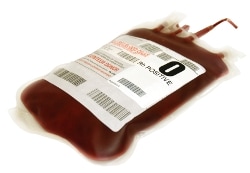
Could Stem Cells Breathe New Life into the Field of Blood Substitution?


Immature cells' regenerative prowess injects new excitement into the field

Mar 17, 2014 |By Dina Fine Maron

Image: CDC

More than a century after scientists embarked on the quest to find an alternative to the blood coursing through our veins, the dream still will not die. Not after a major study dealt a seemingly fatal blow to the field—determining that the top synthetic blood candidates at the time were all more likely to kill you than to save your life. Not after billions of dollars in public and private investments dried up. And not after multiple companies ran aground.
Starting in 2011, however, the moribund field received yet another revival, this time from a group of French researchers with a new approach to boosting blood supplies. Their principal insight: don’t try to re-create millions of years of evolution. Instead, they proposed to piggyback off of what nature already made by coaxing stem cells into taking on the job.
The appeal of creating blood alternatives is obvious. Certainly after a battlefield trauma or a car accident a ready transfusion of artificial blood that could theoretically work with any blood type and not require refrigeration would be a welcome medical tool. A synthetic product outlasting the typical 42-day shelf life of red blood cells and sidestepping even the miniscule risk of transmitting a blood-borne disease would also be high on the medical wish list. But such a product has not yet been created and proved safe in humans.

It’s not for lack of trying. Although blood cells serve multiple roles in the body and have complex interactions with other cellular materials, most synthetic blood products have aimed to just stick to the bare basics—shuttling oxygen from the lungs to different vital organs and then bringing carbon dioxide back to the lungs to be exhaled. When the red cell count gets low, bodily organs may not get the oxygen they need, making a person weak and eventually resulting in serious health problems. The most popular approach taken to replicate that function has been to create artificial hemoglobin-based oxygen carriers, tapping proteins in red blood cells called hemoglobin that act as oxygen’s transport service, and chemically modifying them to increase oxygen-carrying capacity.
But the new idea is to get the body to grow its own substitute—a product that would not be the same as whole blood but could fit the bill in a pinch.

A Paris-based research group, headed up by Luc Douay, professor of hematology at University Pierre and Marie Curie Faculty of Medicine, has already had some success. They culled stemlike cells from blood circulating through a patient’s body and manipulated them into becoming red blood cells nearly identical to those that normally transport oxygen in the body. The team injected two milliliters of the stem-cell derived blood cells back into the patient—an amount far smaller than would be needed in a typical transfusion. The creations had stored well at refrigerated temperatures and circulated in the body with survival time on par with that of original red cells.
Jackpot. In short, the work—albeit on one person, tapping cells from his own body—proved that it could be done. “It’s a promising approach,” says Harvey Klein, chief of the Department of Transfusion Medicine at the National Institutes of Health. “There is a school of pessimists who believe that because of costs it will never materialize on a practice level, but I’ve heard that all my life about different areas of medicine including bone marrow transplants in the ‘60s.” Still, he and others caution that the field is far from being able to forgo the need for blood donors for day-to-day care. In fact, the market for artificial blood products would likely be limited to people with rare blood types and those who, due to blood diseases, require new transfusions, perhaps every couple months.

It’s an encouraging step forward for a field littered with odd and sometimes cringe-worthy efforts to get at the lifesaving power of blood. Animal to human blood transfusions received a short-lived audition in 1667. But the first human-to-human blood transfusion was not performed until 1818—before we learned about blood types and how and when the body rejects certain transfusions. Blood-product research also included attempts in the late 1800s to hook up ailing patients to infusions of fresh cow’s milk. Milk, like blood, had fats that emulsify in fluid, the reasoning went. Plus, milk would be safer than blood because it would not clot. When patients died, physicians figured it was due to other complications. Needless to say, milk injections, like those from animal blood, never really took off.
In the U.S. there is no shortage of blood products available for most patients, thanks to blood donors. After a healthy person donates blood that fluid is typically whirred in a centrifuge and separated out into several parts. Most commonly, patients receive transfusions of red blood cells, the component of blood that shuttles oxygen to tissues throughout the body. (Patients may also receive infusions of white cells that help fight infection or platelets, the small, colorless cell fragments that help stanch bleeding by clotting.)

Although most people only get transfusions once or twice in their lives (if at all), individuals with conditions like sickle-cell anemia require consistent blood transfusions of red cells. But with each infusion there’s a small risk that the body could develop an infection, reject the foreign blood or form antibodies that will lead to the body rejecting and destroying certain bloods in the future. A key threat, however, is that each transfusion contributes to the risk of iron overload in the body. All red blood cells contain iron, but after the body takes what it needs it has no easy way to dispose of the excess. It gets stored, instead, in organs including the heart, liver and pancreas. That buildup of increased iron with each transfusion can damage the organs and eventually prove fatal.
The French researchers hope that using freshly created blood cells made from stem cells could help alleviate those iron buildup concerns. “We think it could be transfused at least three to five times less each year because of the efficiency of the transfusion,” Douay says.

The secret lies in the age of the red blood cells derived from stem cells. Although red cells from donors have a typical shelf life of 42 days, they are a mix of older and newer cells, which means a number of them may not last long in the body. With stem cell–derived options all of the blood product would be new, which could theoretically give patients more bang for each infusion. The only thing that would appear different to a patient receiving the transfusions, ideally, is that he would be receiving them less often. “If you have brand-new cells, you should be able to increase the intervals between transfusions so you can make it longer, says David Anstee, director of the International Blood Group Reference Laboratory in England. “You might be able to improve the quality of life in those situations.” It’s not a perfect fix because it would likely add months, not years, between transfusions, but it could be a start.
Also, researchers could carefully select which blood types to culture with each batch of stem cells, creating stockpiles of needed blood products for people with extremely rare blood types whose blood cell makeup makes it challenging to find good blood matches for transfusions because they would reject most other types of blood. But so far all this remains theoretical—since that initial breakthrough no new blood product has inched close to regulatory approval in the U.S. or Europe.

The greatest hurdles are arguably more monetary than technical, but the monetary obstacles are massive. To match the current prices of high-quality blood products the process would have to become at least fivefold more cost-effective, Douay notes in a recent study published in Biotechnology Journal. Although the current price tag for an average hospital to create one unit of red blood cells from donor blood comes in at about $225, more expensive, unique stockpiles of red cells, kept for individuals with rare blood needs, can cost anywhere from $700 to $1,200 per unit. By comparison, with Douay’s method the price for equivalent amounts of blood cells (assuming that much product could be made successfully) would likely be around $8,330. It could even cost up to $15,000 per unit if all does not go according to plan, Douay estimates.
Moreover, the idea of using Douay’s earlier process, which involved growing the cells in culture, at a larger scale would be “delusional,” he says. To make just one unit of blood—roughly a pint—it would require growing cells in about 400 flasks that were about 30 centimeters by 20 centimeters, he says. But even with endless space for those flasks it would still be impossible because the constant pH and temperature controls that would be needed would be impossible to maintain. What would be needed, he says, is an automated, stirred large-scale bioreactor (something his team hopes to one day produce themselves). “Even something as seemingly simple as red blood cells that don’t have a nucleus evolved a structure and a function that is much more complicated than we can perceive by looking under the microscope,” says Jason Acker, associate director of development for Canadian Blood Services.
Douay, for his part, is not surprised it has taken more than a century for science to get even to this point, where the future of subbing in stem cells for blood products still remains little more than a reverie. “For years,” he says, “we tried to replace nature and do as well as nature does.” The regenerative powers of stem cells may just yet inject new options into the field
.

A Happy Life May not be a Meaningful Life - Scientific American - Mozilla Firefox 2014-02-19 18.42.38

10 Vintage Looks for Spring 2014 from NYFW


Vintage clothing trends - 10 Vintage looks for spring


10 Vintage Looks from NYFW Spring 2014 - Mozilla Firefox 2014-03-18 17.36.56

NSF Distinguished Lecture: Supernovae Reveal an Accelerating Universe by Professor Adam Riess


NSF Distinguished Lecture: Supernovae Reveal an Accelerating Universe by Professor Adam Riess NSF Distinguished Lecture in Mathematical and Physical Sciences: Supernovae Reveal an Accelerating Universe Professor Adam Riess, Johns Hopkins University Nobel Laureate Feb. 24, 2014 Credit: NSF

nsf.gov - Multimedia Gallery - US National Science Foundation (NSF) - Mozilla Firefox 2014-03-18 17.09.02