quarta-feira, 10 de junho de 2015

HGST's helium-filled HDD offers a world-first 10 TB of storage


HGST's Ultrastar Archive Ha10 is aimed at enterprise users

HGST's Ultrastar Archive Ha10 is aimed at enterprise users

We first caught wind of HGST's high capacity hard drives in 2012, when the company claimed it could boost storage capacities by 40 percent by replacing regular old air inside the drive enclosure with helium. The Western Digital subsidiary stayed the course, producing a helium-based 6 TB HDD in 2013 and 8 TB model in 2014, and has now continued the upward trend with the world's first 10 TB hard drive.

Aimed squarely at enterprise and data centers, the Ultrastar Archive Ha10 is the company's latest take on a helium-based HDD. The apparent benefits of helium when it comes to HDD storage is its markedly lower density of around one-seventh that of regular air. This means less friction with internal moving parts, resulting in less power needed to drive the device and increased data density of the individual disks.

HGST calls its version of this HelioSeal and has combined it with shingled magnetic recording (SMR), a hard drive technology that records data on overlapping rather than parallel tracks, much like roof shingles (hence the name). The company says this results in an industry-leading storage density, low power consumption and ever-reliable storage solution. However, since SMR requires the writing of entire tracks, the drive is suited for active archive duties rather than frequent update workloads.

Further to its mammoth storage capacity, the 3.5-in drive is rated at two million hours mean time between failure (MTBF) and a 10-15 unrecoverable reduced bit error rate with 600k load-unload cycles. It comes in SATA 6 Gbps and SAS Gbps varieties and HGST claims a 20 percent improvement in Watts per TB over the preceding Ultrastar He8.

To begin with, the Ultrastar Archive Ha10 will be available to cloud and OEM storage clients with the software capabilities to harness the density of the device.

Source: HGST

Tiny particles mimic the body's pancreas cells to combat type 1 diabetes


The researchers now plan to test the nanoparticle approach in human cells in vitro (Credit: Shutterstock)

The researchers now plan to test the nanoparticle approach in human cells in vitro (Credit: Shutterstock)

The destruction of the pancreatic cells that leads to type 1 diabetes arises when the body's own immune cells identify them as foreign targets and begin to attack them. But a new technique using tiny particles to mimic the form and function of the pancreatic cells is showing promise in halting the onset of the condition.

The work undertaken by scientists from the Germans Trias i Pujol Research Institute and Catalan Institute for Nanoscience and Nanotechnology in Spain explores the potential for a type 1 diabetes vaccine. To start out with, the team developed an immunotherapy technique where the body's immune cells are extracted, modified and then re-injected. This is similar to a method used in promising rheumatoid arthritis research we covered last week, but it has major drawbacks in that it is both expensive and complicated.

The researchers say they have now come up with a more practical method that yields the same results in mice. It concerns liposomes that feature an external fat membrane much like a regular cell. These measure 0.5 to one micron in diameter.

The liposomes are made in the laboratory and designed to replicate the dying beta cells in the pancreas, which characterize type 1 diabetes. By introducing them to the body, the researchers found that they were effective in stopping the immune cells from destroying the beta cells and rendered the body able to tolerate their presence.

Buoyed by the success in testing the technique in mice, the researchers now plan to run tests in human cells in vitro. From there, they hope to continue on to human trials and eventually work towards a cure for the disease by combining the approach with regenerative therapies.

The research is to be published in the journal PLOS ONE.

Source: Universitat Autònoma de Barcelona

15 Cool Things You Can Do On The Internet For Free


There's a whole lot of stuff available online, yet most of us still spend our time scrolling Facebook incessantly, present company included. To whack you out of that self placed inertia, here's a list of cool stuff you can totally use for free online. 

Some of it is useful, while some of it is just fun. Regardless, here's a list of cool stuff you can do online for free!


1. Make some sick beats at Patatap

They even have matching visuals to complement the sounds. Jam out with your friends for a guaranteed good time!

Source - howcast


2. Learn any course you can imagine at Coursera

Learn from literally thousands of options, a lot of which are free. Knowledge is power after all, especially unnecessary knowledge!

Source - dogster


3. Read hilarious online comics like Dr. Mc Ninja

Or go on to comic prospector and find something else you like (But if you don't like Dr.McNinja then you suck)

Source - cloudfront


4. Photoshop pictures online using Pixlr

No need to sign up or anything, just go on and manipulate your photos and make your friends look fat.It's a classic!

Source - filecluster


5. Play hi quality games at BigPoint

Just make sure you have an unlimited internet plan, otherwise you're screwed.

Source - gamesnips


6. Send files upto 1GB for free from Pando

That's HUGE!

Source - betanews


7. Learn how to make pretty much anything at VideoJug

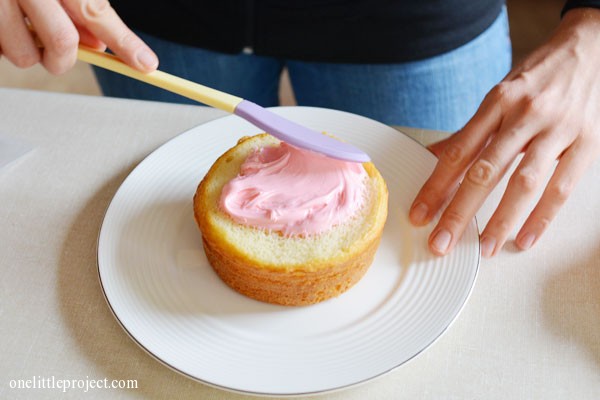
Learn to make cool cakes or candles or dirty toys or whatever.

Source - onelittleproject


8. Learn to read body language and detect lies at Blifaloo

There's no sure shot way to tell if a person is lying, but you can always pretend that there is and get them to tell the truth anyway!

Source - salon


9. Get free tech support at Techguy

If you're having problems with your computer, this free volunteer site will sort you out. Forget your stupid computer guy who only shows up when you're not at home!

Source - zen cart


10. Find free wifi spots worldwide at WifiFreeSpot

It even lists some clinics in Delhi with free Wi-Fi! Now I can just pretend to have a migraine and get free internet woohoo!

Source - politic365


11. Send an anonymous email with 10MinuteMail

The email address disappears after ten seconds, so you go scot-free while your nemesis finally accepts that you are the better human.

Source - timeninja


12. Learn any language in the world at Duolingo

With a little patience, you can be spewing French pickup lines and Spanish cuss words interchangeably. Very useful. 

Source - valuewalk


13. Watch from hundreds of documentaries at DocumentaryHeaven

It's got Kubrick on the home page, which basically convinced me that this site is legit. They've got loads of free documentaries ripe for the picking!

Source - planocritico


14. Learn killer magic tricks at GoodTricks

Everybody loves magic, so if you want to be the next David Blaine (Do you really?), then head on over here and start levitating or whatever.

Source - megnetudeconsulting


15. Torrent websites for everything else!

Just don't download anything illegal! *smirk*

Source - betanews

Early support vital for success in breastfeeding


VS - A (12)
Most women understand the benefits of breastfeeding their infants, but there are physical and emotional roadblocks that can make it a challenge for moms. During the first weeks of a baby's life it is vital for mom to be able to focus on caring for herself and nursing her infant.

"One of the biggest issues for new moms is exhaustion," said Kimi Suh, MD, family medicine physician at Loyola University Health System and assistant professor in the Department of Family Medicine at Loyola University Chicago Stritch School of Medicine.

"Moms are already sore and tired from being post-partum and it can be exhausting and difficult to feed the baby on demand at all hours."

Breastfeeding is a learning process for both mom and baby and requires patience and practice. While in the hospital, moms should take advantage of resources such as lactation consultants who are readily available to assist with establishing good breastfeeding practices and offer advice on common problems, such as trouble latching on.

"I often tell my new moms don't wait to ask for help. Getting the right latch is vital and can be difficult. Having someone with experience there to guide you can make all the difference," said Suh.

Though everyone is excited to meet the newest arrival, the early days after delivery are extremely important for a mom and baby who are breastfeeding. Moms need to be able to practice feeding and not worry about anything else, including visitors.

"Visitors can wait. Use these early days to become confident in breastfeeding. While in the hospital use the time to practice nursing and get some help from experts to feel comfortable without worrying about privacy," said Suh.

According to Suh one of the most important components for a breastfeeding mom is a strong support team. Many people may be disappointed that mom is breastfeeding because they are hoping to have the fun of feeding the baby with a bottle themselves, but there are a lot of other important ways friends and loved ones can be a part of caring for the baby while supporting mom.

Suh suggests supporters:

• Get up with mom in the middle of the night and see how to be of help or just to keep her company

• Change diapers

• Keep breastfeeding mom's water glass full

• Prepare a snack or a meal she can eat while feeding the baby

• Do chores such as laundry, cleaning the house or grocery shopping

• If there are other children help, keep them happy and busy

"Emotional support is extremely important to help a mom breastfeed successfully. Because they are the only ones who can provide the baby with nutrition, moms can feel solely responsible if the baby is upset or something isn't going right. They can get frustrated and feel they are doing something wrong, and even feel like they should give up on breastfeeding. It's important to remind mom what a great job she's doing," Suh said.

Too often moms are worried about their weight or feel like they have to immediately jump into being the primary caretaker. Suh says these first few weeks need to be about making mom as happy and comfortable as possible.

"There may not be a lot of sleep, but if mom wants chocolate, mom can have chocolate," said Suh. "Keeping mom less stressed not only helps her emotional health, but also improves the quality and quantity of the milk she produces. Breastfeeding moms need to take it one day at a time. If something doesn't seem right, she should try not to get stressed out. Instead, she can reach out to her medical provider or lactation consultant, who is there to support her."

Social media helps young adults quit smoking


VS - A (81)


Young adults who use social media to quit smoking are twice as successful in their efforts as those who use a more traditional method, according to new research from the University of Waterloo.

The study, published last week in Nicotine & Tobacco Research, compared the success of the social media-based campaign Break It Off with Smokers' Helpline, a telephone hotline for young adults looking to quit smoking.

After three months in the program, 32 per cent of smokers who used Break It Off apps and web tools had quit smoking, compared to 14 per cent of their peers who used the telephone-based support.

"These finding suggest that the creators of public health campaigns need to evaluate how they use social media channels and social networks to improve health, especially with regards to younger demographics," said Bruce Baskerville, a senior scientist at the Propel Centre for Population Health Impact at Waterloo, who led the study.

In Canada, young adults aged 19 to 29 have the highest rate of smoking, but they report low use of traditional cessation services, such as helplines. Young adults make up the largest demographic of social media users, with 91 per cent using Facebook and one-third actively engaged in microblogging sites, such as Twitter.

"Traditional cessation services can have limited reach and this reduced visibility lessens their impact in a digital era," said Baskerville. "Because they are such heavy users of social media, these platforms provide an alternative and successful way of reaching smokers who are less likely to relate to other cessation programs."

The Canadian Cancer Society launched Break It Off in January 2012 to engage young adults in smoking cessation through an interactive website and social media. The campaign, which compares quitting smoking with ending a romantic relationship, provides users with an interactive website and smartphone app to encourage smoking cessation.


Story Source:

The above story is based on materials provided by University of Waterloo. Note: Materials may be edited for content and length.


Journal Reference:

  1. N. B. Baskerville, S. Azagba, C. Norman, K. McKeown, K. S. Brown. Effect of a Digital Social Media Campaign on Young Adult Smoking Cessation. Nicotine & Tobacco Research, 2015; DOI: 10.1093/ntr/ntv119

CSIRO's Lab 22: Kickstarting a 3D printing revolution in titanium


CSIRO Lab 22: making millions of dollars' worth of 3D printing equipment available to local business

CSIRO Lab 22: making millions of dollars' worth of 3D printing equipment available to local business (Credit: Loz Blain/Gizmag)

Image Gallery (35 images)

Australia is the world's largest producer of titanium at the moment, and it's sitting on the world's second-largest titanium reserves. But with virtually no local industry processing this strong, lightweight metal or manufacturing with it, the country is sending a massive amount of potential value overseas.

Put it this way – if Australia exports unrefined titanium at its current rate, reserves will be depleted in 90 years. But if the country harnessed the full value of processed titanium, it could achieve the same export earnings for some 9,000 years.

Australia's federal scientific research organization, the CSIRO, is looking for ways to kick-start a local titanium manufacturing industry and develop some of that value, and one of the most promising sectors for titanium manufacturing is in 3D printing.

"Titanium is a difficult material to machine, it really eats through tooling and it's a very reactive metal, so it can be quite dangerous if you get hot spots while machining it," says CSIRO's Research Group Leader in Additive Manufacturing, Alexandra Kingsbury. "So it's difficult to machine, but it's weldable, so that makes it appropriate for these [3D printing] machines."

Concept Laser M2 machine - higher fidelity than the Arcam machine, but it takes longer to print

CSIRO has made a substantial commitment to 3D printing research, with an AUD$6 million plus investment in its Lab 22 additive manufacture facility. You might remember Lab 22 as one of the partners in the world's first 3D-printed jet engine.

Under Kingsbury's leadership, Lab 22 is now operating four million-dollar machines, some of which have never been installed in the southern hemisphere before. These include an electron-beam melting Arcam machine, a bonded sand printer and a cold-spray plasma giken robot arm that fires cold titanium particles at a substrate surface hard enough to splatter on and bond.

Lab 22's Alexandra Kingsbury with the group's Cold Spray Plasma Giken machine, mounted on a robot arm

And while these machines will primarily be used for research, the team has decided to take a very direct role in developing local manufacturing companies in their downtime. "We don't utilise and run these machines flat stick 100 percent of the time on research," says Kingsbury, "Research programs are expensive, materials are expensive, you don't run the machines unless you've got funding for it. There's some latent capacity there that we can allow companies in to access."

Thus, Lab 22 has taken on four initial tier two manufacturing partners – local businesses with interest in developing their 3D printing capabilities.

The first two are 3D printing outsourcers Keech3D and MadeForMe. "These guys, you send them a file and they'll get it printed for you," says Kingsbury, "This service bureau model's already up and running in plastics – it can definitely happen in metals too, and that's what these two companies are doing."

The third is Nezkot Precision Tooling, which does a lot of specialist work for aerospace and defense, and the final partner is Bastion Cycles, which is incorporating 3D-printed titanium pieces as the joints in its ultra-lightweight bicycle frames.

Bastion Cycles demo bicycle, featuring 3D-printed frame joints

Kingsbury says Lab 22 is an opportunity for these companies to be guided by CSIRO's expertise through the difficult learning curve of additive manufacture. "It's not quite as plug and play as the hype might have you believe. There's a lot of expertise that you need to do this properly. Sometimes you want a surface to be really smooth, even mirror finish. Sometimes you want it to be rough – this is an acetabular cup for a hip replacement, you want the surface to be rough because the bone's gonna adhere to it better. It's about working out what works better for your product. Do you want to do really fast printing, and then a bit of extra machining, or would you prefer to do a slower print and less machining, or even no machining, could you get away without machining at all? These are the subtle trade-offs that people need to consider when they start using the technology."

One of the keys is knowing where 3D printing can actually give you a business advantage at this stage of the game. "Don't print something you can make traditionally, it's not going to give you a business case. But what will is if you're increasing your complexity and light-weighting your parts, if you wanted to customize something, or do low runs without making new tooling – that's where you'll get value out of this technology."

Voxeljet VX1000 sand printer - the first of its kind in the Southern hempsphere. It prints sand particles, held together with a bonding agent, and can also be used for ceramics and other powders.

Voxeljet VX1000 sand printer - printed sand casting mold

These four businesses represent a modest beginning. As CSIRO's own research into titanium processing and printing techniques progresses, Lab 22 will expand with more machines and additional capabilities, opening up more latent capacity for more tier two partners.

And of course, the ultimate goal with these businesses is that they'll have enough success with the technology to go away and invest in printers of their own – an outcome that would be good for Australia and for the CSIRO team. "There's a few exceptions," says Kingsbury, "but in real true R&D land, we work with global customers, there's really no industry here to service yet. We'd like to see people in Australia, in Melbourne manufacturing using the machines. I think the not-so-secret evil plan there is that they'll need R&D work too in the future – perhaps they'll come back to us."

Lab 22 is an impressive facility with cutting-edge equipment and facilities, and goals no less than sparking a manufacturing revolution. We wish Alexandra and the team every success.

More information: CSIRO Lab 22

Road legal turbine motorcycle breaks three world records


Madmax streetfighter turbine motorcycle on a record breaking attempt

Madmax streetfighter turbine motorcycle on a record breaking attempt

Image Gallery (16 images)

Imagine a Rolls Royce helicopter turbine that produces a scorching 542 hp and over 450 lb-ft of torque strapped to a bare naked motorcycle, a streetfighter. This is what Madmax Race Team brought to Elvington, UK for the Straightliners Speed Record event, leaving with three new official world records. And the best part is that it’s completely road legal – headlights, horn, indicators and all.

Remember the Y2K turbine motorcycle that Marine Turbine Technologies (MTT) had built back in 1998? In its heyday this motorcycle created a lot of buzz due to its unique character and insane performance, ending up on every motorcycle magazine’s cover and, of course, in Jay Leno’s garage. The last one was built in 2005, before MTT turned its focus to designing turbine-powered fracking pumps for the new booming branch of the oil industry and losing actual interest for the motorcycle that generated so much publicity for its creators.

It was around that time that Maxicorp founder, Zef Eisenberg, visited MTT’s headquarters in Louisiana to discuss the continuation of the turbine motorcycle project. After an agreement was met, Maxicorp’s Autosport Division would take over the development of the next turbine bike generation. The last Y2K motorcycle was shipped to the UK, where it was taken apart to begin the development process.

During the following years, the project evolved into building a completely new prototype as the original design was deemed too outdated. Starting with the power source, the discontinued Rolls Royce 250-C18 turbine from the original Y2K had to be replaced with the C18’s successor, the 250-C20B. This meant a giant leap from 240 hp (179 kW) to more than 400 hp (298 kW) in standard form, which was a lot more than the Y2K’s gear could handle.

The frame had to be redesigned and strengthened. As the motorcycle is not thrust powered but wheel driven, the gearbox is apparently a vital part and the Toyota two-speed gearbox used in the Y2K had by now become totally obsolete. The development team designed and fabricated a brand new single speed gearbox with a multi plate carbon dry clutch.

Most spindles and flywheels, originally made from aluminum alloy, were replaced with stronger and lighter one-off titanium parts, and the original Harley-Davidson wheels gave way to BST carbon fiber rims. For the front suspension system the weapon of choice was a racing superbike pair of inverted Marzocchi 50 mm forks, allowing for two 320 mm discs with six-pot ISR brake calipers. The engine management was assigned to a Motec ECU using custom software, developed in house with data logging capabilities and several built-in safety features.

The list of changes and improvements made to the motorcycle became so long that in the end only some parts of the frame remain as proof that the starting point once was the Y2K turbine motorcycle – and even these are soon to be replaced. The cost of this project was estimated at around £200,000 (US$308,000) last year and since then it continues to evolve.

Although originally the motorcycle was designed with aerodynamic carbon fairings, the team ultimately decided to go for a naked, streetfighter look, allowing for the turbine and all the technology used to be on full display. As soon as it was completed, Eisenberg created the Madmax Race Team and decided to take his creation for a try at breaking some speed records.

In May 2014 at the Elvington Airfield in Yorkshire, UK, the fully-faired race bike, sponsored by Tag Heuer, broke the British Land speed record with a one way speed of 214 mph (344.4 km/h). In August 2014 in streetfighter form it set a new world record of 224.9 mph (361.9 km/h) over a mile from a standing start, which was ratified by the Auto-Cycle Union (ACU), the Speed Record Club and the Timing Association.

The plan for this year was to return to Elvington for some more record breaking. This posed several problems that the team had to overcome. First of all they needed more power. The streetfighter bike has a drag coefficient of around 0.9 – as opposed to the much sleeker 0.35 of the fully-faired race bike. After some careful calculations, they realized that in order to increase the top speed from 224.9 mph to the target of 231.7 (372.8 km/h), they had to come up with an additional 100 hp (75 kW)!

This was achieved with a lot of hard work and a special addition to the engine fuel system: a water/methanol injection system. Using a mix of 30 percent methanol and 70 percent water, a special order pump injects 1.4 liters (0.36 US gal) into the turbine inlet every 10 seconds at a pressure exceeding 200 psi. Holding enough for just 20 seconds, the team estimated this additional boost should cut it.

The Madmax turbine streetfighter that turned up at Elvington was by now producing an estimated 542 peak horsepower (404 kW), with a torque of at least 450 lb-ft (610 Nm) at maximum rpm. These performance figures are not 100 percent accurate because the motorcycle proved to be too brutal for any dyno to handle. The latest attempt was on May 13, on a Dynojet 250 equipped with an Eddy Brake system. The bike was strapped down with 150 kg (331 lb) of force on each side in a bid to achieve maximum traction for the 240/40-18 rear wheel.

Despite every measure taken, at around 80 percent throttle the rear wheel started to spin on the dyno’s 750 kg (1,653 lb) grooved steel roller. That would be the inescapable result of too much torque. When the bike’s ECU calculated a perceived acceleration from 190 to 240 mph (306 to 386 km/h) in just one second at the rear wheel, it shut down the turbine as it was designed to do as a safety precaution. Mind you, this happened before using the water/methanol boost!

As of May 17, Madmax’s turbine streetfighter, at the hands of Zef Eisenberg, is the proud holder of three world records and one British national record:

  • World’s fastest Turbine Motorcycle – 1 mile (one way): 233.7 mph (376.1 km/h)
  • World’s fastest Streetfighter – 1 mile (one way): 231.6 mph (372.7 km/h)
  • World's fastest flying quarter mile for Turbine Motorcycle: 3.91 sec
  • Britain’s fastest Naked Motorcycle (Official ACU two way average): 225.6 mph (363.1 km/h)

All these were achieved in road legal trim, as the motorcycle is registered for road use. The bike competed at the Elvington event using normal diesel fuel and road legal DOT tires. In fact, Eisenberg has ridden it to almost every event it has attended, reaching as far as the Helitech 2014 show in Amsterdam, Holland. That’d be 1,200 miles (1,930 km) from the team’s base in Guernsey, UK, travelling and handling road bends smoothly while doing 7.2 mpg (32.9 l/100 km) on pump diesel.

The C20B turbine is equipped with a titanium retainer ring ensuring that the turbine blades will not become lethal projectiles in the case of a failure. There is also a system that prevents flames from coming out of the exhaust pipes – Jay Leno had admitted in an old interview that, while idling at a red light on his Y2K bike, he could smell the bumper of a car behind him melting from his exhaust’s heat, before he took off in a hurry.

There is no commercial future for this turbine motorcycle, as Maxicorp believes that it’s simply too powerful for most riders. Yet, the company’s website does leave a small window of opportunity declaring that, “we may be tempted to build one for those that can demonstrate they have sufficient money and expertise in handling such a bike for special occasions or ideally for those that want to add possibly the most extreme bike ever made to their current collection of automotive exotica”. Have you seen this Mr. Leno?


Source: Madmax Race Team

Hotel or a Floatel?


floating_catamaran_hotel_1

floating_catamaran_hotel_2

floating_catamaran_hotel_3

floating_catamaran_hotel_4

floating_catamaran_hotel_5

floating_catamaran_hotel_6


Hotel or a Floatel?

Posted: 08 Jun 2015 01:59 AM PDT

Or maybe even a Boatel! Geddit?? Anywho… Here’s something right out of a billionaire private island getaway. The Floating Catamaran Hotel is by far the classiest crib to boast of buoyancy. Each apartment comprises a pretty large hall, a gallery, salon, bathroom, sleeping/leisure area and a storage area. Not to mention the killer view of the waters you get from your balcony. Each single apartment unit can be connected by a floating platform to a Central Floating Unit, which can independently house a reception, event hall, cafe/restaurant, staff quarters, and offices. How cool is that! And I don’t think I mentioned this enough… IT FLOATS!

terça-feira, 9 de junho de 2015

Veterans will be first to try cyber physical therapy


High-speed research networks help scientists develop and deploy future health technologies

hand hold a robotic hand

Video available View video

Researchers from UT Dallas demonstrate a 3-D tele-rehabilitation system.
Credit and Larger Version

June 9, 2015

The Internet has been transformational, changing how we communicate with friends and family, how we shop, and more recently, how we heal. Physical therapy is the latest treatment to be offered as telemedicine, with an experimental system now connecting specialists to patients to provide help they otherwise couldn't get, aiding recovery from serious ailments, from broken limbs to stroke.

In an effort to connect physical therapy with wounded veterans far from treatment facilities, researchers from the University of Texas (UT) at Dallas have developed a rehabilitation system that uses real-time video, 3-D computer-generated worlds and force-feedback "haptic" devices to re-create a physical therapy session between a patient and a therapist, all at long distance over high-speed networks.

The team demonstrated the system at the Beyond Today's Internet Summit in March 2015. Organized by US Ignite and the Global Environment for Networking Innovations (GENI), two groups dedicated to advancing the frontiers of the Internet, the event showed what new capabilities are possible with ultra-high-speed, "smart", programmable networks.

Powerful Internet brings powerful applications

Though the majority of U.S. citizens still have Internet connection speeds in the tens of megabits per second, through the GENI and US Ignite programs, supported by the U.S. National Science Foundation, researchers, experts and some communities are able to access gigabit networks with speeds 40-100 times faster than standard networks.

For 3-D tele-rehabilitation to be lifelike and effective requires the system to have virtually no lag-time--or latency, in networking lingo--between action and reaction.

"To transfer all of this data requires a bandwidth greater than 100 megabits per second, which we currently can't do over the Internet," said Karthik Venkataraman, a Ph.D. student working on the computer-enabled health technologies in computer scientist Balakrishnan Prabhakaran's Multimedia Systems Lab at UT Dallas."GENI and US Ignite provide the bandwidth and low latency that is required by these kinds of applications."

Reach out and touch someone

Every year, physical therapists help millions of people recover from the debilitating impacts of strokes, injuries and a range of other ailments--but not everyone has access to a treatment facility or a physical therapy professional.

"We're trying to virtualize a physical therapy session in which a patient and a therapist cannot be present at the same location," explained Venkataraman.

To bring the tele-rehabilitation to life, the system uses Microsoft Kinect to create 3-D, real-time models of the patient and the doctor. The models then join a shared virtual environment, a computer-generated space customized by the participants.

To simulate the touch aspect of the physical therapy session, the patient responds to a touch-sensitive "haptic" arm controlled by the therapist via a paired haptic device.

At the summit, the team demonstrated a physical therapy session in which two individuals practice sawing a log, a task that mimics the movements used by recovering stroke patients. The participants feel both the resistance of the log and the guiding movements of their partner, just as would occur at an in-person therapy session.

The researchers say this is just one example of what can be achieved with next-generation networks that support high-bandwidth and low-latency communication. The team is also working on extending the tele-rehabilitation system so one therapist or physician can work with multiple patients at the same time.

"This scaled-up version will ensure privacy in the sense that the patients will not be able to see other patients. Only the therapist will be able to view and monitor multiple patients," said Prabhakaran Balakrishnan, the lead researcher on the project. "The therapist will also be able to pick one patient and work with him or her on a one-to-one basis."

In collaboration with Thiru Annaswamy, a physician and assistant professor of medicine, the 3-D tele-rehabilitation system will be deployed at the Dallas Veterans Affairs Medical Center and used to help rehabilitate disabled veterans, with field trials beginning in June.

"If the patient and the therapist cannot be in the same location," Venkataraman said, "we still want to be able to give that virtual experience of him or her being together with the therapist in the same room."

--
Aaron Dubrow, (703) 292-4489 adubrow@nsf.gov

Investigators
Balakrishnan Prabhakaran
Ovidiu Daescu
Mark Spong
Xiaohu Guo
Gopal Gupta
Dinesh Bhatia
Roozbeh Jafari

Related Institutions/Organizations
University of Texas at Dallas
Dallas Veterans Affairs Medical Center

Locations
Dallas , Texas

Related Programs
US Ignite
Network Science and Engineering
Global Environment for Networking Innovations (GENI) Project: Establishing the GENI Project Office (GPO)

Related Awards
#1012975 NetSE:Large:Collaborative Research: Exploiting Multi-modality for Tele-Immersion
#1439718 I/UCRC Phase I: iPerform - I/UCRC for Assistive Technologies to Enhance Human Performance

Years Research Conducted
2010 - 2019

Total Grants
$2,437,682

Related Websites
Beyond Today's Internet:
http://www.smartfuture2015.com/

Ultrafast heat conduction manipulates nanoscale magnets


Tue, 06/09/2015 - 12:27pm

Rick Kubetz, University of Illinois at Urbana-Champaign

Schematic, cutaway view of the geometry used to generate currents of spin from currents of heat. Pulses of laser light heat the left side of the sample and create an intense current of heat passing through the [Co,Ni] ferromagnet. This current of heat creates a separation of electron spins that then diffuse through the Cu heat sink and affect the magnetization of a second ferromagnetic layer, CoFeB, causing the magnetization to tilt and then precess. The total thickness of the sample is approximately 100 nm. Alex Jerez, Imaging Technology Group, Beckman Institute.

Schematic, cutaway view of the geometry used to generate currents of spin from currents of heat. Pulses of laser light heat the left side of the sample and create an intense current of heat passing through the [Co,Ni] ferromagnet. This current of heat creates a separation of electron spins that then diffuse through the Cu heat sink and affect the magnetization of a second ferromagnetic layer, CoFeB, causing the magnetization to tilt and then precess. The total thickness of the sample is approximately 100 nm. Alex Jerez, Imaging Technology Group, Beckman Institute.Researchers at the University of Illinois at Urbana-Champaign have uncovered physical mechanisms allowing the manipulation of magnetic information with heat. These new phenomena rely on the transport of thermal energy, in contrast to the conventional application of magnetic fields, providing a new, and highly desirable way to manipulate magnetization at the nanoscale.

“In our study, we make use of the fact that a heat current passing through a magnetic material creates a separation of electron spins. This process creates a current of magnetic dipoles that we use to manipulate the orientation of a second magnetic layer,” said David Cahill, a Donald B. Willett Professor of Engineering and head of the Department of Materials Science and Engineering at Illinois. “The physics of separating spins with heat currents is related to the operation of thermocouples and the thermoelectric generators that power deep space probes. In those thermoelectric devices, a heat current causes a separation of electrical charges. That separation of electrical charge can then be used to measure a temperature or provide electrical power.”

“We use the spin current created by ultrafast heat conduction to generate spin transfer torque. Spin transfer torque is the transfer of the spin angular momentum from conduction electrons to the magnetization of a ferromagnet and enables the manipulation of nanomagnets with spin currents rather than magnetic fields,” explained Gyung-Min Choi, who recently completed his Ph.D. in materials science and engineering at Illinois. “Spin transfer torque has often been realized by passing electrical currents through magnetic layers. In our paper, we showed how spin transfer torque can be generated by an intense current of heat.”

Choi is lead author of the paper, “Thermal spin transfer torque driven by the spin-dependent Seebeck effect in metallic spin-valves,” published in Nature Physics. (The term “Seebeck effect” refers to a thermoelectric phenomenon by which temperature differences between two dissimilar materials in a circuit generate a voltage. The spin-dependent Seebeck effect refers to the analogous phenomenon involving the spin of electrons in a ferromagnet.)

“We quantify thermal spin transfer torque in metallic spin valve structures using an intense and ultrafast heat current created by picosecond—one trillionth of a second—pulses of laser light,” Cahill added. “This heat current has the impressively large magnitude of 100 GW per square meter and persists for approximately 50 trillionths of a second. The sign and magnitude of the heat-driven spin current can be controlled by the composition of a ferromagnetic layer and thickness of a heat sink layer.”

Cahill’s research group at Illinois studies the physical mechanisms governing the interplay of spin and heat at the nanoscale, addressing the fundamental limits of ultrafast spintronic devices for data storage and information processing. In addition to Choi and Cahill—whose work was supported by the Army Research Office MURI program—co-authors of the paper include Byoung-Chul Min, Center for Spintronics Research, Korea Institute of Science and Technology, Seoul; and Kyung-Jin Lee, Department of Materials Science and Engineering and KU-KIST Graduate School of Converging Science and Technology, Korea University, Seoul.
SOURCE: University of Illinois at Urbana-Champaign