sexta-feira, 1 de maio de 2015

Die Logik der Kohle


29.04.2015 – Gregor Honsel

Kohleverstromung und Klimaschutz schließen einander aus. Das scheint einige Spitzenpolitiker zu überraschen.

Es ist schon erstaunlich, wie viele Politiker auf einmal ihr Herz für Kohle entdecken. Ursache ist die Klimaabgabe, die Bundeswirtschaftsminister Sigmar Gabriel (SPD) alten Kohlekraftwerken auferlegen will. Eine „Strafsteuer für Kohlekraftwerke würde das Energieland Nordrhein-Westfalen und die gesamtdeutsche Stromversorgung hart treffen“, zitiert Spiegel Online aus einem Papier aller nordrhein-westfälischen CDU-Abgeordneten aus Bundestag, Landtag und Europaparlament. Braun- und Steinkohle seien Energieträger, „die uns gegen die Risiken der Energiewende absichern können“. Auch aus der eigenen Partei bekommt Gabriel Widerstand: „Wir erreichen nichts für das Weltklima, schädigen aber massiv die deutsche Wirtschaft“, so etwa Brandenburgs Ministerpräsident Dietmar Woidke (SPD) laut Spiegel Online.

Hallo? Was haben die Herren denn geglaubt, wie die Klimaziele sonst erreicht werden sollen? Natürlich müssen so viele Kohlekraftwerke wie möglich abgeschaltet werden, das ist doch der Sinn der ganzen Übung namens Energiewende. Eine Windkraft- oder Photovoltaikanlage spart durch ihre reine Existenz kein einziges Gramm CO2 ein. Sie hilft dem Klima erst, wenn ihr Strom den von fossilen Kraftwerken ersetzt.

Dieser Zusammenhang scheint einige Spitzenpolitiker nun auf einmal zu überraschen. Es ist mal wieder das Prinzip „Wasch mir den Pelz, aber mach mich nicht nass“. Die EU-Regierungen haben zwar 2005 den Emissionshandel genau zu dem Zweck eingeführt, fossile Energieerzeugung zurückzudrängen. Gleichzeitig haben sie das Instrument aber durch die viel zu großzügige Zuteilung von Zertifikaten so kastriert, dass es niemandem mehr wirklich weh tat.

Nun, wo Gabriel merkt, dass sich das Klimaziel lästigerweise doch nicht von alleine erfüllt, geht er die Kohlekraft direkter an. Und prompt schreien Politiker beider Parteien „Aua“. Dabei ist dies nur die logische Folge der Energiewende, die sie selbst bisher mitgetragen haben. Wer sich heute noch für die Kohle einsetzt, möge doch bitte erklären, ob er a) die Klimaziele für obsolet hält und sich klar von ihnen distanziert, ob er b) einen Plan hat, wie sie sonst zu erreichen sind, oder c) den Mut aufbringen, seiner Klientel mal schonend beizubringen, dass es mit der Kohle so nicht weitergeht. Eine Option d) gibt es nicht.

Permalink: http://heise.de/-2625956

Version zum Drucken

Sonnenbad bringt Energie


28.04.2015 – Marcel Grzanna, Peter Fairley

Sonnenbad bringt Energie

Mitten auf einem kleinen See der ostindischen Millionenstadt Kalkutta wird seit wenigen Wochen Strom produziert.

50 Meter vom Ufer des Gewässers entfernt schwimmt eine Plattform so groß wie ein Tennisplatz. Darauf installiert sind zehn Fiberglas-Solarmodule mit einer Leistung von jeweils einem Kilowatt. Ihre Ausrichtung lässt sich mit Hydrauliken flexibel dem Stand der Sonne anpassen. Damit die Plattform nicht abdriftet, ist sie auf dem Grund des Sees verankert. Über ein Unterwasserkabel speist das Mini-Kraftwerk seine Energie in das örtliche Stromnetz ein.

Die Anlage ist zwar nicht die erste ihrer Art – sowohl in Japan und Südkorea als auch in Singapur laufen entsprechende Pilotprojekte –, jedoch die erste auf dem indischen Subkontinent. Sie soll nach Angaben des Herstellers Vikram Solar mindestens 14 Megawattstunden Energie pro Jahr liefern und 25 Jahre lang in Betrieb sein. Das Pilotprojekt im neu gebauten Stadtbezirk der Metropole ist in Zusammenarbeit zwischen dem international tätigen Solarproduzenten und dem örtlichen Arka College für Erneuerbare Energien entstanden.

Vorteil eines schwimmenden Solarparks ist seine Einsatzfähigkeit in Regionen, die mehr Wasser als Bodenflächen zur Verfügung haben, um Energie zu generieren. Auch dort, wo der Kauf von Grundstücken zu teuer ist, um Solaranlagen kurzfristig rentabel zu betreiben, sind schwimmende Pendants eine Alternative. Minister und Ingenieure des Landes sollen bereits Interesse an dem Projekt bekundet haben. Ein Expertenteam aus der indischen Verwaltungsregion Lakshadweep, die aus 27 Inseln im Arabischen Meer besteht, hat sich bereits vor Ort über die potenzielle Nutzung der Technologie informiert.

Denn das Projekt passt in die Energiestrategie des Landes: Im vergangenen Herbst machte der indische Premierminister Narendra Modi Schlagzeilen mit der Ankündigung, bis zum Jahr 2022 auf 100 Gigawatt an Solarstrom-Erzeugungskapazität im Land zu kommen – mehr als 30-mal so viel wie bislang. Schon von 2012 bis 2014 hat sich die installierte Solarkapazität in Indien von 461 Megawatt auf gut drei Gigawatt erhöht. Tobias Engelmaier, Gründer der Solarmarktberatungsfirma Bridge to India, geht davon aus, dass in diesem Jahr noch einmal zwei Gigawatt hinzukommen.

Skeptiker kritisierten zwar, dass Modi zu seiner Strategie weder Details noch Ansätze zur Finanzierung lieferte. Trotzdem haben sich einige finanziell gut ausgestattete Unternehmen offenbar vom Solar-Fieber anstecken lassen: Bei einem von Modi initiierten Gipfeltreffen für erneuerbare Energie im vergangenen Monat konnte der Premier Zusagen über 166 Gigawatt an Solarprojekten einsammeln. Indien müsse einen "Quantensprung bei der Energieerzeugung machen", sagte Modi bei dem Gipfeltreffen. Mit ihren kurzen Bauzeiten und rapide sinkenden Preisen könne Photovoltaik viel dazu beitragen. Die Kosten pro Kilowattstunde sind in den vergangenen drei Jahren von 20 Rupien (knapp 30 Euro-Cent) auf nur noch sieben Rupien gesunken.

Korrektur: In einer früheren Version des Artikels hieß es fälschlicherweise, dass die Anlage 14 Megawatt Leistung pro Jahr liefern soll. Korrekt ist aber 14 Megawattstunden Energie pro Jahr. Wir bitten, den Fehler zu entschuldigen. (Marcel Grzanna, Peter Fairley) / (bsc)

Permalink: http://heise.de/-2582383

Version zum Drucken

Stanford-Forscher zeigen superstarke Miniroboter


30.04.2015 – Sascha Mattke

Stanford-Forscher zeigen superstarke Miniroboter

Ameise gegen Roboter. (Stanford University)

Mehrere Gruppen arbeiten seit langem an biologisch inspirierten Maschinen, die so gut klettern können wie ein Gecko. Die Stanford University hat jetzt einige besonders starke Beispiele für dieses Konzept entwickelt.

Gemeinhin gelten Ameisen, gemessen an ihrem Körpergewicht, als außerordentlich stark: Manche Arten können das 60-Fache ihres eigenen Gewichts durch die Gegend tragen. Eine Gruppe von Forschern an der Stanford University stellt diese Leistung mit Minirobotern jetzt jedoch weit in den Schatten. Eine ihrer Maschinen kann das Zweitausendfache ihres eigenen Gewichts (das nur 12 Gramm beträgt) bewegen. Ein weiterer Roboter schafft bei einem Eigengewicht von 9 Gramm mehr als 1 Kilogramm Last – und zwar senkrecht eine Wand hoch.

Details über die starken Miniroboter sollen Ende Mai auf der International Conference on Robotics and Automation vorgestellt werden. Die Stanford-Gruppe machte bereits Ende 2014 auf sich aufmerksam, als eines ihrer Mitglieder mit speziellen Haftplatten an Händen und Füßen eine Fassade hochstieg.

Entscheidend für derartige Kunststücke ist eine sichere Haftung auf der Oberfläche. Die Inspiration dafür beziehen die Stanford-Forscher aus der Natur, nämlich von den Füßen von Geckos. Die Echsen, die auch kopfüber an Decken entlang laufen können, faszinieren Wissenschaftler seit langem mit ihrem enormen Klettergeschick. Die Grundlage dafür sind Millionen von extrem dünnen, als Setae bezeichneten Haaren an den Geckofüßen, die sich am Ende noch weiter verzweigen. Insgesamt entsteht so eine große Oberfläche, die dank elektrischer Anziehung ausreichend Haftung gewährleistet. Wenn ein Gecko sein Gewicht verlagert, haben die Setae weniger Kontaktfläche, so dass der Fuß problemlos angehoben werden kann.

Schon 2006 stellten die Stanford-Forscher ihren „Stickybot“ vor, dessen Füße ähnlich funktionieren wie die von Geckos. Der große Vorteil einer solchen rein physikalischen Haftung: Anders als eine chemische lässt sie sich leicht wieder aufheben, was schnelle Bewegungen ermöglicht. Mehrere Gruppen versuchen seit dieser Zeit, kommerzielle Anwendungen für die Technologie zu entwickeln. Gecko Biomedical zum Beispiel arbeitet an einem Klebsystem für Operationen.

Die jetzt vorgestellten Stanford-Roboter treiben das Konzept auf die Spitze. Der stärkere der beiden kann bei 12 Gramm Eigengewicht mehr als 20 Kilogramm über eine waagerechte Fläche ziehen; nach Angaben der Gruppe ist das vergleichbar mit einem Menschen, der einen Blauwal bewegt. Die Variante für senkrechte Bewegungen wiegt 9 Gramm und kann mehr als das Hundertfache davon mit sich tragen. Ein Video zeigt, wie dieser Roboter seinen Vorgänger Stickybot eine Wand hochzieht. Ein weiterer Miniroboter, gebaut mit Pinzetten unter eine Lupe, wiegt nur 20 Milligramm, kann aber bis 500 Milligramm befördern.

In ausgereifter Form könnte es für solche superstarken Miniroboter eine Reihe von Anwendungsmöglichkeiten geben. Nach Angaben der Forschergruppe würden sie sich zum Beispiel dafür eignen, schwere Objekte in Fabriken oder auf Baustellen zu transportieren. Ebenfalls denkbar wäre, die kleinen Roboter bei Katastrophen mit Hilfsgütern loszuschicken, beispielsweise um eine Leiter zum Dach eines hohen Hauses zu bringen.

Im größeren Maßstab werden sich die extremen Verhältnisse von Eigengewicht zu Tragfähigkeit wie bei den Mini-Modellen nicht halten lassen, weil die Gecko-Haftung bei winzigen Strukturen am besten funktioniert. Doch wie der menschliche Fassaden-Kletterer Ende 2014 zeigte, ist das Konzept durchaus skalierbar. Genau das haben die Stanford-Forscher auch vor: „Wenn man etwas mehr Platz zur Verfügung hat, kann man wirklich beeindruckende Dinge machen“, sagt David Christensen, einer der Beteiligten.

(Sascha Mattke)

Permalink: http://heise.de/-2626452

Version zum Drucken

Compact synchrotron makes tumors visible


Thu, 04/30/2015 - 11:39am

Technische Universität München

The accelerator of the compact light source. Courtesy of Klaus Achterhold / TUM

Soft tissue disorders like tumors are very difficult to recognize using normal X-ray machines. There is hardly any distinction between healthy tissue and tumors. Researchers at the Technische Universität München (TUM) have now developed a technology using a compact synchrotron source that measures not only X-ray absorption, but also phase shifts and scattering. Tissue that is hardly recognizable using traditional X-ray machines is now visible.

X-ray images have become an integral part of daily medical practice. Bones, for example, absorb large amounts of X-rays because of their high calcium content. This allows them to be differentiated from air-filled cavities like the lungs and surrounding soft tissue. However, because of their very similar absorption coefficients, soft tissue, organs and structures inside organs, like tumors, are hardly discernable from one another using the medical devices deployed in medicine today.

Now, a group of scientists headed by Franz Pfeiffer, Professor of Biomedical Physics in the Physics Department Department and the Faculty of Medicine at TU München, have for the first time succeeded in making such soft tissue visible. The scientists used a new kind of X-ray source that was developed only a few years ago.

Compact synchrotron source

Unlike classical X-ray tubes, a synchrotron generates highly focused, monochromatic X-rays. The individual rays all have the same energy and wavelength. In the past, X-rays with these properties could only be generated in large particle accelerators, which have a circumference of at least one kilometer. The compact synchrotron, in contrast, has merely the size of a car and fits into a normal laboratory.

“Monochromatic radiation is much better suited for measuring other parameters, in addition to absorption,” explains Elena Eggl, doctoral candidate at the Chair of Biomedical Physics. “This is because it does not lead to artifacts that deteriorate the image quality.”

The scientists inserted an optical grating into the focused X-ray beam, allowing them to detect even tiniest phase shifts and scattering of the radiation in addition to the absorption of X-rays. The first phase contrast tomography image from a compact synchrotron source was successfully acquired.

Complementary information

The phase contrast, dark field and absorption images made using the new technology have complementary properties. Liquid in tissue that remains indiscernible and, thus, invisible using conventional X-ray tubes, suddenly comes to life. The greatly improved soft tissue contrast of the new X-ray technology could also help make tumors detectable earlier on and enable quick diagnoses—in medical emergencies, for example.

The clarity of the new technology becomes apparent when comparing white and brown fatty tissue. “In a mouse we were able to recognize not only heart, liver and other organs much better, but could even differentiate between brown and white body fat,” says Eggl.

Brown fatty tissue, which occurs mainly in newborns, can support the burning of normal white fatty tissue. It is a relatively new discovery that adults, too, still have brown fatty tissue. Tissue that—as some researchers hope—can be reactivated to help obese people lose weight.

While these experiments were performed using an initial prototype setup of Lyncean Technologies Inc. in California, a significantly improved compact synchrotron source is under construction at the Garching Research Campus. It is part of the “Center for Advanced Laser Applications” (CALA), a joint project of the TU München and the Ludwig-Maximillians Universität (LMU). Eggl and Pfeiffer, in collaboration with colleagues in laser physics at the LMU and the Max Planck Institute of Quantum Optics, hope to further improve the new X-ray technology.

The research was funded by the German Research Foundation via the Cluster of Excellence Munich-Centre for Advanced Photonics (MAP), the European Research Council (ERC, Starting Grant Nr. 240142), the National Institute of General Medical Sciences (USA, Grant R44-GM074437) and the National Center for Research Resources (USA, Grant R43-RR025730). Further cooperation partners included the Helmholz Center NanoMikro at the Karlsruhe Institute of Technology (KIT), the University of Lund (Sweden) and Lyncean Technologies Inc. (USA).

SOURCE: Technische Universität München

NJIT's new solar telescope unveils the complex dynamics of sunspots' dark cores


Thu, 04/30/2015 - 11:22am

New Jersey Institute of Technology

High-resolution images, taken through the observatory’s New Solar Telescope, show the atmosphere above the umbrae to be finely structured, consisting of hot plasma intermixed with cool plasma jets as wide as 100 kilometers.

High-resolution images, taken through the observatory’s New Solar Telescope, show the atmosphere above the umbrae to be finely structured, consisting of hot plasma intermixed with cool plasma jets as wide as 100 kilometers. NEWARK—Groundbreaking images of the Sun captured by scientists at NJIT’s Big Bear Solar Observatory (BBSO) give a first-ever detailed view of the interior structure of umbrae—the dark patches in the center of sunspots—revealing dynamic magnetic fields responsible for the plumes of plasma that emerge as bright dots interrupting their darkness. Their research is being presented at the first Triennial Earth-Sun Summit meeting between the American Astronomical Society’s Solar Physics Division and the American Geophysical Union’s Space Physics and Aeronomy section in Indianapolis, IN.

The high-resolution images, taken through the observatory’s New Solar Telescope (NST), show the atmosphere above the umbrae to be finely structured, consisting of hot plasma intermixed with cool plasma jets as wide as 100 kilometers.

“We would describe these plasma flows as oscillating cool jets piercing the hot atmosphere. Until now, we didn’t know they existed.  While we have known for a long time that sunspots oscillate—moderate resolution telescopes show us dark shadows, or penumbral waves, moving across the umbra toward the edge of a sunspot—we can now begin to understand the underlying dynamics,” said Vasyl Yurchyshyn, a research professor of physics at NJIT and the lead author of two recent journal articles based on the NST observations.

Called spikes, the oscillating jets result from the penetration of magnetic and plasma waves from the Sun’s photosphere—the light-giving layer of its atmosphere—into the abutting chromosphere, which they reach by traveling outward along magnetic tubes that serve as energy conduits. “This process can be likened to a blowhole at a rocky beach, where relentless onshore waves jet sea water high into the air,” Yurchyshyn said.

Sunspots are formed when strong magnetic fields rise up from the convection zone, a region beneath the photosphere that transfers energy from the interior of the Sun to its surface. At the surface, the magnetic fields concentrate into bundles, which prevent the hot rising plasma from reaching the surface. This energy deficit causes the magnetic bundles to cool down to temperatures about 1,000 degrees lower than their surroundings. They therefore appear darker against the hotter, brighter background.

“But the magnetic field is not a monolith and there are openings in the umbra from which plasma bursts out as lava does from a volcano’s side vents. These plumes create the bright, nearly circular patches we call umbral dots,” Yurchyshyn noted. “Sunspots that are very dark have strong magnetic fields and thus fewer openings.”

Compact groups of fast-changing sunspots create tension in their magnetic systems, which at some point erupt to relieve the stress. It is those eruptions that cause intense “space weather” events in the Earth’s magnetosphere affecting communications, power lines, and navigation systems.

“We had no sense of what happens inside an umbra until we were able to see it in the high-resolution images obtained with the world’s largest solar telescope. These data revealed to us unprecedented details of small-scale dynamics that appear to be similar in nature to what we see in other parts of the Sun,” Yurchyshyn said. “There is growing evidence that these dynamic events are responsible for the heating of coronal loops, seen in ultraviolet images as bright magnetic structures that jet out from the Sun’s surface. This is a solar puzzle we have yet to solve.”

Since it began operating in 2009, Big Bear’s NST has given scientists a closer look at sunspot umbrae, among other solar regions. It has also allowed them to measure the shape of chromospheric spectral lines, enabling scientists to probe solar conditions.

“These measurements tell us about the speed, temperature, and pressure of the plasma elements we are observing, as well as the strength and the direction of the solar magnetic fields,” said Yurchyshyn, who is also a distinguished scholar at the Korea Astronomy and Space Science Institute. “Thus we were able to find that spikes, or oscillating jets, are caused by chromospheric shocks, which are abrupt fluctuations in the magnetic field and plasma that constantly push plasma up along nearly the same magnetic channels.”

The study on umbral spikes was published in the Astrophysical Journal in 2014.

In a second paper published in the Astrophysical Journal in 2015, he is presenting another set of NST observations, taking a closer look at the sunspot oscillations that occur every three minutes and are thought to produce bright umbral flashes—emissions of plasma heated by shock waves.

The NST takes snapshots of the Sun every 10 seconds, which are then strung together as a video to reveal fast-evolving small explosions, plasma flows and the movement of magnetic fields. “We were able to obtain photographs of these flashes of unique clarity that allowed us to follow their development inside the umbra,” he said. Previously believed to be diffuse patches randomly distributed over the umbra, the researchers found their location is in fact not random. They mainly form along so-called sunspot umbral light bridges, which are very large openings in the sunspot magnetic fields that often split an umbra into two or more parts.

“Even more importantly, we found that umbral flash lanes tend to appear on the side of light bridges that face the center of the sunspot,” he added. “This finding is significant because it indicates that sunspot oscillations may be driven by one energy source located under the umbra. There are simulations that appear to reproduce what we have observed, which is very encouraging. We, as a community, are finally in the position to be able to directly compare the observations and the state-of-the-art simulation results, which is the key to making further progress in our field.”

SOURCE: New Jersey Institute of Technology

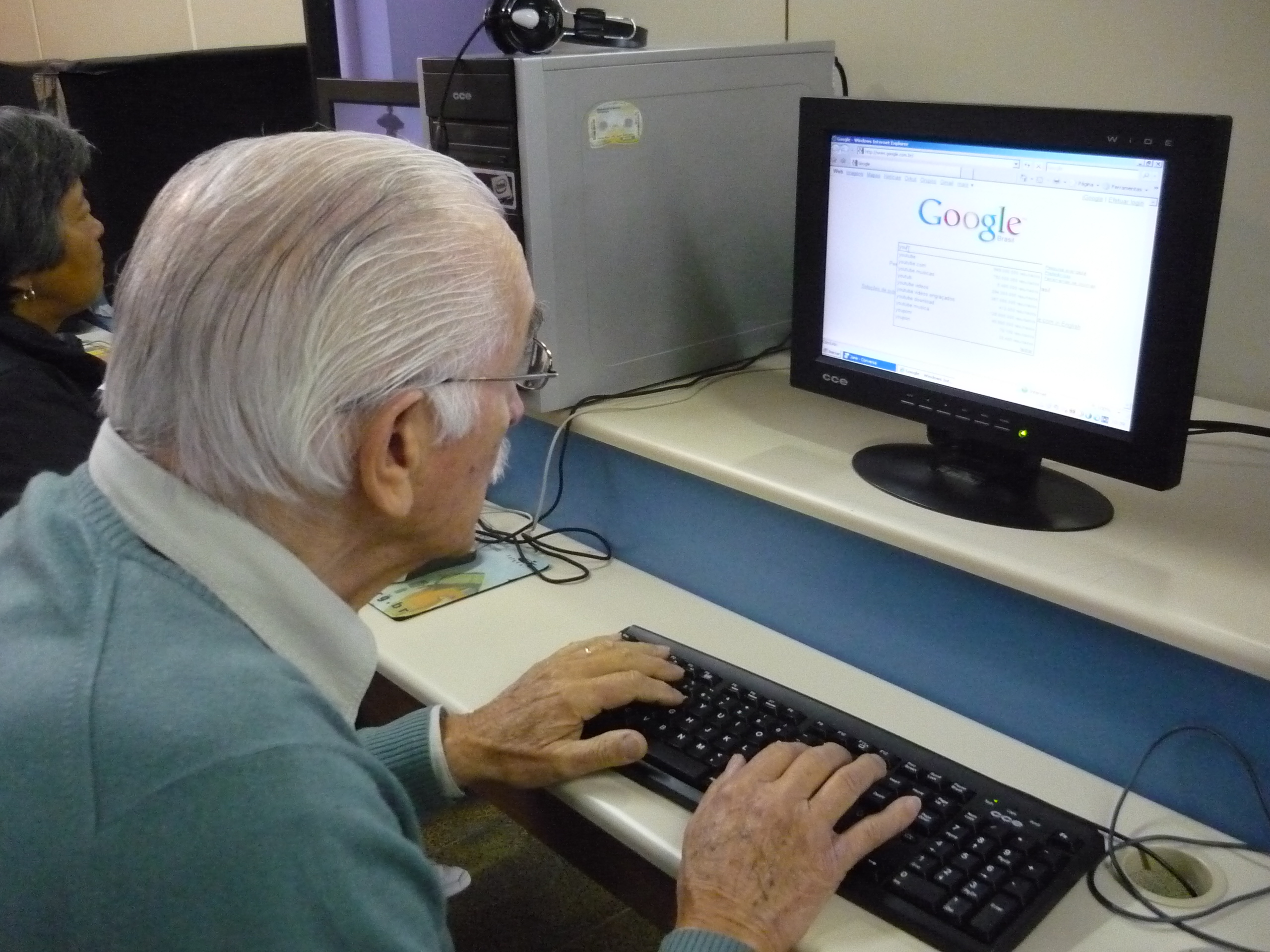
Does Internet use sharpen the brain ?


https://boischio.files.wordpress.com/2011/07/p1010318.jpg


Internet beats books for improving the mind, say scientists

By Richard Alleyne, Science Correspondent

Browsing the internet is better than reading books for boosting the brain power of middle-aged and older adults, new research has found.

Scientists discovered that searching the world wide web exercised the mind far more than reading and was similar to completing crosswords and puzzles.

Brain scans showed that going online stimulated larger parts of the brain than the relatively passive activity of reading a novel or non-fiction book.

It was so stimulating that the authors of the study believe it could actually help people maintain healthier brains into their old age.

"The study results are encouraging, that emerging computerised technologies may have physiological effects and potential benefits for middle-aged and older adults," said principal investigator Dr Gary Small, a professor at the Semel Institute for Neuroscience and Human Behavior at University of California.

"Internet searching engages complicated brain activity, which may help exercise and improve brain function." The study, the first of its kind to assess the impact of internet searching on brain performance, is published in the American Journal of Geriatric Psychiatry.

As the brain ages, a number of changes occur which impact on performance, such as general wasting and reductions in cell activity.

The team found that for computer-savvy middle-aged and older adults, searching the internet triggers key centres in the brain that control decision-making and complex reasoning.

They worked with 24 research volunteers between the ages of 55 and 76 with healthy brain function.

Half of the study participants had experience searching the internet, while the other half had no experience. Age, educational level and gender were similar between the two groups.

Both sets performed web searches and read books while undergoing functional magnetic resonance imaging (fMRI) scans, which recorded the subtle brain-circuitry changes experienced during these activities.

This type of scan tracks the intensity of cell responses in the brain by measuring the level of blood flow during tasks.

All study participants showed significant brain activity during the book-reading task, demonstrating use of the regions controlling language, reading, memory and visual abilities, which are located in the temporal, parietal, occipital and other areas of the brain.

But internet searches revealed a major difference between the two groups. While all participants demonstrated the same brain activity that was seen during the book-reading, the web-savvy group also registered activity in the frontal, temporal and cingulate areas of the brain, which control decision-making and complex reasoning.

"Our most striking finding was that internet searching appears to engage a greater extent of neural circuitry that is not activated during reading - but only in those with prior internet experience," said Dr Small, who is also the director of UCLA's Memory and Ageing Research Centre.

Volunteers with prior experience of the internet registered a twofold increase in brain activation while web searching when compared with those with little internet experience.

Balancing on the edge of life


balancing-on-edge-of-life03a

US military commander: Russian military ‘far more capable’ than Soviet Union’s


http://www.generationaldynamics.com/ww2010/g150228b.jpg


A top U.S. military commander warned that Russia’s modern military is now “far more capable” than that of the Soviet Union, saying Moscow is “messaging” the United States that “they’re a global power.”

The warning over Russia’s military might from Adm. William Gortney, head of U.S. Northern Command, is the second in as many months.

Gortney disclosed to Congress in March that Russian heavy bombers flew more "out-of-area patrols" last year than in any year "since the Cold War." On Tuesday, he affirmed that Russia’s “long-range” flights are rising – and occurring in places they haven’t before, like near Canada, Alaska and the English Channel.

He also confirmed there are two Russian Navy ships off the shores of the United States, reportedly near Cuba and Venezuela.

The comments are the latest sign of military and other tensions rising between the U.S. and Russia, which is accused of stoking the fighting in eastern Ukraine despite international sanctions and condemnation.

Gortney described Russia’s intervention in Ukraine as part of a “new doctrine,” which they’re employing. 

“The Russians have developed a far more capable military than the quantitative, very large military that the Soviet Union had,” he said.

In sheer numbers, the Soviet Union’s military was still much bigger than Russia’s today. According to statistics published in The Washington Post, the Soviet Union in the mid-1980s had more than 5 million in its armed forces, and even more in its reserves. Today, its armed forces number fewer than 1 million, with its reserves at 2 million – roughly comparable to the total forces of the U.S., but smaller than the total NATO force. 

“We watch very carefully what they're doing,” Gortney said, while noting that Russian aircraft are “adhering to international standards that are required by all airplanes that are out there.”

CNN also reported Tuesday that Russian hackers were able to breach a White House computer system after a successful cyber-attack on the State Department. The White House has not publicly confirmed this.

Meanwhile, Gortney revealed Tuesday that China has three ballistic missile submarines capable of hitting the U.S.

On the bright side, he said: “China does have a no-first-use policy, which gives me a little bit of a good news picture there.”

Fox News’ Lucas Tomlinson contributed to this report.

40+ Tips to Become a Twitter Power Marketer


by Team Caffeine ·Twitter Power User

One in five Americans use Twitter. The luxury car industry recently reported a return of $17.80 for every dollar invested in Twitter marketing.

Yet three in ten small businesses have yet to join Twitter. And many more fail to use Twitter effectively.

If you want to stand out on Twitter, read on to find out what you need to know.


How to Make Your Twitter Followers Fall in Love With You

The more your followers engage with you on Twitter, the better their relationship with you, which gives them a positive impression of your brand. What can you do to make yourself lovable on Twitter?

Make your words re-tweetable. Dan Zarella of Hubspot has researched the 20 most retweetable words. Be sure to use them!

Avoid words that turn off followers. These include “bored”, “tired”, “sleep” and “watching”.

Be generous with the favorite button. Who doesn’t love to have their tweets favorited? Whenever you see a tweet you like, hit the favorite star. You’ll be asking your followers feel good.

Don’t be a Noisy Ned. Some people love the sound of their own voice – even on Twitter. If you’ve got lots to share, spread it out through the day. Using Twitter to splurge is a surefire way to lose followers.

Limit hashtags to two per tweet. Any more, and you’ll come across as a hashtag spammer.

Share lots of links. Around 20% of tweets contain a link. Yet over half of all retweets contain a link. Want to be retweeted? Share links!


Bonus Tips on Follower Engagement

Makes sure your posts are short enough to retweet. Can your posts be shared if your followers manually retweet them, and include your username?

Retweet your followers. When someone you follower shares something you like, pass it on to your own followers. It’s a simple way to share the love.

Let your followers see your @replies. Replies usually get hidden in the Twitter system. If you want everyone to see them, then start them with a period – the magic dot. So, if I was replying to myself, I’d start it with .@lorirtaylor.

Say thank you. When your followers retweet or favorite one of your tweets, drop them a line to say thanks. It’s only a few seconds of your time, but it will mean a lot to them.


How to Get New Followers

Follower-count isn’t everything, but you do need followers to get your tweets heard. Here’s what to do if you want to grow your follower count.

Follow people. Often when you follow others, they’ll follow you back. Hoping for a followback isn’t a great reason on its own to follow someone. But if you’re interested in a person’s profile – follow them. The more people you follow, the more engagement you’ll get on Twitter.

Share cool stuff. Getting replies and retweets on your tweets will bring attention to your profile. So make sure you’re tweeting stuff that your followers will want to shout about.

Join Twitter chats. You’ll meet a ton of interesting people and if you say some interesting things, it’s highly likely you’ll gain new followers.

Put your Twitter @username on your business cards. Meeting people in real life will almost always make for a stronger relationship than meeting on social media. So why not include your Twitter handle on your business card? That way you can grow your Twitter following at real life business events. Talking of events…

Tweet highlights from conferences. Attending a business conference? Why not share what you’ve learned? Be sure to use the conference hashtag in your tweets.Make Sure Your Profile is Up to Speed

A weak Twitter profile could be your downfall. Here’s how to make it strong, so you stand out from the crowd.

Write your Twitter bio. Having no biography makes you effectively invisible. It’s only 160 characters, so there’s no excuse for not having one.

Make your biography keyword rich. What are your potential customers likely to search for on Twitter? Your Google Keyword research will help with knowing this. Put these keywords into your Twitter biography.

Use a real photo. Not your brand logo. Twitter is about being social and interacting with people. Got several employees who want to share on Twitter? Give them all their own Twitter accounts.

Smile! A good, close up picture as your avatar is a must on Twitter. Yes, it’s true, people judge on appearances, so make sure you’re looking your best.

Link to your website. There’s no point in putting hours of effort into engaging on Twitter if people can’t find out more about you, and check out your products or services.


Set Up Systems to Make Twitter Simple

Twitter doesn’t have to be a time drain. Most small businesses can do everything they need to on Twitter in just 15 minutes a day. Here’s where to start to streamline your tweeting.

Schedule your tweets. Our scheduling app of choice is Buffer. Hootsuite is a good alternative if you need a broader range of features.

Curate the best content. You don’t have to be original to draw a crowd, as long as you’re sharing good stuff. We recommend setting aside a couple of hours each week for content curation.

How to Connect with Twitter Influencers

Twitter power users aren’t afraid to rub shoulders with the good and the great. In fact, that’s one of the main reasons to use Twitter – there are no barriers to engaging with people at the top of the pyramid.

Follow influencers. It sounds simple, but it’s an important first step. They’ll receive a notification you’ve followed them, which puts you on their radar.

Don’t put all your eggs in one basket. Find a range of influencers who can help you achieve your goals. Not all influencers are on Twitter to engage.

Retweet influencers. They’ll receive notifications about this too.

Reply to influencer tweets. This is particularly effective if they ask a question, but it’s also good to just jump in and start a conversation.

Join them on a Twitter chat. Look through their past tweets, and see if they use a hashtag from a Twitter chat session. If so, join the next Twitter chat with that hashtag – where they’ll be available to talk live.

What to Tweet About

Not sure how you’re going to keep up with Tweeting every day? Never fear! There’s plenty you can tweet about.

Ask questions. People love to be helpful. Questions are brilliant conversation starters. And they can help you get the information you need.

Don’t be shy of sharing your opinions. Controversy can help stoke up conversations. Plus it’s good to show you’ve got personality and soul.

Use the Google Keyword Planner to find out about the interests of your audience. Make sure you cover these interests in your tweets.

Find questions to answer, and answer them. Answering questions is a great way to be helpful and grow your fan base.

Share inspiring quotes. Try to be original and source your quotes from books and magazines rather than the internet.


Use Twitter to Gain Marketing Insights

Twitter is incredibly useful for getting insights into all your content marketing. Here are just a few things you can use Twitter for.

Use Twitter to generate content ideas. Want to know what to blog about? Come up with as many ideas as you can, then share each one in a tweet. The popular tweets are the ones you should blog about.

Test your headline writing skills. Headline writing is an art that can take years to master. Twitter is the ideal place to test headlines. Observe which tweets get the most favorites, retweets or clicks – and you’ll learn what gets attention from your audience.

Find out more about your customers. The more you know about your customers, the easier it is to create products and marketing messages that resonate with them. Following customers on Twitter providers a broad insight into your customers and their needs, likes and dislikes.

Track your Twitter metrics. Want to know what’s working and what’s not on your Twitter feed? The best way to do this is to track your metrics. There are plenty of tools available that make it simple – even if math isn’t your strong point.


The Mindset of a Twitter Power User

Being a Twitter power user isn’t only about the tactics we’ve outlined above. It’s also about adopting a mindset.

Remember, funny is money. This is one of our favorite aphorisms. Having fun doesn’t only lighten your own road. It also makes you more pleasant to be around.

Keep it simple. Twitter isn’t the place to show off your extensive vocabulary. Short words and sentences are the order of the day.

You don’t need thousands of followers. Being a Twitter power user isn’t about the number of followers you have. It’s about using Twitter to achieve your marketing goals. As long as you’re headed to the right destination, don’t get hung up on your follower count.

Don’t be afraid to repeat yourself. Unlike Facebook’s newsfeed, Twitter’s homepage is a live stream of fresh tweets. It’s a good idea to share the same content several times to make sure lots of your followers see it.

Give it time. Rome wasn’t built in a day, nor was War and Peace written in a week. It takes time to become a Twitter power user. Be patient, and know your hard work will pay off in the end.

Team Caffeine

Lori R Taylor is the founder and executive editor of Social Caffeine. In 2009 she started her own direct response focused social media agency, REV Media Marketing LLC, coining the phrase given by her young son, “You bring the rain, we’ll make it pour.” Follow Lori on Twitter.

David is our acting editor. He’s British, but we don’t hold that against him.

Book Cover Test


How much money are you losing because of poor website design?

Conversions are where websites pay off. You must see your site as your laboratory! If you're a blogger might want to gain more subscribers. If you run an ecommerce site you want more sales. Maybe you just need more leads for your business. Whatever the action you want people to take your job is to make it easy. Help them help you. This free report is the marketing glue you need to fix your funnel.


100 no-equipment workouts


A huge no-equipment workout collection with visual easy-to follow guides for all fitness levels. Get it from: http://neilarey.com/100-no-equipment-workouts.html


A huge no-equipment workout collection with visual easy-to follow guides for all fitness levels.

Get the rest from here in one PDF.. to rule them all: http://neilarey.com/100-no-equipment-workouts.html or individually from here: http://neilarey.com/workouts.html