terça-feira, 11 de novembro de 2014

Take action to help #EndEbola


Snap 2014-11-11 at 17.03.42


The Ebola outbreak in West Africa has claimed more than 4,500 lives, and the number of cases grows every day. Our window to stop the Ebola outbreak from spiraling further out of control is closing fast – action is needed now.

The United Nations has a roadmap to stop the spread of Ebola. If G20 countries can commit and deploy the money, troops, and medics needed by the time they meet on November 15, we’ll be on track to start seeing the number of new cases decline by December.

Add your name below and tell the G20 countries: Step up your commitments and help #EndEbola, before it's too late.

Petition

What’s needed NOW to save lives: More money. More troops. More medics.

To G20 country leaders:

With the deadly Ebola virus continuing to tear through West Africa, we urge you to swiftly ensure all the personnel, equipment and funding required to halt the outbreak are made available, as outlined by the Framework for a Global Response to the Ebola Outbreak. By the time the G20 meets in Australia on November 15-16th, the world must be firmly on track to defeat the virus.

We have a window of a few weeks to contain this epidemic. Please act immediately to prevent this epidemic from causing further suffering and devastating more lives across West Africa, and beyond. We call on all G20 members to show real commitment and leadership in the midst of this global crisis and act now.

3-D Metal Processing Laser System


Wed, 09/17/2014 - 2:14pm


3D Metal processing laser system

From October 21-25, 2014, Jenoptik’s Lasers & Material Processing division will present at the world’s leading exhibition for the sheet metal working industry—the 23rd EuroBLECH in Hanover—the laser system JENOPTIK-VOTAN BIM for cutting and welding of metals.

The robot-based laser machine JENOPTIK-VOTAN BIM (Beam in Motion) provides industrial manufacturers with a highly flexible, fast and cost-effective solution for the processing of metals. Various companies from the automotive industry, for example, where this Jenoptik technology has already been qualified, rely on it.

The heart of the JENOPTIK-VOTAN BIM laser cutting system is a laser robot arm in which the laser beam delivery is fully integrated. The laser beam is coupled in through the robot foot so that the transport fiber does not need to be moved within the working space. In this way, not only the costs of maintenance and renewal are minimized, but the system itself is minimized as well. The small laser cutting head that weighs only five kilograms can easily access even the narrowest areas. This is the only way to achieve the high path accuracy and the very high level of system dynamics necessary for 3-D processing. With a repeat accuracy of ±50 µm this laser machine by Jenoptik ranks among the most precise systems of its class. Moreover, the axis movements of the Jenoptik laser arm are up to 60 percent faster than the current standards, thus allowing for a significantly shorter cycle time compared to other robot systems.

One key objective in the continuous further development of the JENOPTIK-VOTAN BIM is to increase capacity while minimizing the size of the machine at the same time. The aim is to simplify its integration into production lines or combined processing units such as cutting/welding systems.

The JENOPTIK-VOTAN BIM components have a modular structure so that they can be arranged within the space flexibly to suit the processing task. As an alternative, they can also be mounted on a platform measuring about 12 m² and accommodating the robot, the laser, the switch cabinet and a turntable that supports maneuverable sequences and continuous cutting. Hence, the JENOPTIK-VOTAN BIM can be transported and positioned easily using a forklift truck which helps to minimize installation time.

In order to achieve an optimal result for a variety of applications, Jenoptik also offers more system variants in addition to the compact JENOPTIK-VOTAN BIM individual plant. These variants are based on the BIM robot module that has an open interface for integration into an overall plant concept. Possible variants are a system with a feeding robot conveniently holding a 3-D-shaped tube or other part in front of the processing robot, or a multi-robot system. In this way, it is possible to set up a highly productive processing system comprising several robots and using minimum space, where the robots can work on a part simultaneously, thus providing maximum flexibility and enhancing performance.

The JENOPTIK-VOTAN BIM laser machine is primarily used in the automotive industry to cut highly complex 3-D car body parts and structural parts as well as hydroformed tubes, e.g. for exhaust systems, precisely and quickly. In addition, manufacturers can benefit greatly from the dynamic capability of the machine which facilitates the laser-based cutting of contours and functional holes in so-called white goods, in tanks and containers.

You can see a live demonstration of the 3-D robot system at the EuroBLECH trade fair in Hanover at booth C46 in hall 13.

Jenoptik   

AC Tachometer Generator


Thu, 10/16/2014 - 10:42am

Tachometer generator

Marsh Bellofram Corp., a member of the Bellofram Group of Companies, has introduced its WESTCON Model 758-9905000, an industrial AC tachometer generator, designed for high-reliability 24/7 jet and diesel engine rotational speed measurements within voltage responsive systems.

WESTCON 758 Series AC tachometers are designed to convert rotational shaft speed inputs into linear analog voltage outputs, even in the harshest of environments. Approximate starting torque is 2.0 in-oz, which is maintained at running speeds of up to 1,000 rpm. Their rugged construction incorporates a multi-pole cylindrical magnet, which turns within a wound stator. The stator itself is constructed from high-quality transformer iron lamination material. Units are housed within a dustproof aluminum alloy housing and feature an SAE 1/8” type steel mounting with 3/16” solid drive dog. Single phase output current is expressed as a sine wave over the full speed range of the tachometer. Units feature 100 ohm stators as standard. Two binding posters are available for electrical connection. Custom stator ranges are available upon request.

These rugged AC tachometers offer more than 20 years of successful market pedigree, including the effective support of GE turbofan engines on the McDonnell Douglas F/A-18 Hornet twin-engine combat jet, an application in which the products have successfully performed ongoing, reliable RPM measurements. They have also supported numerous military and off-highway vehicle diesel and gas engine applications, particularly where a standard SAE screw-type tachometer is necessary.

Marsh Bellofram


Rotary Encoder


Fri, 10/17/2014 - 1:58pm

Rotary encoder

The Leine & Linde MRI 2000 rotary encoder is designed to provide feedback solutions for large rotating machinery, typically found in the construction, pulp and paper, oil and gas, wind and marine industries. Introduced two years ago, this encoder has now received significant performance upgrades.

The MRI ring encoder is segmented into pieces, something that facilitates simple commissioning and service and is of particular benefit on large rotating machinery. As a ring is often mounted on a shaft between other parts in the machinery, it can be difficult to access it, both when first mounting it and when performing service. With a segmented ring, the pieces can be mounted from two sides of the shaft and screwed together. The segments also make handling easier when transporting and storing the ring.

Fixing the ring to the shaft can be made through flange mounting with axial screws or by Leine & Linde's ClampFit solution for simplified commissioning. With ClampFit, the ring segments are screwed together in a way that automatically tightens the ring around the mating shaft. This enables fixing to large cylindrical shaft without any flange surface considerations and without the need for stub shafts.

In this most recent evolution of the product, the ring is now also available with an alternative magnetic structure, enabling relaxed tolerances for the sensor pickup mounting. Radial gap tolerances have been doubled, allowing up to 6 mm between the sensing head and the ring surface. In addition, frequency response of the pickup has been doubled as well, providing the opportunity for higher shaft speeds.

Once installed, LED outputs verify power and signal quality giving the operator immediate verification of system health. Options include overvoltage protection and a programmable reference mark to simplify initialization of the motion control system

The MRI 2000 offers TTL, HTL and RS-422 outputs for standard applications. High Current HTL and the Opto-link fiber-optic outputs are also available which have been specially designed for long distance transmission such as those found in cranes and wind turbines.

Leine & Linde

Stepper Motor


Fri, 10/24/2014 - 11:39am

Snap 2014-11-11 at 16.06.10


Trinamic Motion Control has unveiled its latest patent-pending technology for stepper motors. Dubbed stealthChop, the new technology significantly reduces the noise of conventional stepper motor operation.

Motors operating at low speed exhibit a phenomenon known as magnetostriction, which causes an audible low frequency “hum”. This low-frequency noise is well known as the 60Hz hum that emanates from transmission lines and transformers. Trinamic’s stealthChop minimizes magnetostriction by implementing a PWM algorithm that relies predominantly on voltage modulation for motor control at lower speeds. This technology minimizes PWM current fluctuation, which is the primary cause of low-speed hum.

Noise limitations are especially desirable in applications that normally occur in close proximity to human operators, in applications where multiple stepper motors are in use, in video surveillance applications where installations near walls and ceilings amplify noise, and in consumer applications, like home automation and air conditioning, where users expect minimal noise.

Trinamic devices that implement this new stealthChop technology have achieved measured noise levels 10 dB below traditional stepper motor drive ICs.

Trinamic Motion Control


segunda-feira, 10 de novembro de 2014

Leading researchers discuss privacy and security in a connected age


As we increasingly rely on the Internet to connect to everything from banks and electrical grids to medical devices and autonomous vehicles, we are exposed to new vulnerabilities that threaten our security and privacy.

The National Science Foundation (NSF) has long supported research to enable transformational advances in cybersecurity.  From early NSF investments in cryptography and data protection in the 1980s and 1990s to today's broad portfolio of research investments enabling new paradigms for cybersecurity and consumer protection.

On Thursday, Oct. 30, NSF and IEEE-USA gathered experts in cybersecurity and privacy to explain the nature of these threats and discuss new, innovative ways to combat them.

In a conversation moderated by CISE acting assistant director Suzi Iacono, Lorrie Cranor (Carnegie Mellon University), Roxana Geambasu (Columbia University) and Gary McGraw (Cigital, Inc.) discussed the fundamental research that underlies online privacy and cybersecurity and the translation of ideas from academia to the marketplace.

Said Iacono: "NSF support for cybersecurity research is shaping a future that will give us more individual choice and control."

Credit: NSF

Um bate-papo ao estalar do chicote.


Cheguei a conclusão que embora a Ciência avance em progressão geométrica os problemas sociais também avançam quase nessa mesma progressão…. Ou seja, a Ciência resolve um problema e dois ou mais outros surgem a partir do nada, como por encanto. Deve-se supor então que os tais "problemas" façam parte da vida, e será impossível viver sem eles. O que a Ciência e a Tecnologia poderão fazer é torná-los menos agressivos, menos dolorosos, menos traumatizantes. Mas, eliminá-los….. podem tirar a tropa da tempestade. Never, mesmo.   E por que isso?  Porque somos neurológicamente complexos, mas não perfeitos. E isso está escrito em nossos DNAs. E não pense que isso poderá um dia ser modificado pela Genômica.
Poderemos dentro de 50 a 100 anos chegarmos a um nível de equilíbrio comportamental e organizacional em nossa sociedade que nos faça pelos menos mais felizes , ou seja, pelo menos gozarmos um nível mínimo de satisfação e de prazer em viver tomando-se a sociedade como um todo. Continuará a existir os mais ou menos felizes, porém todos concluirão suas vidas numa boa.  Quando a vida foi criada, quando o homem passou a fazer parte dessa vida, a condição básica para que ela (a vida) se auto-sustentasse e progredisse foi exatamente os tais "problemas" de que tanto se fala. O indivíduo, a sociedade "vê" um problema pela frente, e a solução ou o controle dele é o que dá sentido à vida.  Por isso é que o destino da humanidade continuará sendo e como sempre foi, um imenso laboratório de pesquisas para apenas "controlar" os famigerados "problemas"....  Vejam o exemplo das epidemias que surgem periódicamente... Depois de um certo tempo, cria-se uma vacina, o problema é resolvido e a humanidade respira aliviada. Mas só por um certo tempo.  > Peste bubônica, polio, sarampo, gripe aviária, suína, vaca louca, aids, e agora ebola. Descobriu-se que vírus são inteligentes, eles sempre dão um jeito de driblar o que o homem cria para combatê-los....
Se formos comparar os tempos atuais com o tempo dos nossos antepassados, não veremos nada conclusivamente melhorado, resolvido. Pelo contrário, até parece que pioramos não obstante todo o avanço científico.  Porém, se pensarmos positivamente poderemos antever um futuro onde pelo menos um certo equilíbrio será criado, mais pelo aprendizado devido aos nossos tropeços e tombos do que propriamente por soluções reais.
O que a Ciência e a Tecnologia fazem atualmente é compensar os nossos pecados. Não há um saldo realmente positivo, continuamos no "vermelho"...

José S de Melo

Multifunctional testing instrument helps improve production of laser-heated hard disk drives with enhanced storage capacities


November 8, 2014

The Agency for Science, Technology and Research (A*STAR)

Today''s hard disk drives can hold terabytes of digital data, but manufacturers are having trouble squeezing more storage capacity into these devices using conventional procedures. Now, a new technique that promises to solve this impasse -- heat-assisted magnetic recording (HAMR) -- can be integrated more efficiently into future hard drives thanks to an analytical tool.


Today's hard disk drives can hold terabytes of digital data, but manufacturers are having trouble squeezing more storage capacity into these devices using conventional procedures. Now, a new technique that promises to solve this impasse -- heat-assisted magnetic recording (HAMR) -- can be integrated more efficiently into future hard drives thanks to an analytical tool developed by A*STAR researchers.

Data-storing 'bits' inside hard disk drives have to be turned on and off with magnetic fields. But as bit sizes diminish to improve storage density, the recording heads need stronger and stronger fields to resolve individual magnetic grains. Eventually, impractically large fields are required to read and write data.

The HAMR approach uses a small laser mounted on the disk recording head to heat up the magnetic material before writing to it. The increase in temperature reduces the magnetic field intensity necessary for data storage and consequently, smaller bit sizes can be used. Rapid cooling of the magnetic grains ensures the stability of the freshly recorded data.

Researchers are confident that the HAMR technique can lead to 20-terabyte hard drives within a few years if some specific challenges can be overcome. One current problem is that accurately testing the temperature-dependent recording in localized regions is difficult. Typical analytical methods have to heat up relatively large sample volumes, a time-consuming process that can irreversibly damage HAMR media.

Hongzhi Yang, with a team from the A*STAR Data Storage Institute and the National University of Singapore designed an improved 'pump-probe' laser device to scrutinize HAMR devices. The instrument uses an initial intense beam to heat up a localized region of the magnetic disk. Then, a weaker laser probes the heated region for the micro-magneto-optic Kerr effect (μ-MOKE), a phenomenon that can gauge a material's magnetization state. By repeating these measurements with different heating beam conditions, the researchers obtained detailed data on HAMR writing, reading and magnetic states from specific microscopic spots on the hard drive surface -- information currently unavailable through other techniques.

"The challenge in developing this testing instrument was integrating the complex optical and mechanical components to achieve good signal-to-noise ratios and uniform temperature distribution in the media during heating," says Yang. "But compared to traditional bulk-heating techniques, our method is much faster, allows full disk measurement and avoids annealing effects."

The team is confident that this instrument can be incorporated into disk drive manufacturing plants as HAMR captures a larger share of magnetic recording technology.


Story Source:

The above story is based on materials provided by The Agency for Science, Technology and Research (A*STAR). Note: Materials may be edited for content and length.


Journal Reference:

  1. H. Z. Yang, Y. J. Chen, S. H. Leong, C. W. An, K. D. Ye, M. J. Yin, J. F. Hu. A multi-functional testing instrument for heat assisted magnetic recording mediaa). Journal of Applied Physics, 2014; 115 (17): 17B726 DOI: 10.1063/1.4865969


Watching the space–Wonderful !


Solar system scope

The Deepwater Search for the Antikythera Mechanism, the World’s First Computer


By Alyssa Bereznak | Yahoo Tech – Sun, 21 Sep, 2014

Sometime in the early first century B.C., a ship went down in the Mediterranean Sea, just off a Greek island named Antikythera. The wreck itself wasn’t unusual. The island was surrounded by jagged rocks, which likely caused many a boat to disappear back then. But there was something different about this one. The boat contained a trove of statues, jewelry, and — most notably — what some scholars believe to be the earliest computer known to man.

On Sept. 15, with the help of a technologically advanced underwater suit that makes the wearer resemble Iron Man, archaeologist Dr. Brendan Foley will lead a team to do one final excavation of the site. He hopes to find yet another ancient computer, along with details that will help historians finally identify who its owner was all those years ago — a question that may shape how we view the birth of civilized technology.

Mysteries of the Mediterranean
Discovered in 1900 by a sponge diver who spotted the glimmer of a bronze hand in the sand, the Antikythera wreck first revealed Roman Empire artifacts lie dormant at the bottom of the ocean.

“Its amazing cargo was the light that shined on the Mediterranean,” Foley said. “People thought, oh my god, if this is down there, what else is? The wreck is really the birthplace of underwater archaeology.”
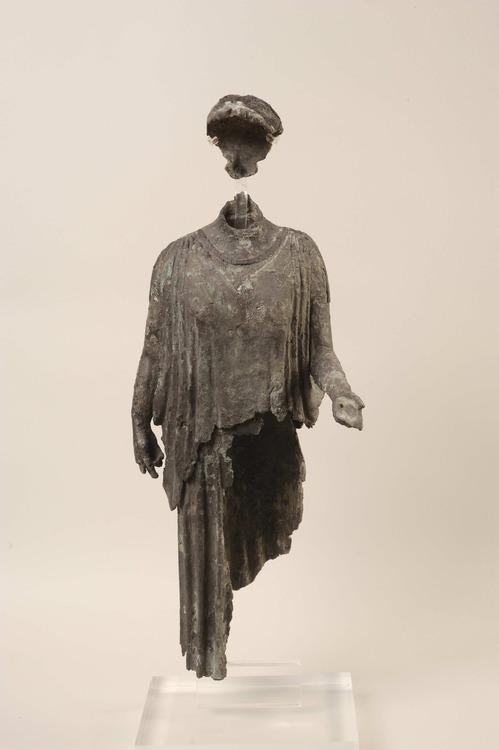
Remnant of statue

Images courtesy of the National Archaeological Museum, Athens. Copyright Hellenic Ministry of Culture and Sports/Archaeological Receipts Fund. (K. Xenikakis)

The exact date and details of the Antikythera shipwreck have long been debated by historians. Initial theories first pegged Roman general Sulla, who lived from 138 B.C. to 78 B.C., as its owner. Scholars surmised that he was traveling home with a recent haul from Asia Minor to attend a big parade being thrown for Julius Caesar.

Carbon dating sank that initial thesis, placing the ship’s capsize date at around 60 B.C. Researchers have since theorized that the ship was sent to retrieve commissioned statues meant to decorate the villas of Rome’s rising upper class.

But Foley favors a more romantic situation: that the ship was transferring a woman of importance or nobility to be married in Rome, and the riches on board — including what he assumes was the very costly and prized mechanism — represented her dowry.

“We’re kind of in love with that idea,” Foley told Yahoo Tech. “It’s such a romantic notion. It makes it the Titanic of the ancient world.” (And the mechanism its Heart of the Ocean necklace, only nerdier).

His wish is buttressed by some evidence. A second excavation of the site, led by Jacques Cousteau in the 1970s, revealed what scientists believe is a female skull and jawbone near some jewelry.

But how Foley’s 10-person team approaches the excavation is dictated less by the ship’s possible origin story and more by putting together the missing pieces from past explorers — especially recovering still-missing parts of the mechanism.

Diving in
Learning how to retrieve the material at 200-foot depths proved much more difficult than the sponge divers in 1900 expected. They spent the better part of a year removing items at the site, their only real diving equipment consisting of a heavy bronze helmet. It connected to a long rubber hose that was fed air by a manual crank at the surface. The entire contraption allowed only five minutes of “bottom time” per person, requiring the excavators to rotate among 20 men at a time.

The task was grueling, but the team was well rewarded for its effort. It recovered a total of 36 marble statues and a handful of bronze ones, some of them more intact than others. Along with that came all kinds of ceramic and glass containers, lamps, human remains, and gold jewelry.
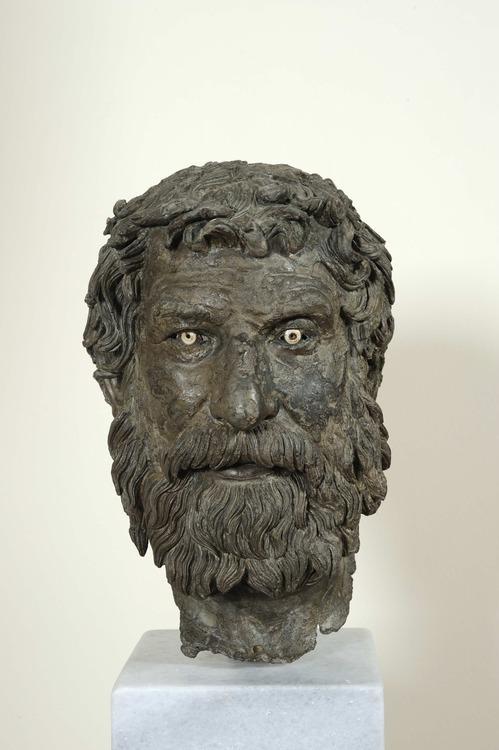
Bust discovered in the wreck

Among their findings was a mysterious rectangular bronze object covered in marine growth. It measured about 20 centimeters high and featured a circular crown gear, but immediately broke into three parts when the divers brought it ashore. They assumed it was part of a broken statue and stored it in a museum along with other fragments recovered from the wreck.

It wasn’t until 1902, when a former Greek minister of education was visiting the museum, that he noticed a few tiny inscriptions on one of these pieces of bronze and its gears. One word he recognized was “sun”; another was “Venus” or, in Greek, “Aphrodite.”
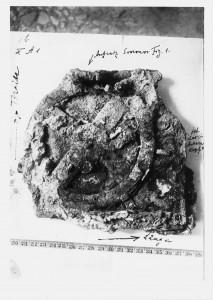
The Antikythera mechanism

“This was the first day that the mechanism was actually discovered,” Yanis Bitsakis, who has a Ph.D. in the history of the Antikythera mechanism and who will be present at the expedition, told Yahoo Tech.

From that day, the scholars knew it was an astronomical device, but they had no idea how it functioned or what, in particular, it could tell you. To make matters more complicated, scientists eventually realized that they had only about 50 percent of the contraption to examine in the first place.

“At first they assumed it was some sort of navigational instrument,” Foley said. “Then people thought that, well, gears from first century B.C. is kind of anachronistic. Maybe it was just something that was dropped on the site much later. But slowly, with the advent of X-ray capabilities to look inside this thing, people have deciphered what it was used for.”

Periodically over the next 50 years, the discussion of what the mechanism did continued.

Physicist and science historian Derek de Solla Price was the first to carry out an extensive study on the device in the 1950s. In 1959, Scientific American ran a front-page article on his discoveries, in which he declared the object to be the first known computer — a bold and groundbreaking claim, considering that historians had previously awarded that title to certain mechanisms made in the Middle Ages, about 14 centuries later.

Historians were mystified by this device and surprised to learn that the Babylonians — who wrote down their observations of lunar and solar eclipses — were in contact with the Greeks. Even so, they couldn’t believe something so intellectually advanced had existed during that period in history.

“It was like Indiana Jones getting into a tomb and discovering a cellphone,” Bitsakis said.

In other words, it proved a certain technological intelligence at that time that even now some scholars refuse to accept.

“Still, some engineers are totally reluctant to approve the mechanism as a real computer,” Bitsakis said. “They just think it’s a hoax or it was put there intentionally after the wreck.”

De Solla Price continued his research for decades. With the help of a colleague at the Atomic Energy Commission, he was able to peer inside the object with X-rays. In 1974, he published a book  analyzed the inner workings of the device titled Gears from the Greeks. After studying the X-rays, de Solla Price concluded that the device was a mechanized tool for predicting and identifying the positions of the planets in the solar system. It was set into motion using a large knob or crank. When a person turned it, the gears of the contraption moved, and those gears were attached to separate needles on the two faces of the machine. On one face, the needles pointed to the positions of the five planets known in the first century B.C.: Mercury, Venus, Mars, Jupiter, and Saturn.

On the other face, the indicator needles showed phases of the moon and predicted the possibility of lunar or solar eclipse. So if you turned it one way, it would move forward in time, and if you turned it the opposite way, you moved into the past.

“It was very skillfully crafted,” diving specialist Michael Lombardi, who plans to join Foley in his excavation, told Yahoo Tech. “The engineering that went into this even today is impressive. And this was done with hand tools. The precision of the gears that worked together were unlike any others.”

It even came with an owner’s manual, which sits on display at the National Archaeological Museum. On what was probably some sort of copper alloy, you can see a script of Greek letters — only a couple of millimeters high — that explain how the item functions. Scientists think those plates were likely attached to the wooden box that the object originally came in (but which fell apart after years underwater).

In 2005, physicist and technological historian Michael T. Wright worked with his colleague Allan George Bromley to re-create a working model.

A year later, Bitsakis and a team of researchers followed up with a slightly modified version of that, which they revealed alongside some new findings in the scientific journal Nature.

The search for more
But that’s not the entire story. While examining the many pieces of the computer that were retrieved, researchers realized that one stood out from the collection: “Fragment D.” It’s a small item, about 6 inches square and 3 inches wide, made of thin sheets of bronze that, after years of deterioration, now have the consistency of phyllo dough. Scientists soon recognized that this piece was made of a different material and workmanship, leading them — especially a hopeful Foley — to believe that there’s an entirely different device that could still be sitting at the bottom of the ocean.

“We think that the mechanism probably wasn’t alone in terms of being a very high-value luxury good,” Foley said. “We think there’s going to be a lot more stuff down there. It’s the kind of stuff that we can’t even predict. it’s the highest-value, highest-quality goods that were available in the first century B.C.”

To ensure that they make the most of their trip, Foley and his team will explore the wreckage using a new $1.3 million exosuit, which will be used for the first time when their excavation launches this week.
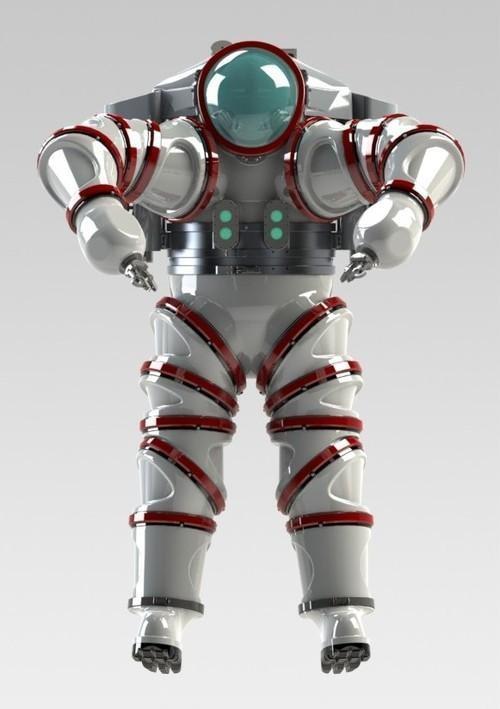
Exosuit diving system

The journey, which Lombardi is calling their “Big Fat Greek Expedition,” will start by sending a robot down to the wreck so that it can map the site and the seafloor around it. The team will also run a metal detection survey to determine how large the site is.

It will then send divers down in the pressurized suit, which allows them to explore the bottom of the ocean for an unlimited amount of time. Traditional diving suits aren’t typically pressurized and therefore require time to “decompress” via closed circuit rebreathers and mixed gases when a diver returns to the surface. This always limited the amount of time a team could spend poking around at the bottom of the ocean. With the exosuit, those limits don’t exist.

“When we’re ready, we say over the communication, ‘OK, I’m ready to come up,’ and they pull us back up,” Foley said. “It takes three minutes to get to the surface. So it’s a huge increase in productivity and efficiency.”

The suit’s flexible tubing and metal claws will also allow researchers to move their arms and navigate the delicate debris. As they traverse the ocean floor, they’ll also use a custom-made remotely operated vehicle, which will act as a data collection station.

That being said, jamming yourself into a stuffy pod is not the most pleasant way to spend a day in the Mediterranean. To navigate the exosuit, you must prop yourself up on a makeshift bicycle seat and place your feet lightly on its foot pedals, which control the thrust of the apparatus. Foley’s team has spent the past half year training in the suit and — as a result — fallen victim to severe bruising, skinned elbows, and tender crotches.

“It’s like you’ve got your arms and legs and torso inside a stovepipe,” he said. “It’s really quite uncomfortable.”

A blank slate
Previous teams have cleared the site of its original statues and wreckage, a fact that Foley says works to his team’s advantage.

“Those big, bulky statues are out of our way, and now we’ve got this sediment blanket on the seafloor,” he told Yahoo Tech. “We’re hoping that if there is another mechanism, it’s down in the mud and it’ll be very well preserved indeed.”

With any luck, the team will find more pieces to the puzzle that explain the mechanism’s mind-boggling first century B.C. presence, or perhaps a companion machine that measures something different. Though neither Foley nor the rest of the team is sure what they’ll find, they’ll be grateful for anything that will teach them more about the surprisingly early origins of technology — something that might even result in the rewriting of history books.

“Since we will be able to survey the whole ship, and hopefully within a year or two or three have the whole cargo discovered, it will greatly help us in finding the whole context,” Bitsakis said. “It will be an even greater story.”