segunda-feira, 10 de novembro de 2014

Leading researchers discuss privacy and security in a connected age


As we increasingly rely on the Internet to connect to everything from banks and electrical grids to medical devices and autonomous vehicles, we are exposed to new vulnerabilities that threaten our security and privacy.

The National Science Foundation (NSF) has long supported research to enable transformational advances in cybersecurity.  From early NSF investments in cryptography and data protection in the 1980s and 1990s to today's broad portfolio of research investments enabling new paradigms for cybersecurity and consumer protection.

On Thursday, Oct. 30, NSF and IEEE-USA gathered experts in cybersecurity and privacy to explain the nature of these threats and discuss new, innovative ways to combat them.

In a conversation moderated by CISE acting assistant director Suzi Iacono, Lorrie Cranor (Carnegie Mellon University), Roxana Geambasu (Columbia University) and Gary McGraw (Cigital, Inc.) discussed the fundamental research that underlies online privacy and cybersecurity and the translation of ideas from academia to the marketplace.

Said Iacono: "NSF support for cybersecurity research is shaping a future that will give us more individual choice and control."

Credit: NSF

Um bate-papo ao estalar do chicote.


Cheguei a conclusão que embora a Ciência avance em progressão geométrica os problemas sociais também avançam quase nessa mesma progressão…. Ou seja, a Ciência resolve um problema e dois ou mais outros surgem a partir do nada, como por encanto. Deve-se supor então que os tais "problemas" façam parte da vida, e será impossível viver sem eles. O que a Ciência e a Tecnologia poderão fazer é torná-los menos agressivos, menos dolorosos, menos traumatizantes. Mas, eliminá-los….. podem tirar a tropa da tempestade. Never, mesmo.   E por que isso?  Porque somos neurológicamente complexos, mas não perfeitos. E isso está escrito em nossos DNAs. E não pense que isso poderá um dia ser modificado pela Genômica.
Poderemos dentro de 50 a 100 anos chegarmos a um nível de equilíbrio comportamental e organizacional em nossa sociedade que nos faça pelos menos mais felizes , ou seja, pelo menos gozarmos um nível mínimo de satisfação e de prazer em viver tomando-se a sociedade como um todo. Continuará a existir os mais ou menos felizes, porém todos concluirão suas vidas numa boa.  Quando a vida foi criada, quando o homem passou a fazer parte dessa vida, a condição básica para que ela (a vida) se auto-sustentasse e progredisse foi exatamente os tais "problemas" de que tanto se fala. O indivíduo, a sociedade "vê" um problema pela frente, e a solução ou o controle dele é o que dá sentido à vida.  Por isso é que o destino da humanidade continuará sendo e como sempre foi, um imenso laboratório de pesquisas para apenas "controlar" os famigerados "problemas"....  Vejam o exemplo das epidemias que surgem periódicamente... Depois de um certo tempo, cria-se uma vacina, o problema é resolvido e a humanidade respira aliviada. Mas só por um certo tempo.  > Peste bubônica, polio, sarampo, gripe aviária, suína, vaca louca, aids, e agora ebola. Descobriu-se que vírus são inteligentes, eles sempre dão um jeito de driblar o que o homem cria para combatê-los....
Se formos comparar os tempos atuais com o tempo dos nossos antepassados, não veremos nada conclusivamente melhorado, resolvido. Pelo contrário, até parece que pioramos não obstante todo o avanço científico.  Porém, se pensarmos positivamente poderemos antever um futuro onde pelo menos um certo equilíbrio será criado, mais pelo aprendizado devido aos nossos tropeços e tombos do que propriamente por soluções reais.
O que a Ciência e a Tecnologia fazem atualmente é compensar os nossos pecados. Não há um saldo realmente positivo, continuamos no "vermelho"...

José S de Melo

Multifunctional testing instrument helps improve production of laser-heated hard disk drives with enhanced storage capacities


November 8, 2014

The Agency for Science, Technology and Research (A*STAR)

Today''s hard disk drives can hold terabytes of digital data, but manufacturers are having trouble squeezing more storage capacity into these devices using conventional procedures. Now, a new technique that promises to solve this impasse -- heat-assisted magnetic recording (HAMR) -- can be integrated more efficiently into future hard drives thanks to an analytical tool.


Today's hard disk drives can hold terabytes of digital data, but manufacturers are having trouble squeezing more storage capacity into these devices using conventional procedures. Now, a new technique that promises to solve this impasse -- heat-assisted magnetic recording (HAMR) -- can be integrated more efficiently into future hard drives thanks to an analytical tool developed by A*STAR researchers.

Data-storing 'bits' inside hard disk drives have to be turned on and off with magnetic fields. But as bit sizes diminish to improve storage density, the recording heads need stronger and stronger fields to resolve individual magnetic grains. Eventually, impractically large fields are required to read and write data.

The HAMR approach uses a small laser mounted on the disk recording head to heat up the magnetic material before writing to it. The increase in temperature reduces the magnetic field intensity necessary for data storage and consequently, smaller bit sizes can be used. Rapid cooling of the magnetic grains ensures the stability of the freshly recorded data.

Researchers are confident that the HAMR technique can lead to 20-terabyte hard drives within a few years if some specific challenges can be overcome. One current problem is that accurately testing the temperature-dependent recording in localized regions is difficult. Typical analytical methods have to heat up relatively large sample volumes, a time-consuming process that can irreversibly damage HAMR media.

Hongzhi Yang, with a team from the A*STAR Data Storage Institute and the National University of Singapore designed an improved 'pump-probe' laser device to scrutinize HAMR devices. The instrument uses an initial intense beam to heat up a localized region of the magnetic disk. Then, a weaker laser probes the heated region for the micro-magneto-optic Kerr effect (μ-MOKE), a phenomenon that can gauge a material's magnetization state. By repeating these measurements with different heating beam conditions, the researchers obtained detailed data on HAMR writing, reading and magnetic states from specific microscopic spots on the hard drive surface -- information currently unavailable through other techniques.

"The challenge in developing this testing instrument was integrating the complex optical and mechanical components to achieve good signal-to-noise ratios and uniform temperature distribution in the media during heating," says Yang. "But compared to traditional bulk-heating techniques, our method is much faster, allows full disk measurement and avoids annealing effects."

The team is confident that this instrument can be incorporated into disk drive manufacturing plants as HAMR captures a larger share of magnetic recording technology.


Story Source:

The above story is based on materials provided by The Agency for Science, Technology and Research (A*STAR). Note: Materials may be edited for content and length.


Journal Reference:

  1. H. Z. Yang, Y. J. Chen, S. H. Leong, C. W. An, K. D. Ye, M. J. Yin, J. F. Hu. A multi-functional testing instrument for heat assisted magnetic recording mediaa). Journal of Applied Physics, 2014; 115 (17): 17B726 DOI: 10.1063/1.4865969


Watching the space–Wonderful !


Solar system scope

The Deepwater Search for the Antikythera Mechanism, the World’s First Computer


By Alyssa Bereznak | Yahoo Tech – Sun, 21 Sep, 2014

Sometime in the early first century B.C., a ship went down in the Mediterranean Sea, just off a Greek island named Antikythera. The wreck itself wasn’t unusual. The island was surrounded by jagged rocks, which likely caused many a boat to disappear back then. But there was something different about this one. The boat contained a trove of statues, jewelry, and — most notably — what some scholars believe to be the earliest computer known to man.

On Sept. 15, with the help of a technologically advanced underwater suit that makes the wearer resemble Iron Man, archaeologist Dr. Brendan Foley will lead a team to do one final excavation of the site. He hopes to find yet another ancient computer, along with details that will help historians finally identify who its owner was all those years ago — a question that may shape how we view the birth of civilized technology.

Mysteries of the Mediterranean
Discovered in 1900 by a sponge diver who spotted the glimmer of a bronze hand in the sand, the Antikythera wreck first revealed Roman Empire artifacts lie dormant at the bottom of the ocean.

“Its amazing cargo was the light that shined on the Mediterranean,” Foley said. “People thought, oh my god, if this is down there, what else is? The wreck is really the birthplace of underwater archaeology.”

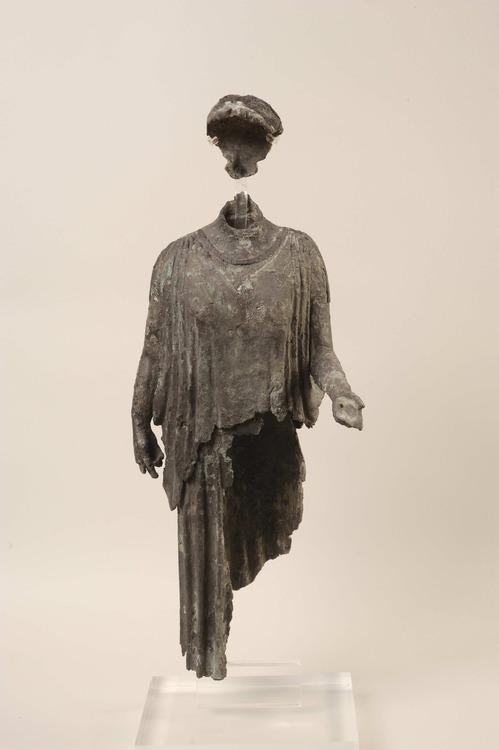
Remnant of statue

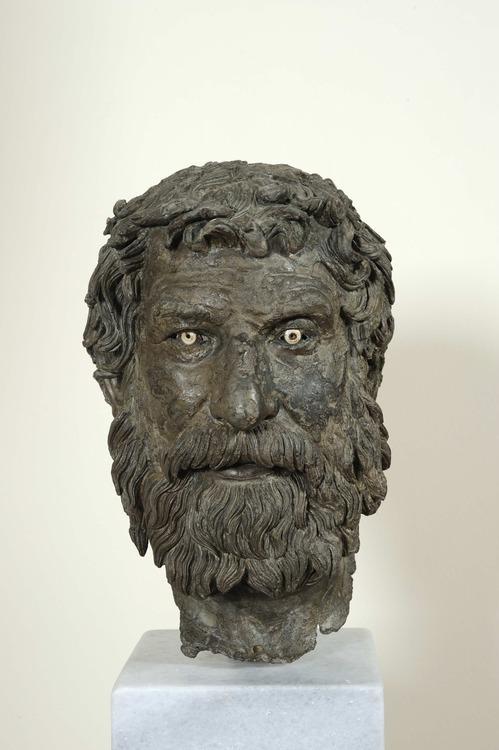
Images courtesy of the National Archaeological Museum, Athens. Copyright Hellenic Ministry of Culture and Sports/Archaeological Receipts Fund. (K. Xenikakis)

The exact date and details of the Antikythera shipwreck have long been debated by historians. Initial theories first pegged Roman general Sulla, who lived from 138 B.C. to 78 B.C., as its owner. Scholars surmised that he was traveling home with a recent haul from Asia Minor to attend a big parade being thrown for Julius Caesar.

Carbon dating sank that initial thesis, placing the ship’s capsize date at around 60 B.C. Researchers have since theorized that the ship was sent to retrieve commissioned statues meant to decorate the villas of Rome’s rising upper class.

But Foley favors a more romantic situation: that the ship was transferring a woman of importance or nobility to be married in Rome, and the riches on board — including what he assumes was the very costly and prized mechanism — represented her dowry.

“We’re kind of in love with that idea,” Foley told Yahoo Tech. “It’s such a romantic notion. It makes it the Titanic of the ancient world.” (And the mechanism its Heart of the Ocean necklace, only nerdier).

His wish is buttressed by some evidence. A second excavation of the site, led by Jacques Cousteau in the 1970s, revealed what scientists believe is a female skull and jawbone near some jewelry.

But how Foley’s 10-person team approaches the excavation is dictated less by the ship’s possible origin story and more by putting together the missing pieces from past explorers — especially recovering still-missing parts of the mechanism.

Diving in
Learning how to retrieve the material at 200-foot depths proved much more difficult than the sponge divers in 1900 expected. They spent the better part of a year removing items at the site, their only real diving equipment consisting of a heavy bronze helmet. It connected to a long rubber hose that was fed air by a manual crank at the surface. The entire contraption allowed only five minutes of “bottom time” per person, requiring the excavators to rotate among 20 men at a time.

The task was grueling, but the team was well rewarded for its effort. It recovered a total of 36 marble statues and a handful of bronze ones, some of them more intact than others. Along with that came all kinds of ceramic and glass containers, lamps, human remains, and gold jewelry.

Bust discovered in the wreck

Among their findings was a mysterious rectangular bronze object covered in marine growth. It measured about 20 centimeters high and featured a circular crown gear, but immediately broke into three parts when the divers brought it ashore. They assumed it was part of a broken statue and stored it in a museum along with other fragments recovered from the wreck.

It wasn’t until 1902, when a former Greek minister of education was visiting the museum, that he noticed a few tiny inscriptions on one of these pieces of bronze and its gears. One word he recognized was “sun”; another was “Venus” or, in Greek, “Aphrodite.”

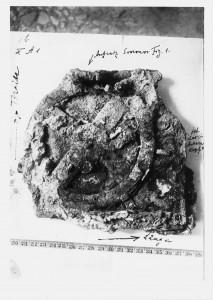
The Antikythera mechanism

“This was the first day that the mechanism was actually discovered,” Yanis Bitsakis, who has a Ph.D. in the history of the Antikythera mechanism and who will be present at the expedition, told Yahoo Tech.

From that day, the scholars knew it was an astronomical device, but they had no idea how it functioned or what, in particular, it could tell you. To make matters more complicated, scientists eventually realized that they had only about 50 percent of the contraption to examine in the first place.

“At first they assumed it was some sort of navigational instrument,” Foley said. “Then people thought that, well, gears from first century B.C. is kind of anachronistic. Maybe it was just something that was dropped on the site much later. But slowly, with the advent of X-ray capabilities to look inside this thing, people have deciphered what it was used for.”

Periodically over the next 50 years, the discussion of what the mechanism did continued.

Physicist and science historian Derek de Solla Price was the first to carry out an extensive study on the device in the 1950s. In 1959, Scientific American ran a front-page article on his discoveries, in which he declared the object to be the first known computer — a bold and groundbreaking claim, considering that historians had previously awarded that title to certain mechanisms made in the Middle Ages, about 14 centuries later.

Historians were mystified by this device and surprised to learn that the Babylonians — who wrote down their observations of lunar and solar eclipses — were in contact with the Greeks. Even so, they couldn’t believe something so intellectually advanced had existed during that period in history.

“It was like Indiana Jones getting into a tomb and discovering a cellphone,” Bitsakis said.

In other words, it proved a certain technological intelligence at that time that even now some scholars refuse to accept.

“Still, some engineers are totally reluctant to approve the mechanism as a real computer,” Bitsakis said. “They just think it’s a hoax or it was put there intentionally after the wreck.”

De Solla Price continued his research for decades. With the help of a colleague at the Atomic Energy Commission, he was able to peer inside the object with X-rays. In 1974, he published a book  analyzed the inner workings of the device titled Gears from the Greeks. After studying the X-rays, de Solla Price concluded that the device was a mechanized tool for predicting and identifying the positions of the planets in the solar system. It was set into motion using a large knob or crank. When a person turned it, the gears of the contraption moved, and those gears were attached to separate needles on the two faces of the machine. On one face, the needles pointed to the positions of the five planets known in the first century B.C.: Mercury, Venus, Mars, Jupiter, and Saturn.

On the other face, the indicator needles showed phases of the moon and predicted the possibility of lunar or solar eclipse. So if you turned it one way, it would move forward in time, and if you turned it the opposite way, you moved into the past.

“It was very skillfully crafted,” diving specialist Michael Lombardi, who plans to join Foley in his excavation, told Yahoo Tech. “The engineering that went into this even today is impressive. And this was done with hand tools. The precision of the gears that worked together were unlike any others.”

It even came with an owner’s manual, which sits on display at the National Archaeological Museum. On what was probably some sort of copper alloy, you can see a script of Greek letters — only a couple of millimeters high — that explain how the item functions. Scientists think those plates were likely attached to the wooden box that the object originally came in (but which fell apart after years underwater).

In 2005, physicist and technological historian Michael T. Wright worked with his colleague Allan George Bromley to re-create a working model.

A year later, Bitsakis and a team of researchers followed up with a slightly modified version of that, which they revealed alongside some new findings in the scientific journal Nature.

The search for more
But that’s not the entire story. While examining the many pieces of the computer that were retrieved, researchers realized that one stood out from the collection: “Fragment D.” It’s a small item, about 6 inches square and 3 inches wide, made of thin sheets of bronze that, after years of deterioration, now have the consistency of phyllo dough. Scientists soon recognized that this piece was made of a different material and workmanship, leading them — especially a hopeful Foley — to believe that there’s an entirely different device that could still be sitting at the bottom of the ocean.

“We think that the mechanism probably wasn’t alone in terms of being a very high-value luxury good,” Foley said. “We think there’s going to be a lot more stuff down there. It’s the kind of stuff that we can’t even predict. it’s the highest-value, highest-quality goods that were available in the first century B.C.”

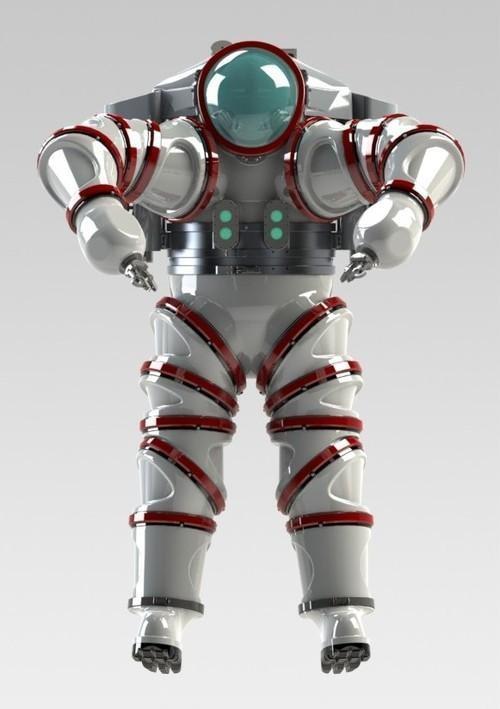
To ensure that they make the most of their trip, Foley and his team will explore the wreckage using a new $1.3 million exosuit, which will be used for the first time when their excavation launches this week.

Exosuit diving system

The journey, which Lombardi is calling their “Big Fat Greek Expedition,” will start by sending a robot down to the wreck so that it can map the site and the seafloor around it. The team will also run a metal detection survey to determine how large the site is.

It will then send divers down in the pressurized suit, which allows them to explore the bottom of the ocean for an unlimited amount of time. Traditional diving suits aren’t typically pressurized and therefore require time to “decompress” via closed circuit rebreathers and mixed gases when a diver returns to the surface. This always limited the amount of time a team could spend poking around at the bottom of the ocean. With the exosuit, those limits don’t exist.

“When we’re ready, we say over the communication, ‘OK, I’m ready to come up,’ and they pull us back up,” Foley said. “It takes three minutes to get to the surface. So it’s a huge increase in productivity and efficiency.”

The suit’s flexible tubing and metal claws will also allow researchers to move their arms and navigate the delicate debris. As they traverse the ocean floor, they’ll also use a custom-made remotely operated vehicle, which will act as a data collection station.

That being said, jamming yourself into a stuffy pod is not the most pleasant way to spend a day in the Mediterranean. To navigate the exosuit, you must prop yourself up on a makeshift bicycle seat and place your feet lightly on its foot pedals, which control the thrust of the apparatus. Foley’s team has spent the past half year training in the suit and — as a result — fallen victim to severe bruising, skinned elbows, and tender crotches.

“It’s like you’ve got your arms and legs and torso inside a stovepipe,” he said. “It’s really quite uncomfortable.”

A blank slate
Previous teams have cleared the site of its original statues and wreckage, a fact that Foley says works to his team’s advantage.

“Those big, bulky statues are out of our way, and now we’ve got this sediment blanket on the seafloor,” he told Yahoo Tech. “We’re hoping that if there is another mechanism, it’s down in the mud and it’ll be very well preserved indeed.”

With any luck, the team will find more pieces to the puzzle that explain the mechanism’s mind-boggling first century B.C. presence, or perhaps a companion machine that measures something different. Though neither Foley nor the rest of the team is sure what they’ll find, they’ll be grateful for anything that will teach them more about the surprisingly early origins of technology — something that might even result in the rewriting of history books.

“Since we will be able to survey the whole ship, and hopefully within a year or two or three have the whole cargo discovered, it will greatly help us in finding the whole context,” Bitsakis said. “It will be an even greater story.”

domingo, 9 de novembro de 2014

Understanding Auto Parts


The basic idea of a car is pretty simple -- turn wheels to pull you down the road. But, as illustrated by the hundreds of individual parts for sale at your local Pep Boys, Autozone or Napa Auto Parts, it actually takes a lot of machinery to make cars work.

If you're trying to figure out what all the parts in your car do, HowStuffWorks AutoStuff is the place for you. Here's a collection of our key car part articles.

Shopping for Parts


Auto Parts on Shopper
This HowStuffWorks Shopper section lets you compare features and prices and check out reviews for all sorts of car parts you can buy online.


Car Security Systems on Shopper
In the car security section of HowStuffWorks Shopper, you can check out prices, reviews and features for hundreds of car alarm packages.


Engine System


How Car Engines Work
It's the reason you can put the pedal to the metal and go from zero to 60 in about 8 seconds. The car engine is a piece of engineering genius and one of the most amazing machines we use on a daily basis. Learn how the four-stroke internal combustion engine works.


How Diesel Engines Work
Ever wonder what the difference is between a gasoline engine and a diesel engine? Diesels are more efficient and cheaper to run than gasoline engines. Instead of using carburetion or port fuel injection, diesel engines use direct fuel injection. Find out what else makes diesel engines different!


How HEMI Engines Work
The HEMI engine has an awesome design and great performance, and it's pretty unique in operation. With the revitalization of the HEMI in the 2003 Dodge trucks, industry and consumer attention is once again on this interesting configuration. Check out how the HEMI works and see what makes it different from the typical engine design.


How Rotary Engines Work
A rotary engine is an internal combustion engine, but it's not like the one in most cars. Also called a Wankel engine, this type of engine performs intake, compression, combustion and exhaust in a different part of the housing. Learn about the unique rotary setup and how it compares performance-wise to a piston engine.


How Radial Engines Work
Radial engines reached their zenith during WWII. But today they are not that common. One place where you can still see the radial engine's influence is in the two-cylinder engine of a Harley-Davidson motorcycle. This remarkable engine can be thought of, in a way, as two pistons from a radial engine. Find out about radial engines.


How Quasiturbine Engines Work
The quasiturbine engine takes the Wankel concept and improves on it: Instead of three combustion chambers, it has four, and the setup of a quasiturbine allows for continual combustion. That means greater efficiency than any other engine in its class. Learn about the quasiturbine and why it might be the most promising internal combustion engine yet.


How Camshafts Work
The camshaft has a huge effect on engine performance. It helps let the air/fuel mixture into the engine and get the exhaust out. Learn all about the camshaft and how a new one can radically change an engine's behavior.


How Superchargers Work
Since the invention of the internal combustion engine, automotive engineers, speed junkies and racecar designers have been searching for ways to boost its power. One way is by installing a supercharger, which forces more air into the combustion chamber. Learn how superchargers can make an engine more efficient.


How Turbochargers Work
When people talk about race cars, or high-performance sports cars, the topic of turbochargers almost always comes up. Turbochargers use some very cool technology to make an engine more powerful, but the concept is really quite simple. Find out how turbos increase the speed.


How Fuel Injection Systems Works
The last carburetor-equipped car came off the assembly line in 1990. Since then, fuel injectors have been the primary means of getting gasoline into the engine cylinder so it can combust and you can drive. Find out how fuel-injection systems work.


Power Train


How Manual Transmissions Work
If you drive a stick-shift car, then you may have a few questions floating around in your head. Have you ever wondered, "What would happen if I were to accidentally shift into reverse while I am speeding down the freeway? Would the entire transmission explode?" Find out all about manual transmissions.


How Automatic Transmissions Work
Automatic transmissions take the work out of shifting. A truly amazing mechanical system, the automatic transmission in a car accomplishes everything a manual transmission does, but it does it with one set of gears. Learn how the whole setup works.


How Clutches Work
You probably know that any car with a manual transmission has a clutch -- it connects and disconnects the engine and transmission. But did you know that automatics have clutches, too? Learn how the clutch in your car works, and find out about some interesting and perhaps surprising places where clutches can be found.


How CVTs Work
In a regular transmission, the gears are literal gears -- interlocking, toothed wheels. Continuously variable transmissions, on the other hand, don't have interlocking gears. The most common type operates on a pulley system. Learn all about the smooth-operating, ultra-efficient CVT.


How Differentials Work
Without a differential, the driven wheels (front wheels on a front-wheel drive car or rear wheels on a rear-wheel drive car) would have to be locked together, forced to spin at the same speed. Find out how this essential component allows the wheels to rotate at different speeds.


Braking System


How Brakes Work
A car's brakes are probably the most critical system on the vehicle -- if they go out, you have a major problem. Thanks to leverage, hydraulics and friction, braking systems provide incredible stopping power. Find out what happens after you push the brake pedal.


How Disc Brakes Work
Disc brakes are the most common brakes found on a car's front wheels, and they're often on all four. This is the part of the brake system that does the actual work of stopping the car. Find out all about disc brakes -- even when to replace the pads.


How Anti-Lock Brakes Work
Stopping a car in a hurry on a slippery road can be challenging at best and at worst, very, very scary. Anti-lock braking systems (ABS) help alleviate the danger. Learn how anti-lock brakes prevent skidding, check out what that sputtering is and find out how effective they really are.


How Power Brakes Work
Power brakes are fairly ingenious machines -- they let you stop a car with a simple twitch of your foot. The concept at the heart of the power braking system is force multiplication -- a whole lot of force multiplication. Get inside the black cannister that provides the power.


How Master Cylinders and Combination Valves Work
We all know that pushing down on the brake pedal slows a car to a stop. We depend on that every day when we drive. But how does this happen? The master cylinder provides the pressure that engages your car brakes. Learn how the master cylinder works with the combination valve to make sure you can brake safely.


Steering, Suspension and Tires


How Steering Works
When it comes to crucial automotive systems, steering is right up there with the engine and the brakes. Power steering systems make the job a whole lot easier, and the internal workings are pretty cool. What happens when you turn your car is not as simple as you might think. Find out all about car steering systems.


How Car Suspensions Work
All of the power generated by a car engine is useless if the driver can't control the car. The job of a car suspension is enormous: maximize the friction between the tires and the road surface, provide steering stability and ensure the comfort of the passengers. Learn how car suspensions work and where the design is headed in the future.


How Tires Work
In the market for new set of tires? All of the different tire specifications and confusing jargon the tire sales clerks or "experts" are shouting at you making your head feel like a tire spinning out of control? Find out all about car tires, including what those sidewall symbols mean!


How Self-Inflating Tires Work
Self-inflating tires perform two crucial functions: They automatically maintain ideal tire pressure for safety and performance in standard conditions, and they allow the driver to alter psi on the fly to adjust to changing terrain. Learn how self-inflating systems like the Hummer's CTIS work.


How Sequential Gearboxes Work
Combine the ease of an automatic with the driver control of a manual, and what you've got is a sequential manual transmission. Instead of having to navigate an H pattern, a simple forward push advances the gear. It's the transmission used by race cars and an increasing number of high-performance street cars. Learn all about the sequential gearbox.


How Torque Converters Work
Cars with an automatic transmission have no clutch that disconnects the transmission from the engine. Instead, they use an amazing device called a torque converter. Find out all about the torque converter.


Electrical System


How Wires, Fuses and Connectors Work
Wires, fuses and connectors - they may sound like the most mundane parts on your car, but they are essential. Yeah, they help keep the tunes going for a long ride, and they make reading that map at night a lot easier. But, they're also necessary for things like the cooling fan in the engine and your anti-lock brakes. Learn why wires, fuses and connectors are so important!


How Ignition Systems Work
A car's ignition system is the key component that helps the engine produce maximum power and minimum pollution. Find out how much is riding on a well-timed spark.


How Car Computers Work
Cars seem to get more complicated with each passing year. Today's cars might have as many as 50 microprocessors on them. Essentially, you're driving around in a giant computer. Learn all about the various computer systems that control your car.


How Windshield Wipers Work
Without windshield wipers, a rain storm would make cars pretty much useless. What began as a hand-cranked system is now automatic, and only getting more so: There are now some windshield wipers that can actually sense rain. Learn the mechanics behind this essential automotive tool.


Exhaust System


How Catalytic Converter Works
A catalytic converter is one of the most important parts of a car's emissions control system. It treats the exhaust before it leaves the car and removes a lot of the pollution. Learn how catalytic converters reduce pollutants and help you pass the emissions test.


How Mufflers Work
Every car out there has a muffler -- it performs the crucial job of turning thousands of explosions per minute into a quiet purr. Mufflers use some pretty neat technology to dim the roar of an engine. Learn about the principles that make it work.


Other Car Parts


How Odometer Works
Mechanical odometers have been counting the miles for centuries. Although they are a dying breed, they are incredibly cool inside. Learn how this simple device tracks distance and find out about digital odometers.


How Cooling System Works
A car engine produces so much heat that there is an entire system in your car designed to cool the engine down to its ideal temperature. In fact, the cooling system on a car driving down the freeway dissipates enough heat to heat two average-sized houses! Learn all about fluid-based cooling systems.


Snap 2014-11-09 at 19.59.22

Co-Sleeping FAQ at StorkNet's Attachment Parenting Cubby


Guidelines to Sleeping Safe with Infants
Maximizing the chances of Safe Infant Sleep in the Solitary and Cosleeping (Specifically, Bed-sharing) Contexts.
by James J. McKenna, Ph.D. Professor of Biological Anthropology, Director, Mother-Baby Sleep Laboratory, University of Notre Dame.

Below I have summarized and highlighted some of the issues to be concerned with as you make your own decisions about where and how your infant should sleep.

1) What constitutes a "safe sleep environment" irrespective of where the infant sleeps?

a) Infants should sleep on firm surfaces, clean surfaces, in the absence of smoke, under light (comfortable ) blanketing and their heads should never be covered. The bed should not have any stuffed animals or pillows around the infant and never should an infant be placed to sleep on top of a pillow. Sheepskins or other fluffy material and especially bean bag mattresses should never be used. Water beds can be dangerous, too, and always the mattresses should tightly intersect the bed-frame. Infants should never sleep on couches or sofas, with or without adults wherein they can slip down (face first) into the crevice or get wedged against the back of a couch.

2) Bed-sharing: It is important to be aware that adult beds were not designed to assure infant safety!

b) If bed-sharing, ideally, both parents should agree and feel comfortable with the decision. Each bed-sharer should agree that he or she is equally responsible for the infant and acknowledge that the infant is present . My feeling is that both parents should think of themselves as primary caregivers.

c) Infants a year or less should not sleep with other children siblings - but always with a person who can take responsibility for the infant being there;

d) Persons on sedatives, medications or drugs, or is intoxicated - or excessively unable to arouse should not cosleep on the same surface with the infant.

e) Excessively long hair on the mother should be tied up to prevent infant entanglement around the infant's neck - (yes, it has really happened!)

f) Extremely obese persons, who may not feel where exactly or how close their infant is, may wish to have the infant sleep alongside but on a different surface.

g) It is important to realize that the physical and social conditions under which infant-parent cosleeping occur, in all its diverse forms, can and will determine the risks or benefits of this behavior. What goes on in bed is what matters.

h) It may be important to consider or reflect on whether you would think that you suffocated your baby if, under the most unlikely scenario, your baby died from SIDS while in your bed. Just as babies can die from SIDS in a risk free solitary sleep environment, it remains possible for a baby to die in a risk-free cosleeping/bed sharing environment. Just make sure, as much as this is possible, that you would not assume that , if the baby died, that either you or your spouse would think that bed-sharing contributed to the death, or that one of you really suffocated (by accident) the infant. It is worth thinking about.

3) I do not recommend to any parents any particular type of sleeping arrangement since I do not know the circumstances within which particular parents live. What I do recommend is to consider all of the possible choices and to become as informed as is possible matching what you learn with what you think can work the best for you and your family.

What is the "proper" sleeping arrangement for me and my baby?

There is no one way to arrange your baby's sleep, before you retire for sleep, and how well one approach works is, as always, determined by factors pertinent to each family and baby (temperament, sensitivity etc.) which are not known to an "advise giver" or the "expert". Try to remember that you know your baby better than anyone. Become informed, but make your own decision and feel good about it.

How you and the other caregivers feel about privacy and separation, or being close to the baby even when the baby is sleeping but you are not, and the physical circumstances of your house, can make a difference as to what approach or practice might work best. For example, some parents who retire for bed much later than the baby feel more comfortable if the baby is kept within proximity where, for example, the baby can be easily seen or heard, or "checked on". In these cases, the baby may not be officially "put to bed" in the sense of being placed in a room where all contact is broken. Rather in these instances the parents might place the baby in an open hall in a bassinet, or let the baby sleep in a bassinet in the living room, or in a carrier seat close enough to permit a kind of informal monitoring.

Interestingly, infants and older baby's fall asleep more easily in the context of family noise, rather than in silence, as is generally thought. This is because the baby probably feels more secure hearing that a care giver - or perhaps that something - is going on nearby. It is always possible that a loud TV or an active herd of siblings could make it impossible for the baby to sleep - but generally it is hard to keep a baby awake if he or she is sleepy. But you can be the judge of how "intrusive" the noise level might be.

Some parents may choose to put the infant in a separate room with the door closed, where sensory access between the baby and the parents (and other family members) is not possible or likely. My preference is never to close the door to a baby's room since baby's find sleep when they need it, and they were not designed biologically or psychologically to sleep in complete social isolation. Some parents find it comforting to put some kind of walkie-talkie in the room, which is fine, except that a more appropriate use of the walkie-talkie talkie would be to turn the amplifiers around. That is pump family noise into the baby's room, letting the baby monitor the parents and siblings, rather than the other way around. Fifty years (at least) of human developmental research shows that baby's respond positively to physical and psychological sensory signals (sounds,sights, smells,touches, movement) from others when they "feel" that they are not alone. We might presume that external social noise gives young children a sense of security - or something akin to a baby thinking "it's nice to know someone is around, should I need them".

Cosleeping and Overlaying/Suffocation . . . Is there a chance I'll roll over and crush my child?

To claim that there is NO chance of an adult overlaying a baby would be irresponsible, but so would it be irresponsible to claim that an infant could never be killed while traveling in an automobile, or while sleeping alone in a crib which has an overly soft mattress, or crib slats which do not prevent the infant's head from passing between them. In each case, the dangers are significantly reduced - and the potential benefits of car travel or infants sleeping alone (where this is what parents want) can be realized - when the safety precautions unique to each choice of behavior are regarded. In the case of automobile travel, strapping infants correctly into a consumer safety approved car seats, and not driving while under the influence (of drugs or alcohol) makes car transportation worth the relatively small risk such travel imposes.

No infant sleep environment is risk free. As regards to cosleeping (in the form of bed-sharing) what we know to be true scientifically is that for nocturnal infant breast feeding and nurturing throughout the night, both mothers and babies were designed biologically and psychologically to sleep next to one another. Infant-parent cosleeping with nocturnal breast feeding takes many diverse forms, and it continues to be the preferred "normal" species-wide sleeping arrangement for human mother-baby pairs. In the worldwide ethnographic record, mothers accidentally suffocating their babies during the night is virtually unheard of, except among western industrialized nations, but here there are in the overwhelming number of cases, explanations of the deaths that require reference to dangerous circumstances and not to the act itself.

Let me expand a bit on what we know to be true scientifically. Anthropological and developmental studies suggest that mothers and infants are designed to respond to the presence of the other, and no data have ever shown that among mother-baby pairs who cosleep for breast feeding in a safe cosleeping/bed-sharing environment that mothers are unable to sense the proximity of their babies in order to avoid smothering them. Our own laboratory sleep studies of cosleeping/bed-sharing mothers infant pairs (2 to 4 month olds) reveal that both breast feeding mothers and their infants are extremely sensitive throughout their night - across all sleep stages - to the movements and physical condition of the other. The healthy infant, which includes most infants, are able to detect instances, where for example, their air passages are blocked. They can respond very effectively to alert the mother to potential danger, and they have the physical skills to maneuver out of danger, under normal circumstances. That being said, modern societies and the objects on which we sleep and the social and physical conditions within which bed-sharing can and often does occur especially among the urban poor forces professionals to be very guarded when discussing bed-sharing and/or cosleeping. The truth is that there is no one outcome (good or bad) that can be associated with cosleeping in the form of bed-sharing, but rather a range of outcomes (from potentially beneficial to dangerous and risky) depending on the overall circumstances within which the cosleeping takes place.

For example, the condition of the sleeping surface - the bed (in Western cultures) and the condition and frame of mind of the adult cosleeper(s), and the purposes for cosleeping - are very important in assessing the relative safety, dangers or potential benefits of sleeping with your infant or child. During my many years of studying infant-parent cosleeping/bed-sharing, I am unaware of even one instance in which, under safe social and physical conditions, a mother, aware that her infant was in bed with her, ever suffocated her infant. But just as is true for other aspects of infancy or childhood important precautions need to be taken if families elect to bed-share. For example, bed-sharing should be avoided entirely if the mother smokes (either throughout her pregnancy or after) as maternal smoking combined with bed-sharing increases the chances of SIDS.

While there is evidence that accidental suffocation can and does occur in bed-sharing situations, in the overwhelming number of cases (sometimes in 100% of them) in which a real overlay by an adult occurs, extremely unsafe sleeping condition or conditions can be identified including situations where adults are not aware that the infant was in the bed, or adult sleeping partners who are drunk or desensitized by drugs, or indifferent to the presence of the baby. In these cases often the suffocation occurs while the parent and infant sleep on a sofa or couch together.

In my own work I stress that a distinction must be made between the inherently protective and beneficial nature of the mother-infant cosleeping/breast feeding context, and the conditions (of the mother and the physical setting including equipment) within which it occurs - which can range from extremely safe to unsafe and risky.

While mother-infant cosleeping evolved biologically, it is wise to recall that beds did not; whether sleeping in a crib or in the adult (parental) bed, the mattress should be firm and it should fit tightly against the headboard so that an infant cannot during the night fall into a ledge face down and smother. Since contact with other bodies increases the infant's skin temperature, babies should be wrapped lightly in the cosleeping environment especially, and attention should be given to the room temperature. Obviously if the room temperature is already warm (say above 70 degrees F, the baby should not be covered with any heavy blankets, sheets or other materials. A good test is to consider whether you are comfortable; if you are, then the baby probably is as well.

I would avoid cosleeping with a baby on a couch as too many that I know of slipped face down into the cracks between the pillow seats and were compressed against the back wall of the couch, or fell face down into the back part of the couch and suffocated. Personally, I would also avoid cosleeping on a waterbed, although there may be some instances where they are firm enough and lack deep crevices (around the frame) that could be deemed safe.

Under no circumstances should the baby sleep on top of a pillow, or have its head covered by a blanket. Moreover, if another adult is in the bed, the second adult should be aware (made aware of) the presence of the baby, and it should never be assumed that the other adult knows that the baby is present. Parents should discuss with each other whether they both feel comfortable with the baby being in the bed and with them. I always suggest that if parents elect to cosleep in the form of bed-sharing each parent (and not just one) should agree to be responsible for the baby. Such a decision, by both sleeping adults, maximizes attention to the presence of the infant.

Toddlers or other little children should not be permitted to sleep in the adult bed next to an infant as toddlers are unaware of the dangers of suffocation. Moreover, it is safer not to permit an infant and a toddler to sleep alone together in the same bed.

Finally, it is not a pleasant thought to consider, but I always think that it is important to consider if, by chance, an infant died from SIDS while sleeping next to you, would you assume that you suffocated the infant, or would you know that you did not, that the infant died independently of your presence? If you are unable to believe that a SIDS could occur independent in the bed-sharing or bed-sharing/breast feeding context, just as it can under perfectly safe solitary sleeping conditions, then perhaps it might be best to have the your infant cosleep next to you on a separate surface, rather than actually in your bed. Regardless of what you decide, it is important to consider the possibility, no matter how remote and unlikely such a scenario may be. That SIDS can, indeed, occur, where safe bed-sharing, breast feeding and complete nurturing and care for the infant has occurred, makes this question worth discussing amongst you and your partner.

Let me end on a positive note: all else being safe, bed-sharing among nonsmoking mothers who sleep on firm mattresses specifically for purposes of breast feeding, may be the most ideal form of bed-sharing where both mother and baby can benefit by, among other things, the baby getting more of mother's precious milk and both mothers and babies getting more sleep - two findings which emerged from our own studies.

What are the advantages of having our baby sleep with us?

Advantages can only be assessed in view of how parents feel about their infant being close or - next to them, and calculated in a positive way only if parents are knowledgeable about how to cosleep safely. Some obvious advantages can include: the baby will know that you are there - can respond emotionally and physiologically in potentially beneficial ways. Babies will breast feed more often with less disruption to mothers sleep - and the baby will receive more sleep as will the mother compared with solitary sleeping breast feeding babies - as recent studies show. Babies arouse more frequently, but for shorter average durations than if the baby slept apart - and spend less time in deeper stages of sleep which may not be beneficial for babies with arousal deficiencies - as also shown in recently published refereed articles. Babies cry significantly less in the cosleeping environment which means that more energy (at least theoretically) can be put into growth, maintenance and protective immune responses. More breast feeding which accompanies cosleeping also can be translated into less disease and morbidly, indeed, breast feeding is enhanced. Proximity of the infant potentially permits the parents to respond to changes in the baby's status - such as if it were choking or struggling to breathe - and, of course, proximity makes it more likely that if a baby was fighting to rid itself of blankets over its head, the parent might hear the event and intercede. Working mothers who feel guilty of not having enough time to be with their babies during the day - can feel better about nurturing and, hence, being in interaction with their baby during the night - and hence, further augmenting and cementing their relationships, as can Dad. Given the right family culture, cosleeping can make mother, dad and baby feel very good, indeed.

What are the long term effects on my baby of sharing a bed?

While advocates of solitary infant sleeping arrangements have claimed any number of benefits of infant sleeping alone, the truth of the matter is, none of these supposed benefits have been shown to be true through scientific studies. The great irony is that, not only have benefits of solitary infant sleep NOT be demonstrated - simply assumed to be true, but recent studies are beginning to show the opposite that is, it is not, for example, solitary sleeping arrangements that produce strong independence, social competence, feeling of high self esteem, good comportment by children in school, ability to handle stress, strong gender or sex identities - but it is social or cosleeping patterns that might, indeed, contribute to the emergence of these characteristics. Consider, for example:

* Heron's1 recent cross-sectional study of middle class English children shows that amongst the children who "never" slept in their parents bed there was a trend to be harder to control, less happy, exhibit a greater number of tantrums. Moreover, he found that those children who never were permitted to bed-share were actually more fearful than children who always slept in their parents bed, for all of the night1.

* In a survey of adult college age subjects, Lewis and Janda2 report that males who coslept with their parents between birth and five years of age had significantly higher self-esteem, experienced less guilt and anxiety, and reported greater frequency of sex. Boys who coslept between 6 and 11 years of age also had higher self-esteem. For women, cosleeping during childhood was associated with less discomfort about physical contact and affection as adults. (While these traits may be confounded by parental attitudes, such findings are clearly inconsistent with the folk belief that cosleeping has detrimental long-term effects on psycho-social development.

* Crawford3 found that women who coslept as children had higher self esteem than those who did not. Indeed, cosleeping appears to promote confidence, self-esteem, and intimacy, possibly by reflecting an attitude of parental acceptance (Lewis and Janda 1988).

* A study of parents of 86 children in clinics of pediatrics and child psychiatry (ages 2-13 years) on military bases (offspring of military personnel) revealed that cosleeping children received higher evaluations of their comportment from their teachers than did solitary sleeping children, and they were underrepresented in psychiatric populations compared with children who did not cosleep. The authors state: "Contrary to expectations, those children who had not had previous professional attention for emotional or behavioral problems coslept more frequently than did children who were known to have had psychiatric intervention, and lower parental ratings of adaptive functioning. The same finding occurred in a sample of boys one might consider "Oedipal victors" (e.g. 3 year old and older boys who sleep with their mothers in the absence of their fathers)--a finding which directly opposes traditional analytic thought"4.

* Again, in England Heron1 found that it was the solitary sleeping children who were harder to handle (as reported by their parents) and who dealt less well with stress, and who were rated as being more (not less) dependent on their parents than were the cosleepers!

* And in the largest and possible most systematic study to date, conducted on five different ethnic groups from both Chicago and New York involving over 1,400 subjects Mosenkis5 found far more positive adult outcomes for individuals who coslept as a child, among almost all ethnic groups (African Americans and Puerto Ricans in New York, Puerto Ricans, Dominicans, and Mexicans in Chicago) than there were negative findings. An especially robust finding which cut across all the ethnic groups included in the study was that cosleepers exhibited a feeling of satisfaction with life.

But Mosenkis's main finding went beyond trying to determine easy causal links between sleeping arrangements and adult characteristics or experiences. Perhaps his most important finding was that the interpretation of "outcome" of cosleeping had to be understood within the context specific to each cultural milieu, and within the context of the nature of social relationships the child has with its family members! For the most part, therefore, it is probably true that neither social sleep (cosleeping) or solitary sleep as a child correlates with anything in any simple or direct way. Rather, sleeping arrangements can enhance or exacerbate the kind of relationships that characterize the child's daytime relationships and that, therefore, no one "function can be associated with sleeping arrangements. Rather than assuming that sleeping arrangement produces a particular "type" person it is probably more accurate to think of sleeping arrangements as part of a larger system of affection and that it is altogether this larger system of attachment relationships, interacting with the child's own special characteristics that produces adult characteristics.

References Cited:

1. Heron P. Nonreactive CO-sleeping and Child Behavior: Getting a Good Night's Sleep All Night Every Night. Masters Thesis, University of Bristol, Bristol, United Kingdom , 1994

2. Crawford, M. Parenting practices in the Basque country: Implications of infant and childhood sleeping location for personality development. Ethos 1994, 22;1:42- 82.

3. Lewis RJ, LH Janda. The relationship between adult sexual adjustment and childhood experience regarding exposure to nudity, sleeping in the parental bed, and parental attitudes toward sexuality. Arch Sex Beh 1988; 17:349-363.. Crawford, M. Parenting practices in the Basque country: Implications of infant and childhood sleeping location for personality development.

4. Forbes JF, Weiss DS, Folen RA. The CO-sleeping habits of military children. Military Medicine 1992; 157:196-200.

5. Mosenkis, J The Effects of Childhood Cosleeping On Later Life Development 1998. Masters Thesis. University of Chicago. Department of Human Development

Will our baby sleep through the night sooner if he or she shares our bed?

There exists no longitudinal data that can answer this question. But a variety of scientific studies indicate that rather than it being completely controlled by the environment, the baby's own maturational rate as influenced by its unique internal needs to awaken, to feed, to find reassurance, or to oxygenate, are as much influencing factors in night waking and "sleeping through the night" as is sleep location. Moreover, it is interesting to note that where infants and parents cosleep the infants are for the most part undetected by the apparent, and the infant upon "feeling" the infant's presence, returns to sleep without awakening the apparent so the question of "sleeping through the night" becomes less relevant.

Of course, years ago Dr. Tom Anders observed that babies awaken for short periods throughout the night without parental knowledge, even where they sleep in a crib, alone. Some babies will simply go back to sleep while others, presumably with different needs and sensitivities, will awaken and "signal" their need for contact with the parent. Should infants do so i.e. signal parents, it is not necessarily a sign of immaturity, stubbornness or attempts to manipulate. Interestingly, laboratory studies reveal that the average duration of infant and maternal awakenings in the cosleeping environment are shorter on average than the awakenings mothers and babies experience when baby awakens in another room, and requires intervention before going back to sleep. One bit of information might help here: from a biological perspective, it is appropriate for babies to awaken during the night during the first year of life. In fact, although infants can be conditioned to sleep long and hard alone, and without intervention and, hence, fulfill the cultural expectation that the should sleep through the night, the fact remains that they were not designed to do so, and it may not be either in their best biological or psychological interest. As always, parental goals and needs lead parents to interpret their infant's behavior, including night awakenings, very differently. For example, many parents do not worry about night awakenings because especially where the babies sleep next to them, the infants are content and less likely to awaken and remain distressed.

.


Best treatments for allergic conditions? Some doctors don’t even know


People who suffer from allergies want to keep up-to-date on the latest information regarding treatment, but it's not always easy. Some doctors don't even know fact from fiction when it comes to treating allergies.

According to a study presented at the American College of Allergy, Asthma and Immunology (ACAAI) Annual Scientific Meeting, prevailing allergy myths have a long shelf life. The study surveyed 409 physicians -- either in internal medicine or pediatrics -- on the topic of treating allergies. The physicians all received six questions on allergy treatment, but because pediatricians treat children's allergies, they answered three additional questions.

"We asked what the best first treatment was for a patient experiencing vomiting and hives after eating a known food allergen," said allergist and ACAAI member Kara Wada, MD, lead study author. "Only 50 percent of internal medicine physicians knew it was epinephrine. And 85 percent of internal medicine physicians thought the flu vaccine shouldn't be given to egg-allergic patients. It's now known that it's safe for those with egg allergies to get the flu shot."

Other myths reported in the survey include:

  • Only 27 percent of the pediatric physicians correctly identified the most common causes of food allergy in children under 4 years of age as both eggs and milk. 34 percent identified strawberries and 13 percent thought it was artificial food coloring.
  • Both groups thought it was necessary to ask about allergies to iodine, shellfish and artificial dyes before ordering a CT scan and other imaging procedures which use iodinated contrast for better imaging. Since shellfish contain iodine, many physicians have linked a contrast reaction to a shellfish allergy. However, shellfish allergy has nothing to do with the reaction, and iodine can't be an allergen as it is found in the human body.
  • The majority of pediatricians thought that skin prick testing for food or inhaled allergens isn't accurate or reliable until 3 years of age. While skin prick testing is rarely conducted on infants younger than 6 months old, there is otherwise no age limit.

Story Source:

The above story is based on materials provided by American College of Allergy, Asthma and Immunology (ACAAI). Note: Materials may be edited for content and length.


Reference tables for physical settings/Physics.

Snap 2014-11-09 at 09.00.34 -2


Snap 2014-11-09 at 09.00.55

Snap 2014-11-09 at 09.01.08

Snap 2014-11-09 at 09.01.21

Snap 2014-11-09 at 09.01.41

Snap 2014-11-09 at 09.01.56

Time spent preparing meals at home linked to healthier diet


Time may be one of the most essential ingredients for a healthy diet, finds new research in the American Journal of Preventive Medicine.

Spending more time at home preparing meals is associated with several indicators of a better diet, such as eating more fruits and vegetables. Conversely, spending less than an hour a day preparing food at home is associated with eating more fast food and spending more money eating out.

"There is very little data on the time cost of healthy eating," said Pablo Monsivais, Ph.D., M.P.H., the study's lead author and a senior university lecturer with the Center for Diet and Activity Research at the University of Cambridge School of Clinical Medicine in England.

The findings are based on responses from 1,319 adults who participated by phone in the Seattle Obesity Study in 2008 and 2009. Participants answered questions about how many hours a day they averaged preparing and cooking food and cleaning up after meals. They also reported on food consumption and spending, as well as use of restaurants. About 16 percent of participants said they spent less than one hour a day on meal preparation. About 43 percent reported spending between one and two hours per day on meal preparation, while 41 percent said they spent more than two hours a day on it.

Employment outside the home was associated with fewer hours spent preparing meals. Notably, about two-thirds of those who reported that they prepped, cooked and cleaned up were women. People with less time available for meal preparation also appear to value convenience, choosing more often to eat out or to buy fast food and ready-made foods to eat at home.

"This study reinforces what previous studies and nutrition practice tells us: that time is commonly reported as a barrier to healthy eating," said Lauri Wright, Ph.D., R.D.N., a registered dietician and nutritionist and assistant professor in the Department of Community and Family Health at the University of South Florida in Tampa.

Wright, a spokesperson for the Academy of Nutrition and Dietetics, reiterated an observation made in the study: "Besides time and cost, people often don't feel confident about their ability to prepare healthy meals."

Wright added, "Registered dietician/nutritionists give close consideration to the issue of time when making their recommendations. They can give tips on ways to optimize time and money, such as planning meals, shopping ahead and preparing some foods in advance that can allow families to have quick-to-prepare healthy meals and snacks."


Story Source:

The above story is based on materials provided by Health Behavior News Service, part of the Center for Advancing Health. The original article was written by Valerie DeBenedette. Note: Materials may be edited for content and length.


Journal Reference:

  1. Pablo Monsivais, Anju Aggarwal, Adam Drewnowski. Time Spent on Home Food Preparation and Indicators of Healthy Eating. American Journal of Preventive Medicine, 2014; DOI: 10.1016/j.amepre.2014.07.033