domingo, 14 de setembro de 2014

Astrophysicists to probe how early universe made chemical elements


ASU astrophysicists have received an important research grant to study how massive stars, such as Eta Carinae, depicted here, evolve and eventually seed the universe with heavy elements created by nuclear reactions inside them.

In the beginning, all was hydrogen -- and helium, plus a bit of lithium. Three elements in all. Today's universe, however, has nearly a hundred naturally occurring elements, with thousands of variants (isotopes), and more likely to come.

Figuring out how the universe got from its starting batch of three elements to the menagerie found today is the focus of a new Physics Frontiers Center research grant to Arizona State University's School of Earth and Space Exploration (SESE). The grant is from the National Science Foundation's Joint Institute for Nuclear Astrophysics -- Center for the Evolution of the Elements. Of the full $11.4 million NSF grant, about $1 million will come to ASU over five years.

SESE astrophysicist Frank Timmes is the lead scientist for ASU's part of the Physics Frontiers Center research project. Timmes, ASU's director of advanced computing, focuses his astrophysical research on supernovae, cosmic chemical evolution, their impacts on astrobiology and high-performance computing. He is also a scientific editor of The Astrophysical Journal.

The evolution of elements project also includes Michigan State University in Lansing (the lead institution), the University of Notre Dame in South Bend, Indiana, and the University of Washington in Seattle.

Joining Timmes on the project will be astrophysicists Patrick Young, Evan Scannapieco and Sumner Starrfield, also from the School of Earth and Space Exploration In addition, the award will fund two postdoctoral researchers to collaborate on the effort.

Take it from the top

Time started 13.7 billion years ago with the Big Bang, which produced the basic three elements. Yet by the time the Bang was a billion years old, essentially all the other chemical elements we know had formed. How did this happen?

"It takes place inside stars," says Timmes. "They're the element-factories of the universe. They take light stuff, such as hydrogen and helium, process it in nuclear reactions, and then crank out carbon, nitrogen, oxygen and all those good things that make you and me."

While the broad outline is clear, details are a lot murkier, he says, and that's where ASU's researchers enter the picture.

"ASU's contribution is to provide the glue between experimental low-energy nuclear astrophysics measurements and astronomical observations of stars," Timmes says.

Ancient stars were fundamentally different from those today, he notes, because they started off with a different collection of initial ingredients -- no heavy elements. But those first-generation stars are gone.

As Timmes explains, "The stars that began back then went through their life cycles and died, so we naturally don't directly see them today. But when they died, they exploded and threw out little bits of carbon, oxygen and nitrogen, which ended up in the next generation of stars."

Round and round in cycles

In a process that still continues today, massive stars create more and more complex elements, then explode as supernovas and scatter the newly created elements into space for another generation of stars to use. Cycle after stellar cycle, stars became steadily richer in heavier and more complex elements.

The sun, its planets and moons all formed about 4.5 billion years ago. Most of the elements they contain didn't exist when the universe was young, so what generation does the sun belong to?

Timmes explains, "A typical massive star, in round numbers, lives about a million years. The Big Bang occurred about 7 billion years before the sun formed. I need a thousand generations of massive stars to get us to a billion years, so I need on the order of 10,000 generations of massive stars to get one with the sun's composition.

"We are the product of many, many, many previous generations of stars."

The researchers at the School of Earth and Space Exploration plan to develop computer models of stars of all sizes, masses and chemical compositions, then set them on their life courses. It's building stars in computers and comparing them to observations of stars to see how the universe builds them for real.

"The toughest theoretical problem we have to work on is how stars explode," says Timmes. "In a loose, hand-waving sense, we know that stars explode, of course, but exactly how it happens isn't well-known or understood."

The new research project fits well with the expertise of the school's astrophysicists. And there's another plus as well. With this project, ASU is joining a small group of research centers that deal with "Frontiers Physics." The entire country has only about ten such centers, Timmes explains. Highly competitive and highly sought-after, they cover subjects such as biological physics and theoretical physics.


Snap 2014-09-12 at 18.10.27

Favoritism linked to drug use in 'disengaged' families


September 12, 2014

Brigham Young University

In families, the perception that parents have a favorite is linked with the less-favored children being twice as likely to use alcohol, cigarettes or drugs. For parents worrying about keeping score and managing perceptions of fairness, one expert has some very simple advice. "Show your love to your kids at a greater extent than you currently are. As simple as it sounds, more warmth and less conflict is probably the best answer."


Professor Alex Jensen with his two daughters.

Before you revive the debate about which sibling in your family is the favorite, you'll want to know what the latest research shows.

Brigham Young University professor Alex Jensen analyzed 282 families with teenage siblings for a study that appears in the Journal of Family Psychology. Favoritism in parenting is a complex topic for sure, but here are some important take-aways.

Does it really matter?

Yes, at least for some families. Jensen looked at perceived preferential treatment in different types of family dynamics. For families that aren't very close to each other -- so-called "disengaged" families -- favoritism was strongly associated with alcohol, cigarette and drug use by the less-favored children.

In these disengaged families, children who view themselves as slightly less favored were almost twice as likely to use alcohol, cigarettes or drugs. If the preferential treatment was perceived to be dramatic, the less favored child was 3.5 times more likely to use any of these substances.

In other words, favoritism appears to be the most problematic when love and support are generally scarce.

"With favoritism in disengaged families, it wasn't just that they were more likely to use any substances, it also escalated," Jensen said. "If they were already smoking then they were more likely to drink also. Or if they were smoking and drinking, they were more likely to also use drugs."

How can you tell who is the favorite?

When you ask people which sibling gets preferential treatment, their perception often doesn't match reality. But that's where things get tricky: Perceptions matter more.

"It's not just how you treat them differently, but how your kids perceive it," Jensen said. "Even in the case where the parents treated them differently, those actual differences weren't linked to substance use -- it was the perception."

What should parents do?

For parents worrying about keeping score and managing perceptions of fairness, Jensen has some very simple advice.

"Show your love to your kids at a greater extent than you currently are," Jensen said. "As simple as it sounds, more warmth and less conflict is probably the best answer."

That's based on what they saw in the data -- the link between substance use and favoritism didn't exist among families that take a strong interest in each other.

Jensen also recommends that parents look for unique things that each of their children are trying to build into their identity.

"Every kid as they get older develops their own interests and start to have their own identity," Jensen said. "If you value that and respect that, and as a parent support what they see as their identity, that would help them feel loved."


Snap 2014-09-12 at 18.10.27


Story Source:

The above story is based on materials provided by Brigham Young University. Note: Materials may be edited for content and length.


Journal Reference:

  1. Alexander C. Jensen, Shawn D. Whiteman. Parents’ differential treatment and adolescents’ delinquent behaviors: Direct and indirect effects of difference-score and perception-based measures.. Journal of Family Psychology, 2014; 28 (4): 549 DOI: 10.1037/a0036888

Corn spots: Study finds important genes in defense response


September 12, 2014

North Carolina State University

When corn plants come under attack from a pathogen, they sometimes respond by killing their own cells near the site of the attack, committing "cell suicide" to thwart further damage from the attacker. This cell sacrifice can cause very small, often microscopic, spots or lesions on the plant. Researchers have now scoured the corn genome to find candidate genes that control this important defense response.


The hypersensitive defense response in corn protects the plant by killing a few of its own cells in a rapid and localized response. NC State and USDA researchers have now identified the top candidate genes involved in this response.

When corn plants come under attack from a pathogen, they sometimes respond by killing their own cells near the site of the attack, committing "cell suicide" to thwart further damage from the attacker. This cell sacrifice can cause very small, often microscopic, spots or lesions on the plant.

But up until now it's been difficult to understand how the plant regulates this "spotty" defense mechanism because the response is so quick and localized.

Researchers at North Carolina State University have identified a number of candidate genes and cellular processes that appear to control this so-called hypersensitive defense response (HR) in corn. The findings, which appear in PLOS Genetics, could help researchers build better defense responses in corn and other plants; HR is thought to occur in all higher-order plants, including all trees and crop plants, and is normally a tightly regulated response.

The 44 candidate genes appear to be involved in defense response, programmed cell death, cell wall modification and a few other responses linked to resisting attack, says Dr. Peter Balint-Kurti, the paper's corresponding author and a U.S. Department of Agriculture (USDA) professor who works in NC State's plant pathology and crop science departments.

To arrive at the finding, the NC State researchers joined researchers from Purdue University in examining more than 3,300 maize plants that contained a similar mutation: They all had exaggerated HR because one particular resistance gene, Rp1-D21, doesn't turn off.

"It's similar to a human having an auto-immune response that never stops," Balint-Kurti says. "This mutation causes a corn plant to inappropriately trigger this hypersensitive defense response, causing spots on the corn plant as well as stunted growth."

The researchers examined the entire corn gene blueprint -- some 26.5 million points in the 2 to 3 billion base pair genome -- to find the genes most closely associated with HR. Balint-Kurti said the top candidates made sense, as they mostly appear to be linked to defense or disease resistance.

"All of the processes associated with the top candidate genes have been previously associated with HR," Balint-Kurti said. "Hopefully this work provides an opening to really characterize this important defense response and learn more about it in other plants."

USDA plant geneticist and breeder Jim Holland co-authored the paper along with first authors Bode Olukolu and Guan Feng Wang, who are post-doctoral researchers at NC State. Vijay Vontimitta, a post-doctoral researcher at Purdue working in a group headed by Guri Johal, is also a first author.

Snap 2014-09-12 at 18.10.27


Story Source:

The above story is based on materials provided by North Carolina State University. Note: Materials may be edited for content and length.


Journal Reference:

  1. Bode A. Olukolu, Guan-Feng Wang, Vijay Vontimitta, Bala P. Venkata, Sandeep Marla, Jiabing Ji, Emma Gachomo, Kevin Chu, Adisu Negeri, Jacqueline Benson, Rebecca Nelson, Peter Bradbury, Dahlia Nielsen, James B. Holland, Peter J. Balint-Kurti, Gurmukh Johal. A Genome-Wide Association Study of the Maize Hypersensitive Defense Response Identifies Genes That Cluster in Related Pathways. PLoS Genetics, 2014; 10 (8): e1004562 DOI: 10.1371/journal.pgen.1004562

Ahoy, offshore wind: Advanced buoys bring vital data to untapped energy resource


Research on the High Seas: Pacific Northwest National Laboratory staff conduct tests in Sequim Bay, Washington, while aboard one of two new research buoys being commissioned to more accurately predict offshore wind’s power-producing potential.

Two massive, 20,000-pound buoys decked out with the latest in meteorological and oceanographic equipment will enable more accurate predictions of the power-producing potential of winds that blow off U.S. shores.

The bright yellow buoys -- each worth about $1.2 million -- are being commissioned by the Department of Energy's Pacific Northwest National Laboratory in Washington state's Sequim Bay. Starting in November, they will be deployed for up to a year at two offshore wind demonstration projects: one near Coos Bay, Oregon, and another near Virginia Beach, Virginia.

"We know offshore winds are powerful, but these buoys will allow us to better understand exactly how strong they really are at the heights of wind turbines," said PNNL atmospheric scientist Will Shaw. "Data provided by the buoys will give us a much clearer picture of how much power can be generated at specific sites along the American coastline -- and enable us to generate that clean, renewable power sooner."

Offshore wind is a new frontier for U.S. renewable energy developers. There's tremendous power-producing potential, but limited information is available about ocean-based wind resources. DOE's Office of Energy Efficiency and Renewable Energy purchased the buoys to improve offshore turbine performance in the near term and reduce barriers to private-sector investment in large-scale offshore wind energy development in the long term. The buoys were manufactured by AXYS Technologies, Inc., in Sydney, British Columbia.

A recent report estimated the U.S. could power nearly 17 million homes by generating more than 54 gigawatts of offshore wind energy, but more information is needed. Instruments have long been sent out to sea to measure winds on the ocean's surface, but the blade tips of offshore wind turbines can reach up to 600 feet above the surface, where winds can behave very differently.

The buoys carry a bevy of advanced instruments, including devices called lidar, which is short for light detection and ranging, to measure wind speed and direction at multiple heights above the ocean. Other onboard instruments will record air and sea surface temperature, barometric pressure, relative humidity, wave height and period, and water conductivity. Subsurface ocean currents will also be measured with acoustic Doppler sensors.

All of these measurements will help scientists and developers better understand air-sea interactions and their impact on how much wind energy a turbine could capture at particular offshore sites. The data will also help validate the wind predictions derived from computer models, which have thus far relied on extremely limited real-world information.


Story Source:

The above story is based on materials provided by Pacific Northwest National Laboratory. The original article was written by Frances White. Note: Materials may be edited for content and length.

sábado, 13 de setembro de 2014

Tutorials


Pogo Pins and Photographing LCDs

This post is a new product post, a tutorial and a behind the scenes look, all about Pogo Pins.

Pogo pins are small spring loaded pins that are used to make temporary connections to circuit boards. They are typically use for automated circuit testing or for programming Microcontrollers.


Pogo Pins


continue reading…

8 Breadboard Hacks

8 Breadboard Hacks

A few hacks to make bread boarding easier…

1. Hacking the power buses

The power buses on a breadboard are constructed in multiple pieces. To get continuity down the length of the bus continue reading…

ATmega168A Pulse Width Modulation – PWM

ATmega168 Pulse Width Modulation - PWM

Dimming an incandescent bulb is easy. Simply adjust the current down using a potentiometer and you are done. Dimming an LED is another story entirely. When you reduce current through an LED there are unintended consequences like color shifts and dropouts. A better way is to use Pulse Width Modulation (PWM).

continue reading…

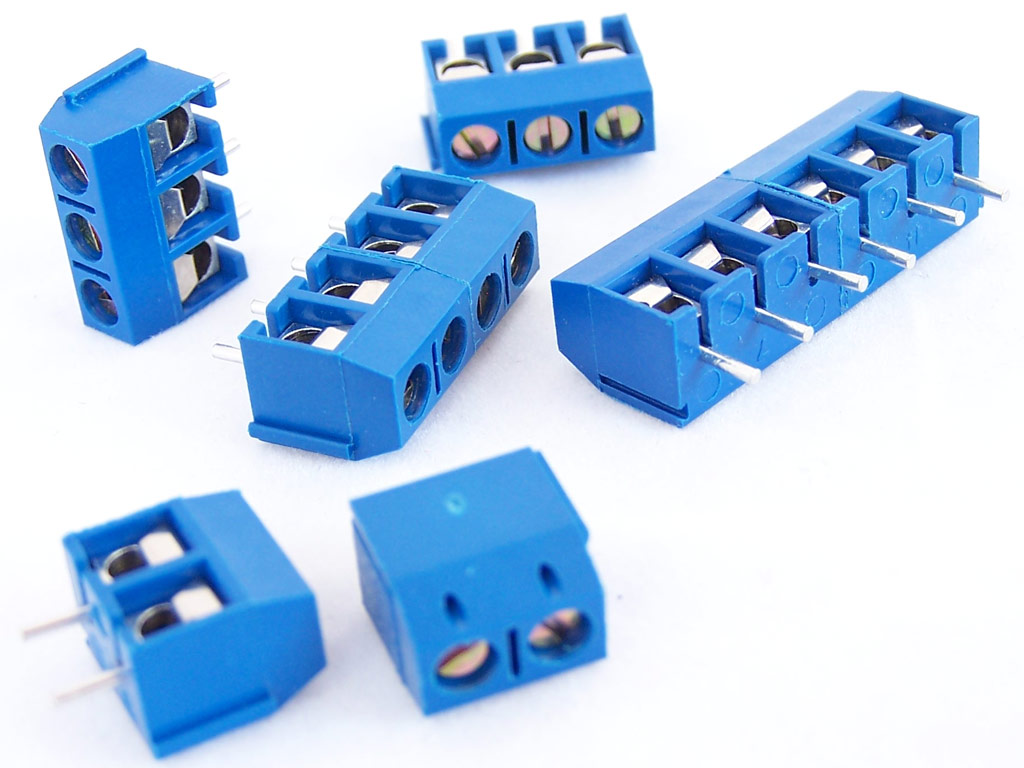
Extending Terminal Blocks

Extending Terminal Blocks

This week we have something that is so simple, it hardly qualifies as a tutorial, so let’s call it a “tip” and get started.

For some time we’ve stocked 2 pin and 3 pin terminal blocks. These terminal blocks have standard 5.08mm spacing, so they fit in all our development and prototyping boards. This is all good, but what do you do if you need a 4-way, 5-way or even bigger terminal block?

continue reading…

Soldering is Easy

Soldering is easy

Jeff Keyzer, Mitch Altman and Andie Nordgren have created a seven page comic book about soldering. The style reminds me a little of Forrest Mims’ Getting Started in Electronics.

In any event it is a great book and will be part of a bigger book “How to Make Cool Things with Microcontrollers (For People Who Know Nothing)” which will be released later this year.

The Authors have been kind enough to release the comic under a Creative Commons license (Attribution-ShareAlike), so you are free to teach with it, color it, modify it, share it with your friends, translate it, and basically do whatever you like with it!

The complete comic book is available for download here:

“Soldering is Easy” Comic Book (PDF)

Analogue to Digital Conversion on an ATmega168

Analogue to Digital Conversion on an ATmega168

Many AVR microcontrollers are capable of doing Analogue to Digital Conversion. The ATmega168 has 6 ports (8 ports on the SMD packages) that can be used for analogue input. This tutorial shows you how.

continue reading…

Reading and writing Atmega168 EEPROM

Reading and writing EEPROM

EEPROM (Electrically Erasable Programmable Read Only Memory) Is non-volatile memory, meaning it persists after power is removed. The ATmega168 microcontroller has 512 bytes of EEPROM which can be used to store system parameters and small amounts of data. This tutorial shows you how to read and write EEPROM.
continue reading…

AVR Eclipse Environment on Windows

AVR Eclipse Environment on Windows

In this tutorial we will show you how to setup an AVR Eclipse development environment on Windows.
continue reading…

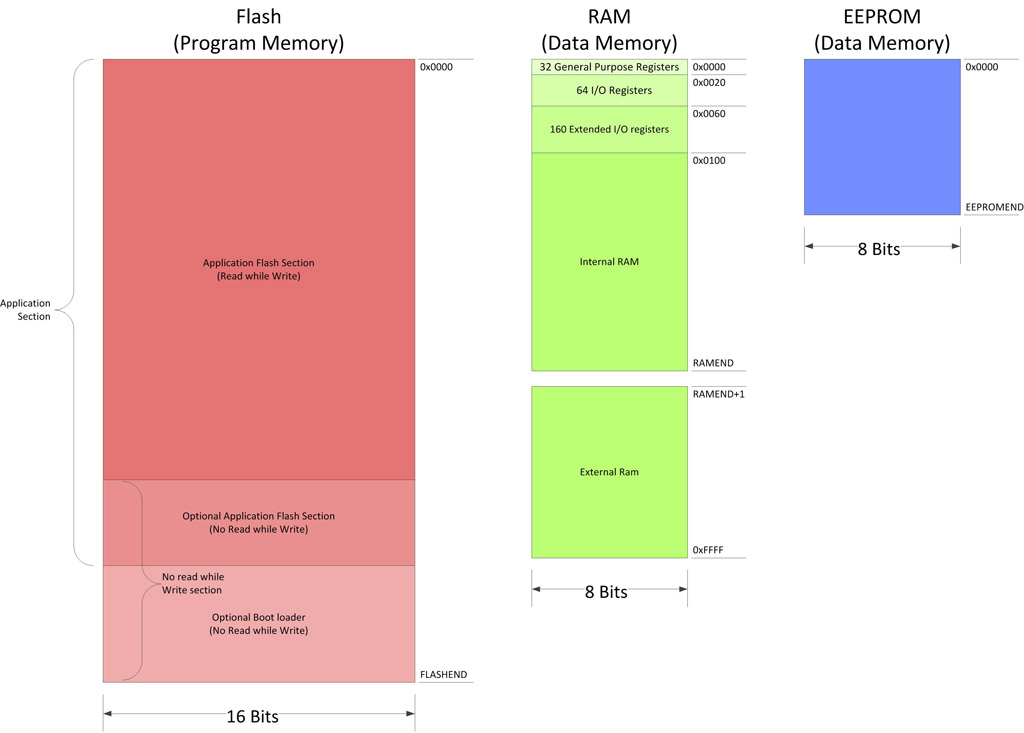
AVR Memory Architecture

AVR Memory Architecture

The AVR family of microcontrollers use a modified Harvard Architecture which uses 3 types of memory, most of which are on chip.
continue reading…


Snap 2014-09-13 at 22.04.07

Electronics


Snap 2014-09-13 at 21.52.11

Electronics

New family of materials for energy-efficient information storage and processing


A schematic illustration of the crystal structure of h-RFeO3. The arrows on the Fe sites indicate the atomic magnetic moments. The coexisting spontaneous electric polarization (P) and magnetic polarization (M) are both along the same crystal direction.

Switching the polarity of a magnet using an electric field (magnetoelectric memory [MEM] effect), can be a working principle of the next-generation technology for information processing and storage. Multiferroic materials are promising candidates for the MEM effect, due to the coexistence of electric and magnetic orders. On the other hand, the coexistence of spontaneous electric and magnetic polarizations is rare in known materials, which hinders the application potential of the MEM effect.

This article briefly reviews a new family of multiferroic materials -- hexagonal rare earth ferrites -- that have been demonstrated ferroelectric and ferromagnetic simultaneously by experiments. Both the ferroeletricity and ferromagnetism in hexagonal ferrites originate indirectly from structural distortions, resulting in so-called improper ferroelectric and ferromagnetic orders. Naturally, structural distortions may mediate the coupling between the electric and magnetic polarizations in hexagonal rare earth ferrites, causing the MEM effect, as predicted by theory.

The possible MEM effect in rare earth hexagonal ferrites is particularly useful for information storage and processing because the non-volatile nature of the magnetic polarization avoids the energy cost of constant memory refreshing and a constant flow of current. The polarity of magnets are used to store information, for example, in the hard disk of computers. The information is modified by "writing" the polarity using a magnetic field, which requires a flow of current that costs significant amount of energy. If the polarity can be switched using an electric field (the MEM effect), the energy-efficiency will be greatly improved, because the generation of the electric field intrinsically needs less power than for generating a magnetic field. The fact that the electric field can be easily localized also suggests application in miniaturized devices.

This research was supported in part by Nebraska EPSCoR.


Story Source:

The above story is based on materials provided by World Scientific. Note: Materials may be edited for content and length.


Journal Reference:

  1. Xiaoshan Xu, Wenbin Wang. Multiferroic hexagonal ferrites (h-RFeO3,R=Y,Dy-Lu): a brief experimental review. Modern Physics Letters B, 2014; 28 (21): 1430008 DOI: 10.1142/S0217984914300087

Experts call for massive global response to tackle Ebola


The current Ebola outbreak now requires a 'rapid response at a massive global scale,' according to experts. Writing an editorial in Science, Professor Peter Piot, co-discoverer of the virus, says that the epidemic in West Africa is the result of a "perfect storm" involving dysfunctional health services, low trust in governments and Western medicine, denials about the virus's existence, and unhygienic burial practices.

The outbreak which began in December 2013 now spans five countries in West Africa and has so far killed nearly 2000 people, with the WHO predicting that 20,000 may become infected.

Professor Piot, Director of the London School of Hygiene & Tropical Medicine, writes: "This fast pace of Ebola's spread is a grim reminder that epidemics are a global threat and that the only way to get this virus under control is through a rapid response at a massive global scale -- much stronger than the current efforts."

According to Professor Piot, international assistance to the growing local efforts must include support for disease-control activities such as the provision of protective equipment, patient care, and addressing the health, nutritional, and other needs of populations in quarantine.

It is also an opportune time to accelerate evaluation of experimental therapies and vaccines. With the WHO announcing that compassionate use of experimental therapies is ethically justified, even if they have not been tested in humans, Professor Piot comments that "an exceptional crisis requires an exceptional response."

In a separate article in Eurosurveillance, Professor Piot and colleague Dr Adam Kucharski delve deeper into the challenges currently facing West Africa. They warn that the exponential growth in numbers makes tracing and surveillance for Ebola increasingly difficult, and that cases could double every fortnight if the situation remains the same.

Professor Piot and Dr Kucharski write: "Fear and mistrust of health authorities has contributed to this problem, but increasingly it is also because isolation centres have reached capacity. As well as creating potential for further transmission, large numbers of untreated -- and therefore unreported -- cases make it difficult to measure the true spread of infection, and hence to plan and allocate resources."

They also warn that it is not just Ebola patients who are affected by the outbreak. In cities like Monrovia in Liberia, the infection has led to the closure of most health facilities, and as a result, untreated injuries and illnesses have caused further loss of life.


Story Source:

The above story is based on materials provided by London School of Hygiene & Tropical Medicine. Note: Materials may be edited for content and length.


Journal References:

  1. P. Piot. Ebola's perfect storm. Science, 2014; 345 (6202): 1221 DOI: 10.1126/science.1260695
  2. A J Kucharski, P Piot. Containing Ebola virus infection in West Africa. Eurosurveillance, Volume 19, Issue 36, 11 September 2014 [link]

How evolutionary principles could help save our world


SSJ-153248

That's the recommendation of a diverse group of researchers, in a paper published today in the online version of the journal Science. A majority of the nine authors on the paper have received funding from the National Science Foundation (NSF).

"Evolution isn't just about the past anymore, it's about the present and the future," said Scott Carroll, an evolutionary ecologist at University of California-Davis and one of the paper's authors. Addressing societal challenges--food security, emerging diseases, biodiversity loss--in a sustainable way is "going to require evolutionary thinking."

The paper reviews current uses of evolutionary biology and recommends specific ways the field can contribute to the international sustainable development goals (SDGs), now in development by the United Nations.

Evolutionary biology has "tremendous potential" to solve many of the issues highlighted in the SDGs, said Peter Søgaard Jørgensen, another Science author from the University of Copenhagen's Center for Macroecology, Evolution and Climate. The field accounts for how pests may adapt rapidly to our interventions and how vulnerable species struggle to adapt to global change. The authors even chose this release date to coincide with the upcoming meeting of the UN General Assembly, which starts September 24.

Their recommendations include gene therapies to treat disease, choosing drought-and-flood-resistant crop varieties and altering conservation strategies to protect land with high levels of genetic diversity.

"Many human-engineered solutions to societal problems have turned out to have a relatively short useful life because evolution finds ways around them," said George Gilchrist, program officer in NSF's Division of Environmental Biology, which funded many of the Science authors. "Carroll and colleagues propose turning the tables and using evolutionary processes to develop more robust and dynamic solutions."

Applied evolutionary biology just recently made the leap from an academic discipline to a more-practical one, spurred by an effort within the community to better synthesize and share research insights. And--above all--increasing environmental pressures.

"The fact that we're changing the world means that evolutionary processes are going to be affected," said Thomas Smith, of the Department of Ecology and Evolutionary Biology at the University of California, Los Angeles (UCLA) and another Science author. The question is, according to Smith: Do we want to be engaged in this change, or not?

The paper also serves as a platform for establishing a cross-disciplinary field of applied evolutionary biology, Carroll said, and a way to promote the field as a path to sustainable development solutions.

"Evolutionary biology touches on many elements of the life sciences, from medicine to conservation biology to agriculture," said Smith. "And unfortunately, there hasn't been an effort to unify across these fields."

This disconnect exists despite the use of evolutionary tactics in many disciplines: treating HIV with a cocktail of drugs, for example, to slow pathogen resistance. And the effects of evolution already swirl in the public consciousness--and spark debate. Think of the arguments for and against genetically modified crops, or warnings about the increasing price of combating drug resistance (which costs more than $20 billion in the U.S. each year, according to the nonprofit Alliance for Prudent Use of Antibiotics).

Seldom are these issues described in an evolutionary context, said Smith. "We're missing an opportunity to educate the public about the importance of evolutionary principles in our daily lives."

In conservation, evolutionary approaches are often disregarded because of the belief that evolution is beyond our ability to manage and too slow to be useful, according to a paper Smith co-authored in the journal Annual Review of Ecology, Evolution and Systematics (AREES).

That article, recently published online, also tackles applied evolution. It was co-authored by Carroll, University of Maine Biologist Michael Kinnison, Sharon Strauss--of the Department of Evolution and Ecology at University of California-Davis--and Trevon Fuller of UCLA's Tropical Research Institute. All are NSF-funded. Kinnison and Strauss are also co-authors on the Science paper.

Yet contemporary evolution--what scientists are observing now--happens on timescales of months to a few hundred years, and can influence conservation management outcomes, according to the AREES paper.

Considering the evolutionary potential and constraints of species is also essential to combat "evolutionary mismatch." This means the environment a species exists in, and the one it has evolved to exist in, no longer match.

Such disharmony can be "dire and costly," the authors write in Science, citing the increasingly sedentary lifestyles--and processed food diets--of modern humans. These lifestyles are linked with increasing rates of obesity, diabetes and cardiovascular disorders. Restoring our health requires greater physical activity and less refined carbohydrates: "Diets and activity levels closer to those of the past, to which we are better adapted," the Science paper said.

Implementing applied evolutionary principles often requires very careful thinking about social incentives, said Jørgensen. Public vaccination programs, for example, and pest control in crops often create tension between individual and public good.

Applied evolution, therefore, requires input from biologists, doctors, agriculturalists: "We're making a call for policy makers, decision-makers at all levels," to be involved, Jørgensen said.

Evolutionary biologists don't have all the answers, said Smith. And using applied evolution is not without risk. But we have reached a point "where we need to take risks in many cases," he said. "We can't just sit back and be overly conservative, or we're going to lose the game."

  1920x1080 (10)


Snap 2014-09-12 at 18.10.27

Fact or Fiction?: Oxytocin Is the “Love Hormone”


Snap 2014-09-12 at 12.12.19

Love is complicated, and so is the purported molecule d’amour

Sep 8, 2014 By Gary Stix

A biochemical produced in the brain called oxytocin has entered popular culture in recent years as the “love,” “cuddle” or “bonding” hormone. That’s a lot to choose from.

Oxytocin plays a role in producing contractions at childbirth and in helping in lactation, but we’ve known that for more than a century. Experiments in the 1990s showed that it was instrumental in leading prairie voles, known for their monogamous behavior, to pick a lifelong mate. Later studies then demonstrated that the chemical contributes to trust and social interactions in various animals, including humans.

After the vole study, interest in the nine–amino acid peptide started to rise. In a TED talk economist Paul Zak called it “the moral molecule” because of its link to trust, empathy and prosperity.

The Internet DIY brain-makeover market then took up the meme.  Vero Labs of Daytona Beach, Fla., sells “Connekt” oxytocin spray for $79 that purports to “strengthen workplace bonds” and “increase positive self-awareness.” The company has also come out with a his-and-her“Attrakt” spray that mixes oxytocin with pheromones—chemical sex attractants that help mice get it on, but whose role in triggering mating behavior in humans is hotly disputed. (Researchers who study oxytocin warn prospective buyers away from these purchases, saying that long-term use in humans has not been studied.)

It is not all marketing and placebos, however. A substantive body of research suggests that oxytocin—and a related molecule called vasopressin—promote various types of social behavior. Participants in one study that involved playing an investment game forked over more money to an investment banker after taking a sniff. Oxytocin levels rose in a study of new parents as they became accustomed to living with their newborns. And trials are now under way to assess whether an oxytocin spray may help allay some of the social deficits of young children diagnosed with autism.

Oxytocin has another side to it that makes it something less than Love Potion No. 9. Recent research shows that it can intensify a negative memory of a social experience—such as the recollection of your boss yelling in your face in front of co-workers. It may even increase the likelihood of aggression and violence toward others who are not part of your social group.

Oxytocin without question has an influence on social dealings, but its effect may depend heavily on circumstance. The American Psychological Association’s Science Watch had two great quotes from scientists about oxytocin that caution against pigeonholing it as having any fixed role in governing social relationships:

“Oxytocin is not the love hormone,” says Larry Young of Emory University. “It’s tuning us into social information and allowing us to analyze it at higher resolution.”

And from Shelley Taylor of the University of California, Los Angeles:  “It’s never a good idea to map a psychological profile onto a hormone; they don’t have psychological profiles.”

That means that it may be awhile, if ever, before you are able to ratchet up that lovin’ feeling with a whiff from an inhaler—best to stick with the cabernet and the bubbly.

More on oxtyocin:

1. Be Mine Forever: Oxytocin May Help Build Long-Lasting Love

2. Oxytocin, the Love Hormone, Also Keeps People Apart

3. A Love–Hate Relationship?: "Feel-Good" Oxytocin May Have a Dark Side

4. Oxytocin May Relieve Some Autism

5. When is comfort most comforting? When you've got a specific Oxytocin gene!

Snap 2014-09-13 at 12.29.02